Syria – the situation in Damascus is critical
The inhabitants of the Christian suburbs in the Syrian capital express their desperation at the constant attacks upon them.
The international Catholic pastoral charity Aid to the Church in Need (ACN) is calling for prayers and for a cessation of all violence.
According to a report sent to the pontifical foundation ACN by Caritas International, the situation in the Syrian capital is critical, with people scarcely daring to emerge from their homes.
In the last three days, Damascus has suffered a sudden increase in violence, including the Eastern Ghouta, a part controlled by the rebels, with reports of more than 250 people killed.
In its report, Caritas lamented the fact that the media are “unfortunately neglecting a part of the Syrian story”, pointing out that “most of the news reports were focusing on the Russian and Syrian airstrikes on Eastern Ghouta and the humanitarian situation there, the casualties and needs, but we hardly found anyone talking about the situation inside Damascus, which has been under attack from mortar shells since the beginning of 2018.”.
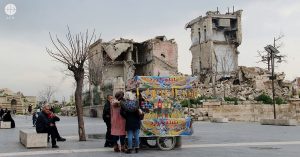
“Certain Damascus neighborhoods have witnessed repeated mortar attacks and shelling since January 22nd, especially the Bab Touma, Abbassyin, Kassaa, Koussour and Jaramana neighborhoods”. The eastern suburbs of Damascus are where the main Christian area is located, along with the majority of the Caritas offices and the convents and monasteries of the city. “Since February 5 and up till now, more than 200 mortar shells have hit Damascus’ eastern neighborhoods, causing more than 28 killed and 90 injured”, the Caritas report reveals.
According to another source consulted by ACN, the attacks continued throughout the whole of yesterday, Wednesday, and were particularly violent during the night, when according to unconfirmed sources a total of 51 mortars fell on the Bab Touma neighbourhood and the surrounding area. The official figures indicate that over 42 people have been seriously injured and a dozen killed. Although it seems that the number of fatalities may be much higher.
Several of the mortars fired felt very close to the convent of Sister Annie Demerjian, who spoke to ACN and confirmed that both she and the other residents of the convent had narrowly escaped death when a mortar fell but “thanks be to God did not explode”. Otherwise, she and several of the University students “would have been injured or killed”. Sister Annie, who belongs to the congregation of Jesus and Mary, described how the windows shook and “people grabbing their children and running for their lives” on one of the days that witnessed the most intensive mortar bombardments of the conflict in the Syrian capital. “Yesterday was like hell”, she said. “It was raining bombs. There were so many people injured.”
Sister Annie, with whom ACN is developing numerous pastoral and emergency aid projects in Syria, described how another sister of her congregation, Sister Manal, had to run through the street in order to escape the bombs. Sister Annie told how “I kept talking to her on the phone as she was running. I told her, ‘Don’t hang up; stay on the line.’ Manal told me, ‘you can’t see the sky, it has turned black.’ Finally Sister Manal managed to get back to the convent unharmed. “The Lord has been good to us. Up to the present none of us has been injured, but many other people have suffered”, Sister Annie concluded.
Caritas reported on another attack on 8 February during which “around 70 mortar shells hit many neighborhoods in Damascus, leaving more than 30 people injured, 5 killed and causing huge material damage in apartments, shops and cars”.
Caritas’ own national office in the country was itself involved on 11 February when “seven rocket propelled grenades struck the Janayen Al-Wared suburb, just a few metres from its offices. Fortunately, our offices were closed that day, since it was the weekend.” Nevertheless the mortar attacks caused “many injuries among the civilian population”.
“People in Damascus are very depressed nowadays. They were optimistic in the last few months, and they felt that they had reached the end of war; but they feel now that they are back to zero. Most of the families who are living in the eastern part of the city stopped sending their children to schools after the attacks of January 22nd. The main streets and squares that are usually very crowded during the day are now almost empty. All the people are very cautious in their movements.”
The increasing violence is connected to a broad offensive launched by Al-Qaida-linked groups on January 1st, 2018 to capture a key military base in the eastern countryside just outside the capital Damascus. This base, known as “The Vehicle Base”, contains large numbers of soldiers, as well as big weapon depots. Since then, government forces have been trying to regain control of the areas controlled by anti-government armed groups. As a result, the civilian population on both sides suffer from the continuous fighting between armed rebel groups and the Syrian army.
The Syrian government medical authority recently gave its own figure for “the number of victims of mortar shells and sniping operations, with at least 35 thousand people killed or injured since 2011”.
“Please pray for us in Syria, and help us talk loudly about this part of the story, which is neglected, and which is severely affecting our lives and the lives of our loved ones,” the Caritas report concludes.
Father Andrzej Halemba, ACN’s head of section for the projects in Syria, has also called for prayers “for the Syrian Christians, who are living through some extremely difficult moments at this time”. He also called “for a cessation of hostilities and all bombing in Eastern Ghouta and the city of Damascus, where hundreds of civilians, many of them Christians, are living in terror night and day on account of the incessant attacks.”
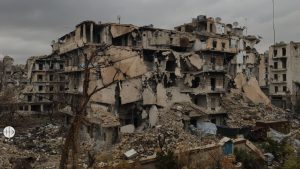
Syria is a priority country for ACN, and last year the charity funded over 140 projects there, most of them in the form of emergency aid, including pastoral aid, support for religious sisters, Mass stipends and repairs to bomb damaged churches and convents.

Recommended