Prospect of hope and a future for the South Sudanese refugees dispersed throughout many camps in Uganda
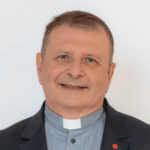
Christine du Coudray, the person responsible for the Africa Department at the Pontifical Foundation Aid to the Church in Need (ACN), returned from a journey to Uganda a few weeks ago. While there she visited the Bidibidi and Imvepi camps located in the north-west of the country. There are 1.2 million refugees, coming for the most part from South Sudan, dispersed throughout the camps in this region, which covers the dioceses of Arua, Nebbi and Gulu. On top of this there are also refugees to be found in the environs of Kampala, the capital located in the centre of the country. In an interview Robert Lalonde gathers some initial impressions of the trip.
What made you decide to visit this region?
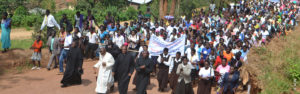
I was invited by three Bishops: Mgr Eduardo Kussala, Bishop of Tombura Yambio and President of the Episcopal Conference, Mgr Roko Taban, the Apostolic Administrator of the diocese of Malakal – both from South Sudan -, and Mgr Tombe Trille, Bishop of El Obeid in Sudan. They had come to see for the first time the situation of their compatriots who had fled to Uganda to escape the violence in South Sudan. I was also invited by the American foundation Sudan Relief Fund with which ACN is linked since we co-fund a number of projects. Mgr Sabino Odoki, the Bishop of Arua in Uganda, took us to get an overview of the situation in these camps. It was a highly enriching week and it left a strong impression.

How would you describe the situation there?
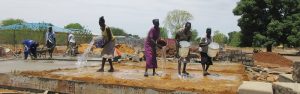
Since we’re dealing with refugee camps you would think that the prevailing mood was one of distress. But it’s important to know that these camps have been in existence since 2013. The residents have food, drinking water and medical care. They even have a plot of land that they can cultivate. All things considered, the living conditions are definitely better than in many African villages which do not receive any external aid. Even so the situation is difficult, which is why the refugees expect support from us. That’s what we came to assess their needs on the spot.

What moment on the trip made the greatest impression?
We were all impressed by the welcome given to us by Mgr Odoki and by the leadership he has shown. Among other things, he has assigned two diocesan priests to carry out pastoral work in the camps. We were also highly impressed when we learned that the pieces of land on which the 9 camps of the dioceses in the north-west region have been constructed originally belonged to ordinary Ugandans who generously offered them to the refugees. This welcoming attitude shown by the brothers and sisters in the faith is also in Uganda’s interest since Uganda hopes that its neighbouring country will one day live in peace. Does this not demonstrate a great spirit of hospitality and provide a lesson that should be remembered?
In what way is the Catholic Church involved in the camps?
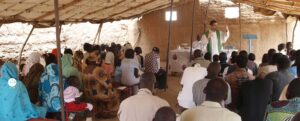
The presence of the Bishops was a good opportunity for the Church to demonstrate its concern for all these people, who are not there by choice but who have been forced there by life’s vicissitudes. Even so, this period of enforced exile can be used marvellously as a time for training with a view to building the society of tomorrow. When these individuals return home, the re-construction of their country will be in their hands. The Church is already involved and may possibly become further involved by giving other training sessions.
Last year ACN sent € 34 000 to the Emmaus community based near Kampala. This community has considerable expertise in different fields such as catechesis, pastoral care, social doctrine, the family apostolate and in providing emotional and sexual education to young people, which is so important in a country decimated by AIDS. 65 young people have been trained in the camps.
What is the situation of the young in the camps?
These young people have gone through major traumas. Some saw their parents killed before their very eyes, others suffered severe facial burns… they are now asking themselves how they shall ever be able to forgive. The Emmaus community has set up a programme to accompany them in the process of forgiving and invites young people to come and kneel before the Holy Sacrament to pray. The accounts of healing have multiplied, as though the Lord has intervened to soothe hearts and spirits.
Will other means be applied in future to help the refugees?
On the one hand the Bishops have committed themselves to return in September to celebrate Holy Mass in the camps and, on the other, to ask their priests who speak the various Ugandan dialects to come and conduct an apostolate.
What is more, Mgr Odoki, the Bishop of Arua, told us that he was part of a delegation that recently met Pope Francis. The delegation informe him about the situation in the diocese and mentioned the urgent need for the presence of religious sisters among the refugees. The Pope assured them that he would make a special appeal to convents, urging them to respond to this need.

And what kind of support can be given by Aid to the Church in Need in the spirit of these commitments?
To foster the presence of Church personnel we envisage building a house with a number of rooms to accommodate priests for a certain time. With the help of other organisations we could do the same for the nuns. Such a house could provide half a floor per congregation with a chapel and a communal dining room.
With regard to the training courses we intend to continue vigorously with our work in this domain. It is clear that the desire for such training, combined with the atmosphere of peace which prevails in the camps, is a factor which favours this kind of involvement. The Bishops were delighted with such a proposal from ACN. They know that, once trained, the leaders we address (catechists, the young people who study the Church’s social doctrine and those who go more deeply into the family apostolate) will share their knowledge and experience with other refugees. In this way they will build the future together. One of them, Santos, also described his experience to us as having been “more than wonderful”. The more we provide these training conditions, the more the country will rise again. Isn’t that a glorious prospect of hope and for a future?

Recommended