Living The Faith In Kenya, Five Years After The Garissa Attack
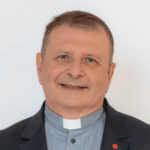
Bishop Joseph Alessandro is the Catholic Bishop of Garissa, Kenya. He is Maltese, and as a Franciscan missionary, has been working in the African country for the past 14 years. In this interview with ACN, he shares his pastoral experience as a missionary, the current five years after the terrorist attacks situation in Garissa by Al-Shabab and how the Church is responding to the situation. Interview by Grace Attu of ACN Malta.
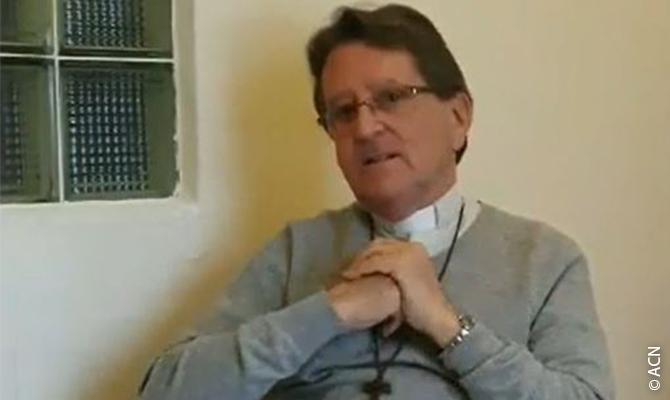
You have been working as a missionary in Kenya for many years. Can you tell us about your pastoral work and experience?
I have been in Kenya for about 14 years, in two separate periods. I have been the ordinary Bishop there since 2015. The work in the Diocese is somewhat unique because the Diocese is the largest in Kenya at 143,000km2, but the faithful are few in number because it’s a semi-desert, very close to Somalia on the Eastern part, and another part to Ethiopia.
Catholics are very few as they mostly come from the up-country because of work; government employees, civil servants, teachers, nurses, doctors and a few businesspeople. Even though they are very few, we still try to cater for them as much as we can. In the Diocese there are 7 parishes, very much scattered one from another. Besides the distance the road is not good and it’s not safe especially when we receive news that there have been attacks on the road by terrorist groups. We try to provide catechesis and last year we had some couples who had their wedding blessed. It was a big event in the Diocese. We also prepare their children for baptism and confirmation and first Holy Communion. That’s the pastoral work we are doing, then we have what some people call social work, I prefer to call it charity work.
How would you describe the faith of these few Catholics?
Their faith is very strong, although they have challenges because it’s a predominantly Muslim environment. Sometimes when attacks happen, the victims are always up-country people who are Christians, not only Catholics, but also other Christians. This could sometimes instil fear in them especially when we have feasts or big gatherings. We find help from the government, when we inform them about our activities, they provide us with security. On Sundays during Masses there is also the security so we try to create a safe environment for the faithful.
Garissa brings to mind the deadly terrorist attack on the university and the activities of Al-Shabab. Can you give us a picture of the current situation?
Yes, this event happened exactly 5 years ago, it was a very sad event. If I remember well, there were about 148 students who lost their lives. They were all Christians from various denominations. It was really a shock to the whole nation especially to the Church in Garissa because there were Catholics amongst them whom we knew used to come to our Church on Sundays. I used to go to the university campus to celebrate Mass and hear confessions. I admired them so much because they were very active. In fact when the attack happened at the university, some international reporters came to our church the following Sunday, it was Easter, and they interviewed some people and asked them, ‘Aren’t you afraid to come to church?’, they said ‘Yes, we are afraid but if we have to die, it’s better to die in the church than on the street’.
Although we had that experience we thank God that now things have returned almost to normal, even though there are still some sporadic attacks from these terrorist groups in our Diocese. These last 2 months there have been about 16 of these incidents and attacks, about 60 people lost their lives because of these attacks.
How is the Church responding to this situation?
We try to create a dialogue first of all with the local people. We have a team made up of religious leaders – Muslims, Protestants, Catholics, Methodists and some others and we meet regularly so that we try to create a bond amongst ourselves and if we foresee something that is not going right, we discuss it to prevent the situation worsening. When things happen, since we have already this bond, we try to keep our people calm. We have to go forward. These are extremists, not everyone is like that. So we try, for our part, to educate our people to differentiate between the terrorists and those who are not terrorists, Muslims also. For their part, the Muslims try to tell their people that the Christians are their brothers although there are differences but we have to live together as brothers and sisters. I think we are trying to do our best.
ACN relies mostly on the generosity of benefactors to support Missionaries like you who are abroad doing the work of God in countries where it is difficult to practice the faith. What message do you have for our benefactors?
It’s true that the Church is Universal and that’s the beauty of the Church. We not only profess the same faith but we try to assist each other. There are churches who are in need materially so other churches will assist them. In return, the churches who will be assisting materially, are in need of priests, because the number of priests in Europe and in the West is going down, priests from these countries that had received this assistance can be sent on mission. This is an interchange, so the Church is very alive and active in this way. I appreciate the benefactors greatly. If it wasn’t for their assistance I think the Church wouldn’t be where it is now because we need structures, not only for schools, but even where to accommodate the religious communities, the sisters, and even the priests and then to sustain them. Everyone has something to give and everyone needs something to receive.

Recommended