Jesuit priest calls for reconciliation in Aleppo
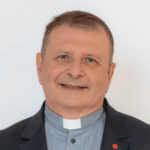
On Wednesday a cease-fire agreement came into effect for the hard-fought Syrian city of Aleppo. But there are media reports that fighting is continuing and acts of violence are still being carried out by the pro-Syrian forces against the civilian population. Father Ziad Hilal, a Jesuit and the Syrian project representative for the Catholic pastoral charity Aid to the Church in Need (ACN) in Aleppo, talked to Aid to the Church in Need and appealed to the parties in the conflict and to the western nations to cease provocations and commit themselves to reconciliation.
The interview was conducted
Father Ziad Hilal, what is the current situation in Aleppo? Is the cease-fire being observed?
No, after a pause the fighting has obviously broken out again. We hear bombs and missile fire relatively close by. Not far from us there are two areas where the rebels are holed up and refuse to surrender. Up to now we’ve only heard fighting.
And in your area?
In our area it’s quiet. Many people have come from the east of the city to the west. Numerous organisations are there to help them. It has been a very cold day.
But only a few days ago our convent was the target of an attack. In our building a missile struck at 6 p.m. on Saturday evening and caused material damage. We are normally celebrating Holy Mass at this time in our church, but on this particular Saturday we were on a retreat with a community of sisters. That’s what saved us!
How do you estimate the present situation in the east of Aleppo?
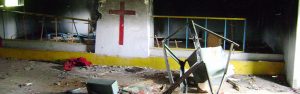
For the first time for five years I was able to visit the eastern part of the city and get an idea of the situation, specifically in the Christian quarter of Al-Midan. All you see is total destruction. Our Saint Vartan Centre has also been severely damaged. And then there are the two parts of the city where the rebels are resisting. I don’t understand why they’re doing that. After all, they have no option.
Were you able to drive to the eastern part without any difficulty?
Yes, I was received well. There are army checkpoints but they let me through without further ado.
There have been media reports of massacres committed against the civilian population by the Syrian army and its allies…
I have my doubts as to these reports. There may have been isolated cases but we haven’t heard anything here. You have to know that these days a lot of false information and fake pictures are being circulated. Organisations on the spot, such as the Red Cross, have not propagated such news to date. The problem is that people tend to exaggerate. It’s important not to provoke at this point, but to remain calm. The thing is to encourage people to accept one another and to dare to try reconciliation.
Can you see any signs of such reconciliation?
Not yet. We’ve destroyed the city because we haven’t yet managed to come together in a dialogue. We’ve lost our civilisation and destroyed our history. What for? It’s a tragedy.
Many Syrians give foreign forces the principal blame for the war…
We mustn’t point the finger at others: first and foremost we are the guilty ones. But I must say that the media are playing a miserable role in this war. They are provoking the two sides and setting one against the other. These provocations have got to stop.
Now that the eastern part of the city has been liberated, so to speak, do you see any hope of a rapprochement?
The fight for Aleppo has been a bitter one. The city has been completely destroyed and an inordinate amount of patience was needed even to achieve the present cease-fire. But we must keep our hopes up, otherwise why are we still here? In the course of its history Aleppo has experienced many conquerors. Thousands and thousands have died here and the city has been destroyed time and again. And yet it has always bounced back. So let us hope!
Is there anything the west can do?
First and foremost: stop the provocations! Call on the politicians to exercise reason and to seek moderate talks and reconciliation. The Middle East must become a peaceful region where all live in peace together. Otherwise it will become hell for us.

Recommended