Belarus: “The Catholic church is not demanding any privileges, but its rights.”
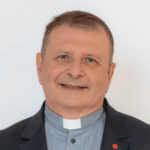
[vc_row][vc_column][vc_column_text]Archbishop Tadeusz Kondrusiewicz of Minsk-Mohilev deplores the violation of the rights of the Catholic church in Belarus. In a document that has been made available to the pontifical foundation Aid to the Church in Need (ACN), he calls for the signing of a concordat between the Belarus state and the Catholic church, a pact that has been in the making for many years, but has yet to be signed. “Without a concordat of this kind in place, the church in the Republic of Belarus cannot completely fulfill its mission as it does in other countries,” he explained.
The church is not demanding “any privileges, but an acknowledgment of its rights in order to be able to adequately carry out its work.”
The situation is especially problematic in matters relating to the activities of foreign priests in the country. Although the number of native Belarus priests has “significantly” grown from 60 to 400 over the past 25 years, the work of foreign priests remains “indispensable”, emphasized Archbishop Kondrusiewicz. These priests, who predominately – but not exclusively – come from Poland, frequently meet with obstacles when they try to extend their residence permits. “They are often issued a visa for only three to six months. That is not conducive to doing any sort of real work as priest, and the pastoral work with believers and youth formation are suffering from it. We are trying to develop local vocations, but that takes time. And then you have to factor in the demographic crisis, which also has a negative impact on the number of vocations.”
The archbishop further told Aid to the Church in Need that a growing number of foreign priests have recently been denied extensions when they tried to renew their residence permits and have been deported under the pretext of minor offenses such as speeding in traffic, even after having worked in Belarus for many years.
“For some unknown reason, Belarus is afraid of foreign priests. But how many church buildings have been and are being built to serve believers in Belarus – and all thanks to the efforts of these foreign priests! These priests come to proclaim the Word of God in places where there are no local priests. How many pastoral and social programmes have they launched! They get to know the culture of Belarus and Belarus becomes their home. And they bring new pastoral experiences with them. Today’s world is not only undergoing economic globalization, but cultural and religious globalization as well, and we need to get on board so that we are not left standing at the station, watching the taillights of the train disappear,” Archbishop Kondrusiewicz said.
The archbishop then went on to explain that even foreign priests who are only in Belarus for a short visit have to apply for approval from the authorities before they are allowed to celebrate Holy Mass. A process that is practically impossible to get through in so short a time. “A paradox situation has developed in which a foreign priest may attend Mass as part of the congregation, but when he stands on the other side of the altar and celebrates Holy Mass himself, he becomes a criminal,” the archbishop lamented.
He then touched upon the problems that have arisen concerning the restoration of church buildings expropriated during Soviet times. Archbishop Kondrusiewicz emphasized how valuable these buildings are, not only for the church itself, but also for the country: “They are our cultural heritage. Tourists and pilgrims are more likely to come here to look at these churches than the modern buildings with their often tasteless architecture.” He then gave as an example an 18th-century church from his archdiocese that was expropriated during Soviet times and then restored by the Catholic church with its own funds after the political turnaround. However, ownership of the church has yet to be returned to the parish; instead, the Catholic church has to pay rent in order to be able to use it. “Where is the justice?” he asked and called for restitution laws as they exist in several other eastern European countries.
According to the archbishop, a further problem is that no building regulations have been adopted that take the specific situation of church buildings into account; instead, churches underlie the same regulations as, for example, cultural centres. “However, the churches are built using the donations of parishioners and not public funds as would be the case for a cultural centre. According to regulations, a church must be completed within a year or even less. How is that possible?” This means that permit extensions have to be applied for several times during the ongoing construction work, which costs money every time.
The archbishop is also “very concerned” about the state’s attempts to influence the contents of the teaching materials used for catechesis, which is taught by the church in Belarus as part of its Sunday School programme. “This is just interference in the internal matters of the church and is not reconcilable with religious freedom and the freedom of conscience and of religious organizations.”[/vc_column_text][/vc_column][/vc_row]

Recommended