Mozambique: “The wounds of the civil war are still open”
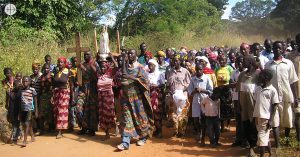
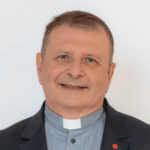
Peace still has not come to Mozambique. For Bishop Adriano Langa of Inhambane, “the wounds left behind by war are not as easy to close as a tap.” The traces and aftereffects of the many years of armed conflict are still visible throughout the African country. During a meeting held at the international headquarters of the pontifical foundation Aid to the Church in Need (ACN) in Königstein, Germany, Bishop Langa explained that there is still quite a way to go before it will actually be possible to live in peace.

“We say that the war continues to claim lives even though the guns have fallen silent,” he said. “We have yet to overcome the aftereffects of the war fought to gain independence from the colonial power, the civil war as well as the political tensions of 2014 to 2015 … and it will take a very long time for them to disappear. It is something that cannot be seen, but still exists.” The civil war in Mozambique, which lasted from 1977 to 1992, cost the lives of almost one million people. Moreover, an estimated five million people were forced to leave their homes and their homeland. In spite of the peace agreement signed in 1992 the spectre of war could never be banished completely.

Jihadist attacks in the North?
As though this were not enough, a wave of violence was unleashed in October of 2017 in the northern part of the country, in the province of Cabo Delgado. Extremely violent attacks were carried out on villages, during which houses were destroyed and people killed. It is estimated that over one hundred and fifty Mozambicans lost their lives during these attacks, but none of the known groups have claimed responsibility for them. This has given rise to all sorts of speculation, including a direct link to radical Islamist groups.
The bishop of Inhambane is aware of the problem. He gave voice to the concerns of the church, “People die. Or their lives are destroyed … When a house or a village is destroyed, life is also destroyed. The Church is concerned and we hope that the situation can be resolved. More than anything, we hope that this will all come to an end. We want the attacks to cease because there has been a great deal of violence and the situation is very difficult.” According to Bishop Adriano Langa, it is important “to offer signs that the Church is right there.”

Traces of poverty
The civil war has had a dramatic effect on Mozambique: in addition to the numbers of deceased, injured and displaced, the entire country was plunged into underdevelopment. In 1990, while the civil war still raged, Mozambique was considered the poorest country in the world. Today, the prevailing poverty is another sign that the “tap” of war has not been completely turned off yet. The Church is aware of the problem.
According to Bishop Alberto Vera, president of Caritas Mozambique and bishop of Nacala, the poverty rate primarily rose in rural areas this year and prosperity has only increased in the circles of the political and financial elite. This has only deepened the chasm between the country’s rich and poor.
Bishop Adriano Langa confirmed this assessment during the interview with the ACN foundation. “Of course there is poverty in Mozambique, that is indisputable.” For the bishop of Inhambane, the poverty is particularly evident in rural areas, one example being in his diocese, which has very poor infrastructure. “When there are no roads, communication becomes very poor and that is what is happening in Mozambique. The north produces a great deal; however, the products do not reach the south because of the lack of roads.”
ACN supports the church in Mozambique with subsistence support to priest and religious sisters as well as with financial aid for formation and building projects. The foundation funded projects in 2017 with almost 650,000 euros in grants.

Recommended