Equipment for the transmission of services in the Cathedral and other churches in the diocese Prishtina Prizren
As a new multicultural state, Kosovo declared independence from Serbia only in 2008. It is the second smallest country in the Balkans and more than a quarter of its population is under the age of 15. The main problems are unemployment (at 30%) and rampant corruption. Today, Kosovo’s population is predominantly Albanian and more than 95% are Muslim. About 2.2% of the population is Catholic. The majority of ethnic Albanians were forcibly converted to Islam when the Ottoman Empire ruled the Balkans. Today, there is peaceful coexistence between Catholics and Muslims as the same Albanian nationality unites them.
Special equipment to broadcast services
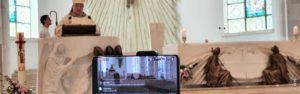
Mgr Dodë Gjergji, bishop of Kosovo, has tried to maintain a link with his faithful through social media. He’s transmitting on Facebook the celebration of Holy Mass and the morning prayer from the cathedral in Pristina. Unfortunately, this solution only allows a small part of his faithful to follow the services. He uses a mobile phone, which does not allow for good image and sound. Rev Dodë Gjergji would like to invest in the appropriate equipment (camera and accessories) to be able to broadcast in You Tube. He believes that this material will still be useful in the future (in the aftermath of the pandemic) for broadcasting Sunday Masses a well as catechetical programmes in the cathedral and the other parishes.
Facing Covid 19
On May 13, ACN had a long interview with Mgr Dod ë Gjergji, bishop of Koso vo. He explains what the current health situation is, how his Church has adapted and what the challenges are. «Kosovo is also stopped due to the Corona pandemic. There have been few deaths so far, but this week the number has grown fairly quickly. Face masks are mandatory. The last time freedom was lacking was over 20 years ago during the war. This is why people say that corona looks like a war to them. But, at that time, we knew who the enemy was and who to fear. Today we do not know. Friends, family can be “the enemy”. The infection is hidden everywhere and there is great uncertainty. The churches are not closed, but there cannot be services with faithful. It is only possible to celebrate Mass outside, but with the necessary distance and protection. Easter 2020 was very sad because there was no one in the churches. Therefore, lights were placed everywhere on the benches, as a kind of substitute for the faithful. Thank goodness public television broadcast Easter Mass and there were even 1 million viewers (including the diaspora abroad). 46 baptisms of adults, who convert from Islam to Christianity planned for Easter are now postponed to the feast of the Assumption of Mary, August 15. I try to visit the 25 parishes to celebrate mass there. Some services are then distributed online.
Once, I even recorded 50,000 entries during mass on my Facebook page in one day. I am truly grateful that people can live their faith online, via Facebook or other social media. But it cannot always continue like this, because there is no human proximity, there is no community, the priests need the eyes of believers and finally we need each other.
Elderly people can listen to RADIO MARIA and it is a blessing for them in the days of Corona. During the pandemic period, the bishops of Albania, Kosovo and Montenegro launched an initiative to pray the rosary each evening on the radio. RADIO MARIA currently registers an extremely high number of listeners. I’m in constant discussion with the authorities on how to make the churches accessible again to the faithful. But the measures are not yet clear. Financially, the church has not received donations from the faithful for three months. Thank goodness our believers send us mass stipends. This tradition is deeply rooted in our people » «I hope that we will celebrate freedom again after the pandemic, as we did after communism or after the Balkan wars. And the Church must become stronger, move forward with new impetus, give more witness and be even more authentic for believers, for people, for the world. »

Recommended