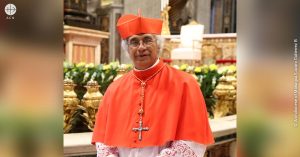
Syrian prelate meditates on ‘a Lent of tears’
Marking the beginning of Lent 2017 with a pastoral letter obtained by international Catholic charity Aid to the Church in Need, the leader of the Maronite Church in Damascus, Archbishop Samir Nassar, described the situation in Syria in terms of an “apocalypse … a large wasteland of ruins, pulverized buildings, burned out homes, neighborhoods turned into ghost towns, villages razed to the ground.”
The archbishop reflects in particular on the plight of families, children and couples wishing to get married, whom he refers to as “an asset to the future that is collapsing,” as violence, death, imprisonment or enlistment in the army has separated the beloveds; those who are still together, he adds, face the “grave difficulty” of finding “adequate shelter” once married.
It’s “almost rare,” the archbishop says, “to come across a family that is entirely intact;” families, society’s “bulwark” and “foundation” stone, have been ripped apart, as family members have fled, perished in the fighting, languish in prison or are trapped doing the fighting “at the front lines.”
Children—who “are the most fragile”—the archbishop says, “have paid dearly for this pitiless violence.” He cites a UNESCO estimate that more than 3 million Syrian children are unable to attend school; and those that still do must cope with greatly overcrowded classrooms and a shortage of qualified teachers.
Priests, too, suffer, says the archbishop—their flocks are greatly diminished and along with it these pastors’ own social and spiritual fabric that sustains them. Numerous priests have fled and those that remain “are contemplating their eventual departure.”
Instead of “looking for freedom,” the archbishop writes,” the Syrian people “are waging a daily battle” for sheer survival, hunting for food, water, and fuel. The people’s “bitterness” can be read in their “silent looks and in streams of tears.”
Nonetheless, in the face of this somber assessment, Archbishop Nassar concludes that the Syrian Church will make use of the Lenten “time in the desert” to “better guide” the faithful “toward the Resurrected Christ … who tells them: “Come to me, all you who are weary and burdened” (Mt. 11:18).

Recommended