Mexico: one year after the earthquake
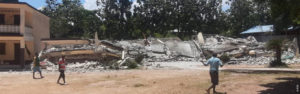
For Mexican people what happened in September 2017 is still not easy to forget. The country was stroked by two earthquakes in just 12 days, one at the 7th and the other at 19th. Thousands of families were torn apart, 471 died and 12 million people were somehow affected. Most of the victims were in Mexico City, but there were also many in other regions, such as Cuernavaca, Oaxaca and Puebla. Those who were in the affected cities when the phenomenon happened recall vividly the events; buildings collapsing like a house of cards, roads and bridges being destroyed by the earthquake. But they also remember the solidarity shown by people from all over the country in drawing on all their resources and tirelessly searching for survivors amid the ruins.

But now, one year after the disaster another problem has appeared: discontent. “The processes for reconstructing of the affected areas in Mexico have been confusing and those who suffered with the tragedy continue to express their discontent because the bureaucracy to have support to rebuild the houses is slow and far from clear”, explains Julieta Appendini, the director of the Mexican national office of the international Catholic pastoral charity and pontifical foundation Aid to the Church in Need (ACN) in Mexico City.
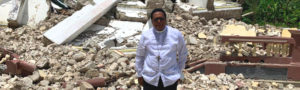
The Mexican Bishops’ Conference has identified that 1,850 Catholic churches, in 26 different dioceses, have been damaged by the earthquake. 1,603 of these are officially property of the state, which means that the government is responsible for rebuilding and repairing them and it also means that the Church authorities cannot intervene. Among the properties belonging to the state there are: 17 cathedrals, 4 basilicas, 44 shrines, 76 convents and monasteries, 226 smaller churches and chapels, 31 parish offices or presbyteries, 11 seminaries 1,411 parish buildings and 30 large buildings being assessed on the magnitude of the damage. The official estimative is that it will take between three and six years to repair them all.

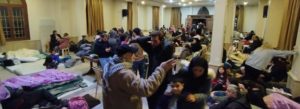
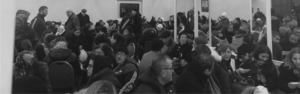
The churches and chapels that do not belong to the state are being repaired and rebuilt by the Mexican Bishops’ Conference together with the help of international organizations, such as ACN. The Pontifical Foundation has been helping since the beginning. At first providing emergency aid to 23 local communities in the municipal areas of San Mateo del Mar and Unión Hidalgo in Oaxaca, where communities of up to 10,000 people were forced to seek refuge in adjoining territories after the destruction of their homes; and now ACN is supporting the construction and reconstruction of the affected churches. The convent of the Poor Clare Missionaries of the most Blessed Sacrament (Misioneras Clarisas del Santísimo Sacramento) is already being repaired in Cuernavaca. The convent was badly damaged, had to be demolished and rebuild from scratch as well as two other building that belong to different congregations, such as the church of the Bienaventuranzas in Puebla and the chapel of the Disciples of Jesus the Good Shepherd (Discípulas de Jesús Buen Pastor).

“I was in Jojutla, one of the most severely devastated regions in the country”, recalls Julieta Appendini. “Back then, I heard a beautiful story of a boy named Mario. He became speechless for a few days after the earthquake because of the great trauma he experienced. He was at school when the quake struck. His mother took him to a church to give thanks to God for them to be alive. When he saw Jesus at the altar, Mario said: ‘That was the man who saved us. He was at school and said that we should leave very quickly’. Only when the children were all outside did the building collapse. I think that in times of a tragedy, such as the one we had here, it is God who accompanies us and gives us the strength to carry on. That’s why it is important to rebuild the churches so that people can have a place to feel safe and secure” says the national director of ACN Mexico.
ACN has already supported five different projects in five dioceses with a total of 150,000 Euros. Currently another reconstruction project in the diocese of Cuernavaca, close to the epicenter of the second earthquake that stroke the country one year ago (September 19th 2017) is being evaluated.

Recommended