Mass Stipends: They are our priests too
“The Church draws her life from the Eucharist.” So begins the encyclical of Pope Saint John Paul II, Ecclesia de Eucharistia. The Second Vatican Council describes the Eucharist as the “Source and summit of the Christian life” (Lumen Gentium 11). All the rest derives its meaning from it. And not surprisingly, for it has to do with God himself. It is also the crux of the priesthood. Without the consecrated hands of the priest there is no Eucharist, without the Eucharist no Church. The coronavirus epidemic has isolated our priests and put the Church, put us all, to the test. All alone, or with just one or two assistants, they celebrate the Holy Sacrifice of the Mass. In most of the developed world we can still follow services via live streaming, but in many of the poorest countries most of the Catholic faithful can only associate themselves in spirit with the priest.
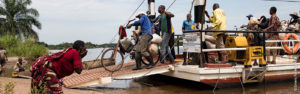
In Africa the faithful customarily bring more than just their open hearts and spontaneous joy when they gather around the Table of the Lord; often they bring fish, eggs, even live chickens for their priest. That is what the priest normally has to live on – as is the case in the dioceses of Inongo and Kananga in the Democratic Republic of the Congo. And where there are no gifts, they must rely on the widow’s mite. But since the coronavirus struck that has all finished – no chickens, no fish, no eggs, no Offertory collection. Bishop Donatien and Bishop Marcel have turned to us for Mass stipends for the 85 priests in Inongo and the 168 in Kananga, so that “their” priests, about whom they are greatly concerned, will be able to survive. But they are our priests too, as they pray for us, present our intentions before God and continue, for our sakes, “the work of redemption on earth” as Saint Jean-Marie Vianney, the Curé of Ars and patron saint of priests, describes it.
In Venezuela, in India and Ukraine, as well, the virus and its consequences have turned the already difficult situation of many priests into one of dire poverty. Before the virus, they supported people, with counsel, medicines and food; now they often don’t know where their next meal is coming from. But they draw strength from the sacrament of their ordination – and from their confident hope that we understand the importance of their universal saving mission for the whole Church and will hasten to support them – and with them the Church – with your Mass offerings.

Recommended