Christians look with hope and concern at Lebanon’s parliamentary elections
ON MAY 15, 2022, LEBANON WILL GO TO POLLS to elect a new Parliament. Christian leaders are making sure that the role of Christians at the country’s political level does not diminish, even though the Lebanese Constitution stipulates that are allotted 50 percent of the 128 seats in Parliament. However, real power has increasingly been shifting toward Muslim politicians and Christians are not necessarily united.
The country’s political landscape is divided into drew groupings or parties, with Christians divided among all three. The largely Shiite “March 8 Movement” is dominated by Iran-backed Hezbollah; the “March 14 Movement” has a majority of Sunni Muslims, as well as Druze, and enjoys the support of a Christian party called “Lebanese Forces” as well as Saudi Arabia. “There are Christian parties involved in both alliances. The third power bloc is known as the “Civil Movement,” which sprung up in the wake of massive protests over the country’s economic and political crisis. This grouping of parties—which has support from all faith groups—has the support of Western nations.
Church leaders are urging Christians to vote and be heavily involved in the political system, to counteract the fall-out of the terrible state of the economy which has prompted many Christians to leave their homeland—thus reducing the Christian voice as Lebanon’s future is being shaped. A hoped-for development is the decentralization of Lebanon’s political and economic structure, as presently all power is centered in Beirut and environs, where 50 percent of the population lives.
This centralization is a particular burden for the 75 percent of the Christian population that has moved from their villages to the Beirut region to find work. The current voting system requires that these Christians go to their original hometowns and villages to vote, which is a significant financial burden that suppresses the Christian vote. The system favors wealthy candidates who can afford to pay for gas, enabling their supporters to go home to vote.
Many in the Church believes that decentralization would spur economic development and wealth creation across Lebanon and not just in Beirut—a benefit to all Lebanese, Muslims and Christians alike.
ACN recently spoke with Melkite Archbishop Edward Daher of Tripoli about the upcoming elections. Many in his diocese have moved from the center of Tripoli to the suburbs, where ACN is helping him construct a new cathedral, to encourage the remaining Christian population. He said:
“Political diversity among Christian parties is required and needed to achieve democratic solutions and outcomes. Accordingly, Christian politicians are divided about the future of Lebanon and the best strategies to protect Christians.
“The Church wants Lebanon to be truly independent and the Lebanese government to have full authority over all of Lebanon. We want equality and prosperity for all Lebanese regardless of their religion. We support the full implementation of the Constitution, especially with regard to the 50-50 political power sharing between Christians and Muslims (regardless of population sizes) and to implement the decentralization of the government.
“The Church urges the Christians to be heavily involved in the elections to select the best candidates who would serve their communities and not be corrupt.”

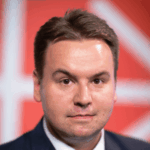
Nawfal Yousseph Nawfal is a Christian candidate for the ‘National Bloc’ party, which is part of the “Civil Movement.” He also spoke with ACN:
“The most important issue for Christians in the election is emigration and the resulting diminishing political influence of Lebanon’s Christians.
“Lebanese Christians today are looking for a system to provide them with long term stability because they are overwhelmed with the memory of the country’s civil war, and they fear potential new violence.
“One objective is to regain the power of the presidency held by a Christian, which was reduced in 1990, at the end of the civil war, in favor of the power of the prime minister, which office is always held by a Sunni Muslim.
“The economic crisis has worn down Christians and they must be united, just as the Shiites and Sunnis are united. We must sit down together to discuss which Lebanon we want.
“The problem is that politicians in their strategies to please neighboring states benefit financially to help strengthen their parties and groups. But as a result—in the absence of a sufficiently strong central government—we are facing the prospect of Lebanon’s break up into separate states.
“Lebanon got its independence in 1943 and Christians held most of the government power until 1989. Lebanon’s diversity made it the jewel of the Middle East. If the role of Christians in the 2022 elections is diminished, then the future of Lebanon will be changed forever.
“Unfortunately, Christian parties are caring more about their own benefits, disregarding their country’s wellbeing, which doesn’t reflect at all what the Christians role has been in the Middle East, in terms of safeguarding the message of Lebanon as a country where different faiths can live in harmony.
“The upcoming elections offer an opportunity to create a real political shift and a first shot at accountability—if we vote correctly. The support of the international community is vital.”

Recommended