West Africa: “We will not let them divide us”
Bishop on the growing violence against Christians in West Africa
The third Plenary Assembly of the bishops of West Africa took place in Ouagadougou, the capital city of Burkina Faso, from 13 to 20 May. The assembly was overshadowed by severe terrorist attacks that have shaken the country.
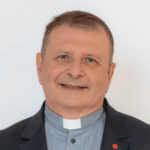
Bishop Martin Happe, a native of Germany who is head of the diocese of Nouakchott in Mauritania, took part in the assembly of bishops at Burkina Faso. Volker Niggewöhner, a journalist of the pontifical foundation Aid to the Church in Need, discussed the dramatic events with the missionary to Africa.
ACN: Bishop Happe, several assassinations have been carried out within a short period of time. How did the attendees of the assembly of bishops react to this?
BISHOP MARTIN HAPPE: In spite of these dramatic events, more than one hundred bishops from several West African countries came to the assembly at Burkina Faso. It was a sign of encouragement for the Church and the entire country. Burkina Faso is not the only place suffering violence; it can be found throughout the region. The violence is being incited by Islamist fundamentalists, who are trying to stir up conflict between the ethnic groups as well as between Catholics and Muslims. No one knows for sure who is behind it. However, it must also be said: the victims of this wave of violence are mostly Muslims.
What makes the Christians a target for terrorists?
Before I came to Mauritania, I worked in Mali for 22 years, mostly in the northern part of the country. This was when the attacks started happening there. The fundamentalists specifically targeted the small Christian minority. However, it should also be pointed out that up to 160 000 Muslim refugees from Mali sought refuge in Mauritania. These Muslims are also considered “heretics” by fundamentalists because they are not followers of Wahhabism and fundamentalist Islam. Of course, for the terrorists, non-Muslims are far worse. That is why they primarily target Christians.

Is religious fanaticism the only reason for persecution or are there also others?
Religious fanaticism is often just an excuse. Everything revolves around natural resources, around political power. It is a very complex issue.
How do the Christians react to the terrorism?
Over the last few days, both the West African bishops and the government in Burkina Faso have clearly stated: we will not let them divide us. They will not be able to separate us into different religious and ethnic groups. Because that is exactly what the terrorists want to see happen.
Do you see ways, for example to ensure that the more moderate proponents of Islam are given opportunities to state their views?
That is a decisive point. In the concluding statement issued by the assembly, we bishops wrote that religious leaders have to work together towards mutual goals. We have to unite and take a clear stand: anyone who kills in the name of God cannot proclaim themselves a messenger from God. We have to promote this solidarity, which already exists. It is the only instrument we have to take action against violence.
West Africa is a highly diverse region in terms of the prevailing circumstances. There are countries with a Christian majority population such as Ghana. And there are countries in which the Christians represent a small minority, as is the case in Mauritania. What is the situation there?
In Mauritania, the government and people set great store by the fact that they are an Islamic and not an Islamist republic. Islamism is strictly monitored. Attacks have been planned, but these were discovered and thwarted before they could be carried out. As a Catholic bishop, I travel all over the country and am not afraid. However, I do not know how long this will last.

What can we Christians in Europe do?
Show solidarity, that is important. The Church in Mauritania, for example, is miniscule with only about 4000 Catholics. It is very important that we receive visits, that people show interest, keep themselves informed and pray for us.
For almost 25 years the ACN Foundation supports the Church of Mauritania with different projects. At the moment, in addition to the support for the maintenance of priests and religious, ACN co-finances the repair work of the Cathedral of Saint Joseph in Nouakchott, which celebrates its 50th anniversary this year.

Recommended