Burkina Faso: Horror-stricken after massacre
Among the victims in the aftermath of the bloodiest terrorist attack since Islamist violence began are also Christians
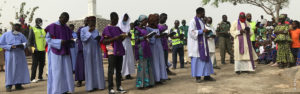
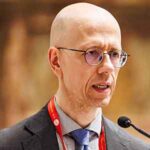
Having survived the bloodiest massacre since Islamist violence began in the West African country of Burkina Faso, people of all religions live in fear of further attacks. This was reported by Laurent Dabiré, the Catholic Bishop of Dori, to the pontifical foundation ACN International on Tuesday. In the bishop’s own words, “The people are speechless. Particularly those living in the Sahel, where the massacre occurred, are asking themselves, ‘Who will be the next target?’ The reaction of the Catholic faithful mirrors that of the rest of the country. Catholics were not the direct target. The massacre was a sweeping attack that did not differentiate by ethnicity, sex or religion,” the bishop explained.

In the early hours of Saturday morning, more than 100 people were killed during a terrorist attack on Solhan, a village located in the eastern part of the country. It is presumed that the attack was carried out by Islamist groups. According to the bishop, the exact number of casualties has yet to be determined, but the media are reporting between 100 and 170 victims. “These include four Christians,” the bishop said. He described Solhan, the site of the attack, as a vibrant Christian community. He then noted that the increasingly volatile security situation had forced many Christians to flee even before it happened. “Just like everyone else in Burkina who is being targeted by terrorism, the Christians were overcome by fear. However, as Christians, they have more reason to fear a forced imposition of Islam. Their religious freedom and even their lives are at stake,” explained the bishop.

The bishop said that the perpetrators have yet to be identified. “Who carried out the attack and for what reason has yet to be determined. However, the most plausible explanation is that it was the armed groups who have been terrorising the country since 2015. This is another of their atrocities and their way of showing their strength and getting people to talk about them.” For several years now, Islamist terrorists have been focusing their attacks on the northern and eastern parts of Burkina Faso. “Burkina has become the target. We are the neighbours of Mali and Niger, countries that are facing similar problems. The attacks follow the logic of conquest.”

According to Bishop Dabiré, there are no problems between Christians and Muslims or the other religions in Burkina. “The country is being attacked by diverse groups that use Islam for propaganda or for mobilisation. The Islam of the armed groups is not the Islam of our brothers. The Muslims of Burkina are themselves targets,” the bishop explained.
For this reason, the bishop believes that there is nothing standing in the way of a continuation or even an intensification of the interreligious dialogue between Christians and Muslims. “We have to hope that a dialogue between the religions can help solve the country’s problems. What comes to mind here is the refugee issue.” The number of persons internally displaced by Islamist terrorism is growing. “In the last two months, the numbers have risen dramatically due to the resumption of attacks with many victims,” the bishop explained.

Islamist terrorist groups began to extend their reach into Burkina Faso in 2015. According to ACN’s Religious Freedom in the World Report, the country has become one of the hotspots for militant jihadism in Africa. In the meantime, the number of internally displaced persons has grown to about one million. With about 55% of the inhabitants, the majority of the country are followers of Islam. About 24% are Christians. The rest belongs to traditional religions.
ACN has been supporting the Catholic Church in Burkina Faso by helping those who have experienced Islamist violence to return to normal life. To achieve this aim, a primary focus of its relief efforts is on projects that work to alleviate trauma.

Recommended