Bitter memories of time of terror for the priests in Zanzibar
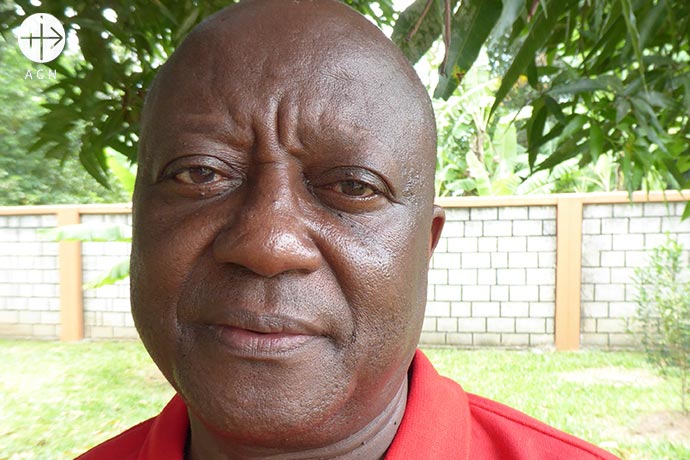
Father Damas Mfoi is a Catholic priest in the semi-autonomous archipelago of Zanzibar of the coast of Tanzania. Zanzibar is predominantly Muslim with a small Christian population. Since 2010, Father Mfoi has been a parish priest on the main island of Unguja. In 2012, the otherwise peaceful island community witnessed a series of violent attacks on religious leaders. A Muslim cleric was burned with acid in the fall of that year; a Catholic priest suffered gunshot wounds on Christmas Day 2012, and another was shot to death the following February. At the time, leaflets were distributed to incite violence, some of which bore the stamp of the radical Islamist group Uamsho. However, responsibility for the attacks has yet to be claimed or officially assigned. Father Mfoi tells Aid to the Church in Need about the time of terror:
“It was Christmas 2012, and we had planned to go for supper until we heard that Father Ambrose had been shot. Church leaders were in a state of shock, and we could no longer have our shared meal. We were frightened. We rushed to the hospital, but cautiously, as it was announced via leaflets that Church leaders would be killed, and that churches would be destroyed.
“When we arrived, Father Ambrose was still bleeding, and he couldn’t talk. The following day, he was flown to Dar es Salaam for further treatment. After that, it was our faith that kept us here. People on the mainland called us home, but as Christians committed to the Gospel, we knew from the very beginning that ours was a mission of suffering, and that our lives might be threatened. There was no running away.
“More leaflets were distributed, saying that Muslims should not allow the sale of alcohol, or the presence of churches. They were published anonymously, but today we know who they are. We didn’t know what would happen, though some said that they were just idle threats. But less than three months later, Father Evaristus Mushi was struck, and tragedy befell us.
“It was a Sunday morning at 7:15 A.M.; I was saying Mass in a small church. A non-Catholic neighbor came running in; he shouted, “Father Damas, I have something to tell you!” He told me that Father Mushi was dead, the victim of a shooting. Some man shot him that morning, when he was parked in front of his church. I drove to the other churches to say Mass; now that Father Mushi was dead, I had to carry out the mission of Christ alone.
“News of Father Mushi’s death rippled throughout the community, but that wasn’t the end of it. After we buried him and paid our last respects, a group of women came to our gates, crying. I told them, ‘Don’t cry now. Father Mushi is in heaven.’ One replied, ‘Father, she is not crying over Father Mushi. She is crying because of you.’ The assailants targeted me because I had built too many churches.
“The next morning, I escaped to the mainland, and a month later, I returned. I thought to myself, ‘There is no abandoning our mission. Jesus wouldn’t want to see us fail. There are Christians still here—why should their leaders run?’
“Upon my return, I found that the police had set up a command post within my compound, and over the next two years, they patrolled the area because of the tension that lingered. The government took good care of us, but we knew, above all, that God protected us. When I was offered a bodyguard, I refused, believing that the work of Jesus did not require a machine gun; He promised his people that he would be with us until the end of time.
“Six or seven months passed, and for a while, we thought that the worst was over, though security was still tight. But come September, a priest had acid splashed on him as he was leaving his regular café. He survived the attack but sustained major injuries.
“There is no recovering from what’s happened, and since the assailants might still be active, we aren’t completely safe. But through all these problems, we continue our interfaith work. We talk to people in the community, and we tell them that we believe God created us all and gave us the freedom to believe in whatever way we were taught. Muslims are taught about Muhammad; Christians are taught about Jesus Christ. We should all do our best to respect that and avoid mixing politics with religion.”
In 2017, Aid to the Church in Need supported the Church in Tanzania with projects totaling more than 1.7 Million Euros.

Recommended