6 months of war in Ukraine: “The Lord put us here to serve”, says Bishop of Kharkiv
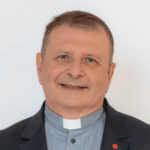
Kharkiv is a huge city, with a population of 1.7 million before the war, and now only about 20 km from the front line. War has a dramatic effect on people’s lives, and as this conflict completes its sixth month, the scale of the loss and destruction in Ukraine continues to increase. After having spoken to ACN about the general conditions in the Latin Diocese of Kharkiv-Zaporizhzhia, Bishop Pavlo Honcharuk now focuses on the ways the Church is trying to help and adapt to the new situation.
Children are the most vulnerable members of society, especially in wartime. Are there still children in Kharkiv? How is the Church trying to help them?
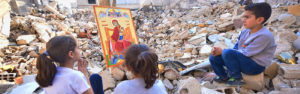
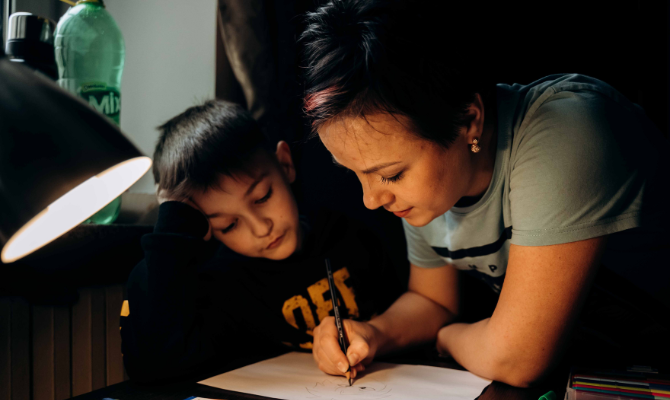
There is still a good number of children. They often stay in bomb shelters, and we try to help them. We provide toys, for example. Children experience things in a completely different way. Even if they live in basements or shelters, they run and play, they live in a parallel world. The Church helps the parents and provides hygiene products, food, and so on.
When will children be able to go back to school and students to university? What is their short-term future?
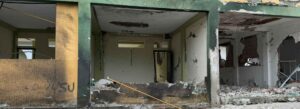
If the situation worsens there will probably be no full-time education, either for elementary school children or for students, because in Kharkiv we see a lot of targeted missile hits on school buildings. I don’t know exactly how many schools have been destroyed, but at least twenty, also many kindergartens, so it is dangerous to gather a large number of children in one place.
If anyone is still stuck in the fantasy that Russia is only bombing military facilities, they are not only mistaken, but they are also badly deluded. Hospitals, businesses, schools, universities, kindergartens and homes have been destroyed. What is the purpose of shooting at residential buildings and at markets? They also destroy villages; some are simply razed to the ground. What is the purpose of doing this?
What is pastoral work in hospitals in Kharkiv like?
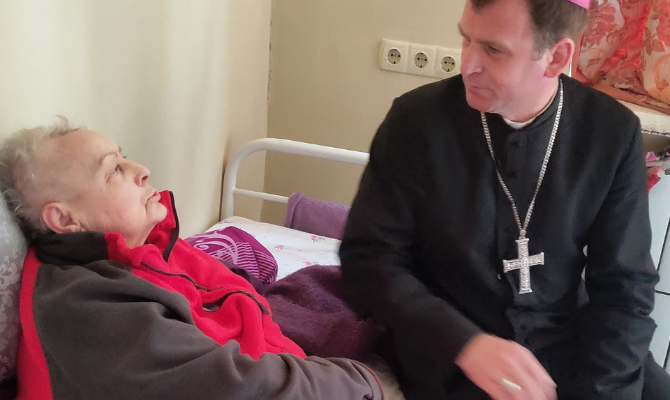
There is a military hospital where our military chaplain works, together with a priest of the Orthodox Church of Ukraine. Priests also visit the city hospitals, which also care for the wounded. One of the most difficult things for me was seeing a three-year-old child lay here, who was wounded during shelling. It is unclear whether he will survive. He is only here because someone wanted a war. Here one feels powerless. On the other hand, there is also the awareness that the Lord is sending me here to serve.
Do priests keep in touch with their parishioners who went abroad or to the west of Ukraine, where things are calmer?
Of course, priests keep in touch with those who have left to go to other places in the country, and abroad. They have created groups on social media, and there they can support, teach, and help each other. Priests who have parishioners in the occupied territories work similarly, also keeping in touch with them as much as possible. But sometimes there is no contact at all, it depends on the situation.
How does the Church try to help in situations where a family member is in captivity or has been deported?
There are prisoners of war. And sometimes I am approached by their relatives, who ask for help in contacting the other side, to somehow get them out. But I have no contact with the other side, and it remains only to listen to such a person, to support them. Many people are left in the occupied territories, and families are separated.
I met a soldier who from his position at the front line can see his home through binoculars. His wife and two children remained, under occupation. Every day he can see his wife and children from a distance, but he has no contact with them. He can’t call them. He says he would like to hug them but can’t even make a sign.
Also, there are real tragedies of people who end up in the Mariupol filtration camps, where children are separated from their mothers. If someone has something against a woman, they create suspicions about her, and she is immediately sent to a prison, and separated from her children. There are many such tragic stories, very painful, and it is not clear how priests can help.
Are people now more likely to turn to priests? What does the spiritual service of the Church look like at this time?
Yes, war breaks people’s superficial sense of stability and security. Some people volunteer because it is easier for them to deal with an emergency, but a person of faith serves because he knows in Whom he believes, and why he is helping. This attitude is a light for people who don’t know God. This is our mission, to help people, and to turn them to God. Our mission as priests and laymen is to always be ready because you never know when and what kind of person the Lord will put next to you. This war removes the veil from the deep longing for God.
In the hospital I visited a couple who had lived together for sixty years, we prayed together, and afterwards the husband said it was his first prayer in his life, and it filled him with joy. Three days later I learned he’d died. His wife told me that in all those years she had never seen him so happy. She was very grateful. The man was in disbelief all his life but three days before his death, he met God.

Is there cooperation with other Christian denominations?
Not in the sense that we do projects together, but we talk, and we share experiences. For example, the city district of Kholodnaya Gora (which means Cold Hill) where Bishop Mitrofan, of the Ukrainian Orthodox Church lives, was very exposed to missiles. When he came to visit, we invited him to stay with us, and he lived with us in the curia for almost four months. We travelled together, visited the sick in the hospital, people in the subway when it functioned as a shelter, and so on, he in his bishop’s clothes and I in mine. And that was a testimony.
We already have some contact with Protestant churches and the Jewish community, as well as with different volunteers or entrepreneurs.
Do you have a message for ACN benefactors who are helping Ukraine and your diocese?
I sincerely thank you! Let the words of Jesus Christ be your inspiration: “Whatever you did for one of my little ones, you did for me”. Let these verses strengthen you when fatigue sets in. Know that Christ is here, and he needs your help. Christ is in these suffering people, and they need your help. By helping them, one day you will hear from Him: “Thank you for helping me, because then I was hungry, cold, and you helped me. Enter the Kingdom of Heaven!” May God bless you!

Recommended