Holy Land increasingly emptied of Christians: “We dream of reaching even 5%, but we are far from that”
In an address to representatives of Aid to the Church in Need, Benedictine Abbot Nikodemus Schnabel offered a stark and personal account of the fragile and rapidly shrinking Christian presence in the Holy Land.
The image of Jerusalem as a vibrant heart of Christianity contrasts sharply with the reality experienced today by the faithful. In a powerful address to the national directors and representatives of Aid to the Church in Need (ACN), Benedictine Abbot Nikodemus Schnabel offered a stark portrait of the situation of Christians in the region as a “tiny” minority, marked by war, economic hardship, uncertainty and a steady exodus.
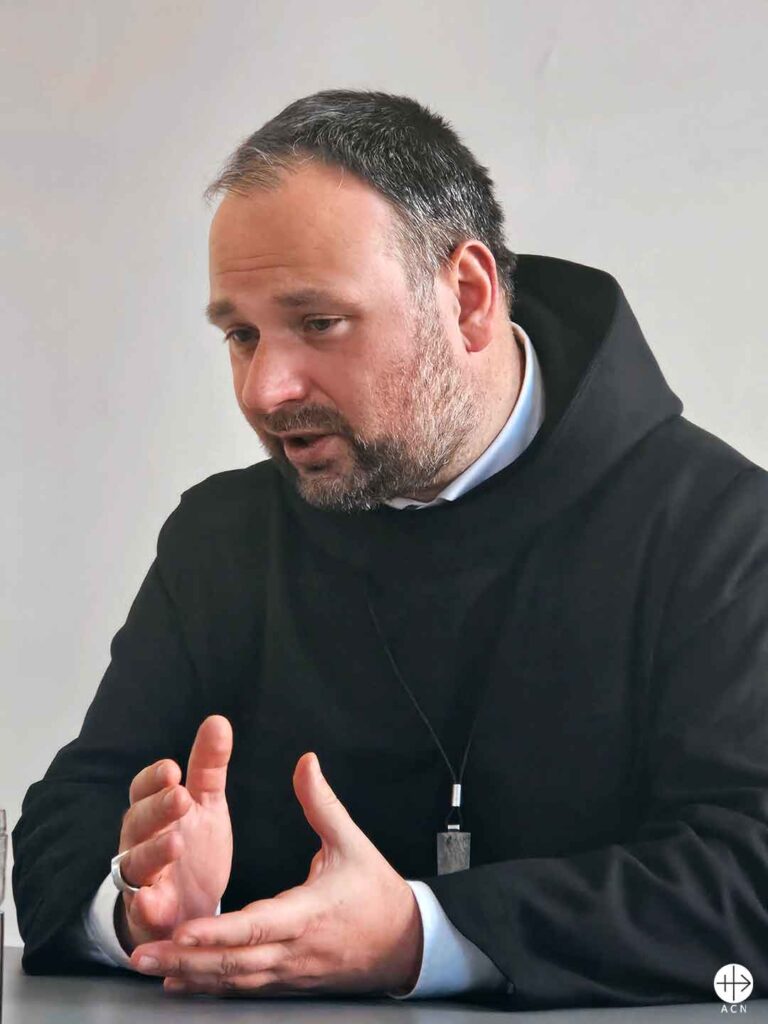
“If you think this is an Eldorado of Christianity, the reality is different,” he said. “All Christians together are less than 2%. For us, dreaming of reaching 5% or 6% would already be a lot. If you think of the most secularised regions in Europe – like the Czech Republic or the former East Germany – even there Christians are many times more numerous than here,” he said.
The abbot, who is responsible for monasteries linked to key Paschal moments – the Cenacle, traditionally associated with the Last Supper and Pentecost, and Tabgha, on the Sea of Galilee, where the Risen Christ is believed to have appeared – began from the mystery of Easter itself to open a window into “his world”: that of a local Church marked by extraordinary richness but also extreme fragility.
A colourful, but almost invisible Church
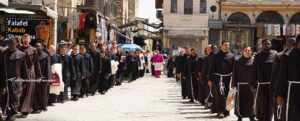
Abbot Nikodemus recalled that the Christian reality of Jerusalem is profoundly plural. There are 13 historic Churches, six of which are Catholic and seven non-Catholic. “It is very, very colourful,” he said, “with many different Churches and traditions.” Yet this richness can be misleading: behind the historical and liturgical diversity lies a very small community.
The bishops’ conference of this small region – covering Cyprus, Israel, Palestine and Jordan – has 24 members, reflecting a unique ecclesial complexity. And yet, the real Christian presence continues to decline. “The paradox is clear,” he explained. “The place where the most important events of our faith occurred risks losing its indigenous Christians.”
“My fear is that the Holy Land could become a kind of ‘Christian Disneyland’,” he warned. “The holy places will remain, with monks and priests. But there may be no Christian families, no young Christians, no ordinary Christian life.”
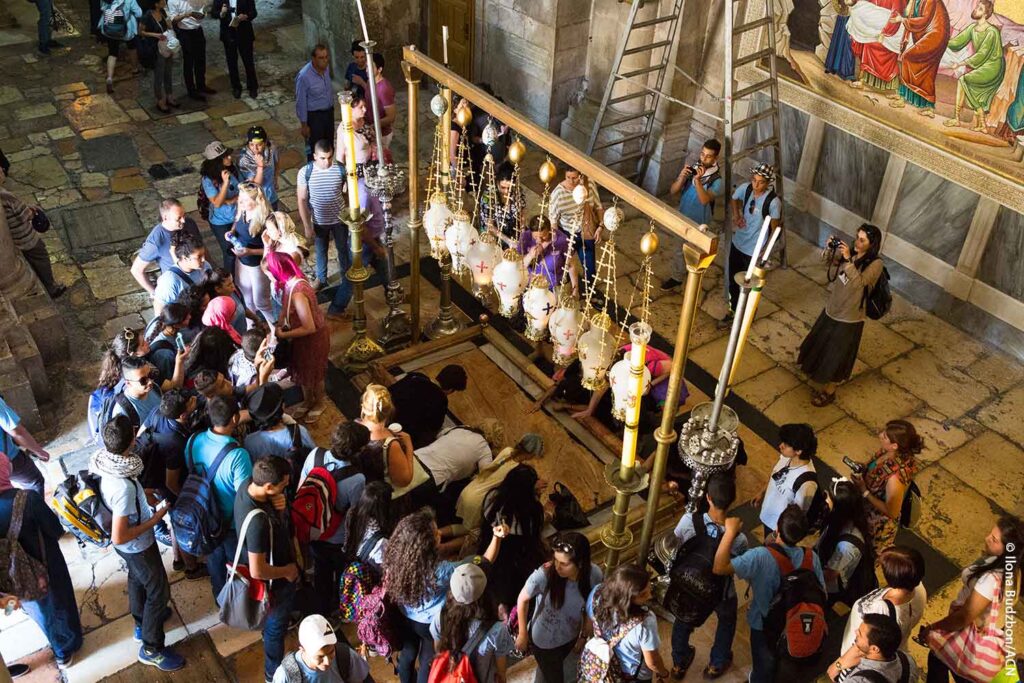
Palestinian Christians, migrants and Hebrew-speaking Catholics
Focusing on the Latin Church, an even smaller reality within this mosaic, the abbot described three main groups.
The first consists of Arabic-speaking Palestinian Catholics, present in the region for centuries. Within this group are those living in Israel with full citizenship, residents of Jerusalem without political rights, Christians in the West Bank facing restrictions on movement, and the small community in Gaza, which he described as particularly vulnerable, living under a ‘double occupation’: the external pressure of war and blockade, and the internal oppression of the Hamas regime.
The second group is that of Hebrew-speaking Catholics, a small but growing community, often formed by mixed families and integrated into Israeli society. “It is a new phenomenon,” he said, raising the question of what it means to be both Israeli and Catholic.
The third group, by far the largest, is made up of migrants and asylum seekers, more than 100,000 Catholics, according to his estimates. Many come from the Philippines, India or Sri Lanka, as well as from Africa, Eastern Europe and Latin America, and work mainly in caregiving, construction and agriculture.
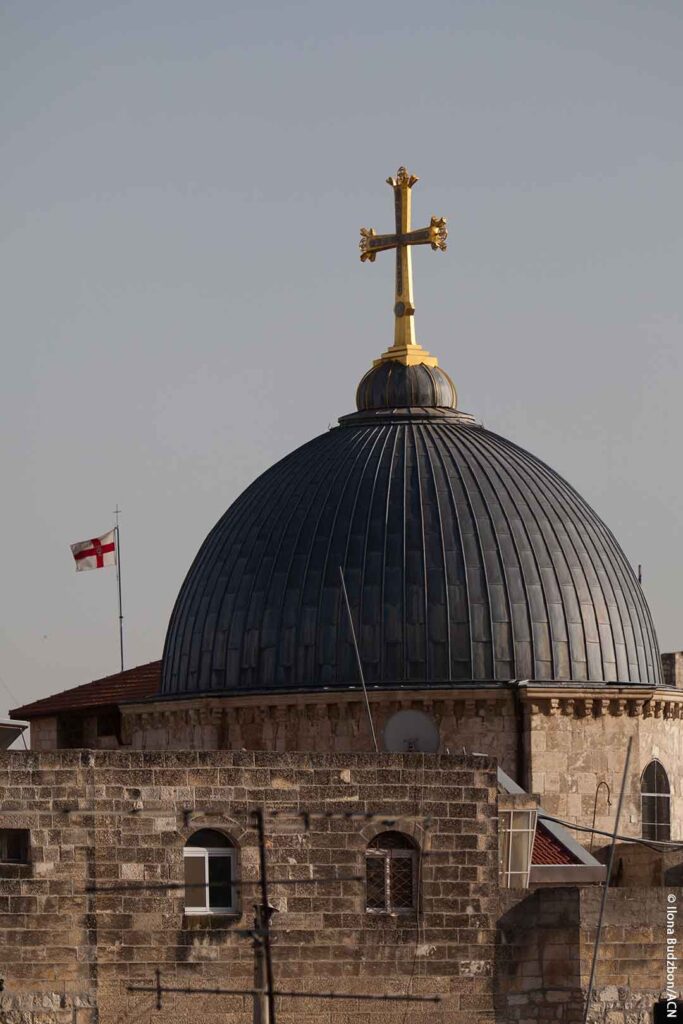
“They are, in many ways, the most vulnerable,” he said, describing situations he referred to as “a form of modern slavery”.
Abbot Nikodemus denounced the inhumane conditions faced by many migrant Christian workers in Israel, who have their passports confiscated and have very limited freedom to change employers, suffer family separation, and live under a legal framework that, in practice, penalises motherhood among some foreign workers.
“In the eyes of the system, the most ‘criminal’ act can be to say yes to life,” he said, referring to women who choose not to abort and as a result risk falling into irregular situations together with their children.
For the abbot, this is one of the hidden wounds of the Church in the Holy Land: A Church sustained in large part by invisible men and women who care, work and pray, yet often lack basic security.
A community hit by war and the collapse of tourism
If dignity is the central issue for migrants, for local Christians the main concern is economic survival. “About 60% of Arabic-speaking Christians depend on tourism,” he explained. “And the last good year was 2019.” Since then, successive crises have devastated the sector. The pandemic, followed by conflict and instability, has drastically reduced pilgrimages, leaving many families without income.
“This is the biggest challenge,” he said to the ACN directors and representatives. “People leave because they don’t see a future.” When asked what can be done to help Christian families remain in the Holy Land, Schnabel pointed to two priorities: housing and job creation.
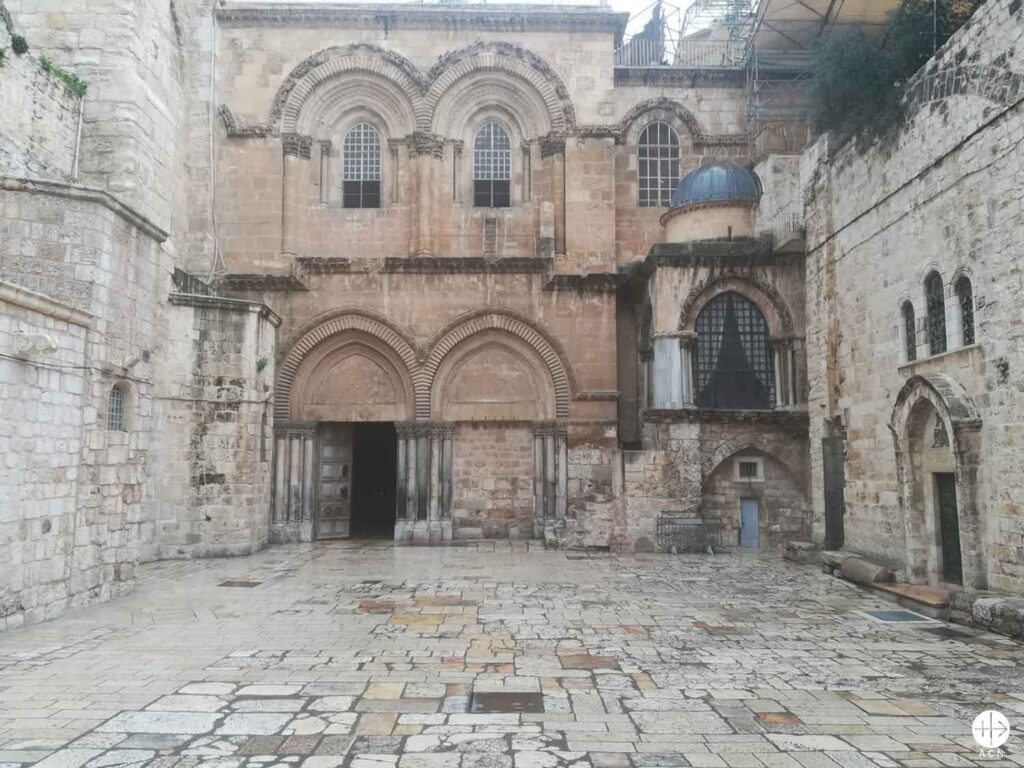
Without a concrete future, he warned, communities will continue to disappear. He also noted a painful perception among many Christians: that they are not considered essential in Israeli or Palestinian national narratives.
“They often have the feeling that it doesn’t matter whether they are there or not,” he suggested.
His final appeal was both spiritual and existential: “Pray that there is a future for Christians here.”
A Church that refuses to choose sides
In a context of increasing polarisation, the abbot insisted on the position of the local Church: “We are neither pro-Israel nor pro-Palestine, but pro-human.” This stance, he explained, reflects the concrete reality of a Church present “on all sides”: with faithful in Israel, in the West Bank and in Gaza, as well as among migrant communities.
Recalling the events of 7 October 2023, Abbot Nikodemus spoke of Catholic migrant caregivers who were killed after refusing to abandon the elderly people entrusted to them, reflecting a profoundly Christian attitude. “They refused to flee,” he said. “They stayed with those who had been entrusted to them.”
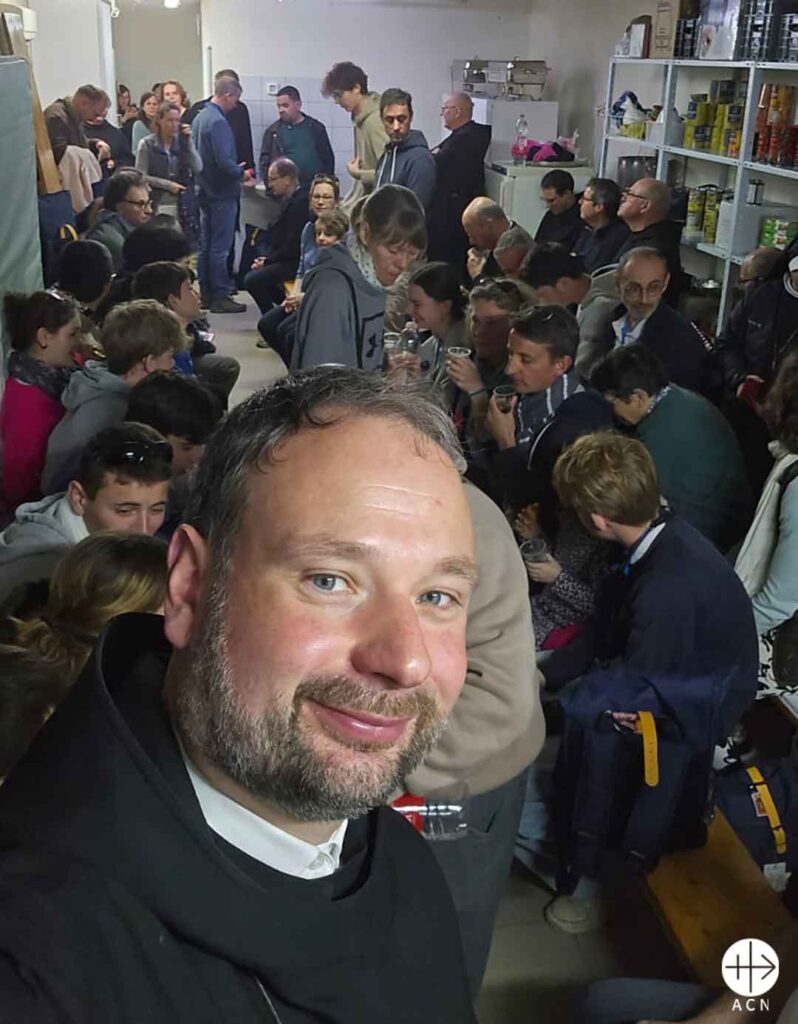
He also recalled the funeral Mass that followed, where the prayer of the faithful included a petition first for those suffering in Gaza, and then for the conversion of those responsible for the violence.
“For me, that was extraordinary,” he said. “To pray for your enemies – this is what it means to be Christian here. They understood more about the Gospel than many of us,” he added.
Attacks against Christians and denunciation of extremism
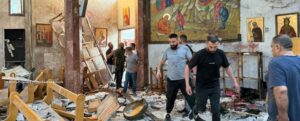
In one of the most forceful parts of his intervention, the abbot also denounced the growing hostility towards Christians from extremist Jewish groups, including incidents of spitting in the streets, vandalism, arson attacks, desecration and hate graffiti. This phenomenon can no longer be considered marginal, he believes.
Schnabel pointed directly to ultranationalist religious sectors and strongly criticised the presence in the Israeli government of figures who, he said, have legitimised or enabled such attitudes. At the same time, he stressed that this does not reflect a general attitude among all Israeli Jews and recalled that there are also Jewish groups who actively defend Christian communities and denounce these abuses.
His analysis was equally critical of what is known as “Christian Zionism”, which he described as incompatible with the Gospel when it is used to justify violence, ignore the suffering of Palestinians, or remain silent about attacks against Christian communities.
The Holy Land cannot become a museum without believers
The abbot’s testimony leaves a powerful image: a Church almost invisible in numbers, yet immense in its spiritual and social significance. A Church that sustains schools, hospitals and communities far beyond its demographic weight, and that lives across languages, rites and borders.
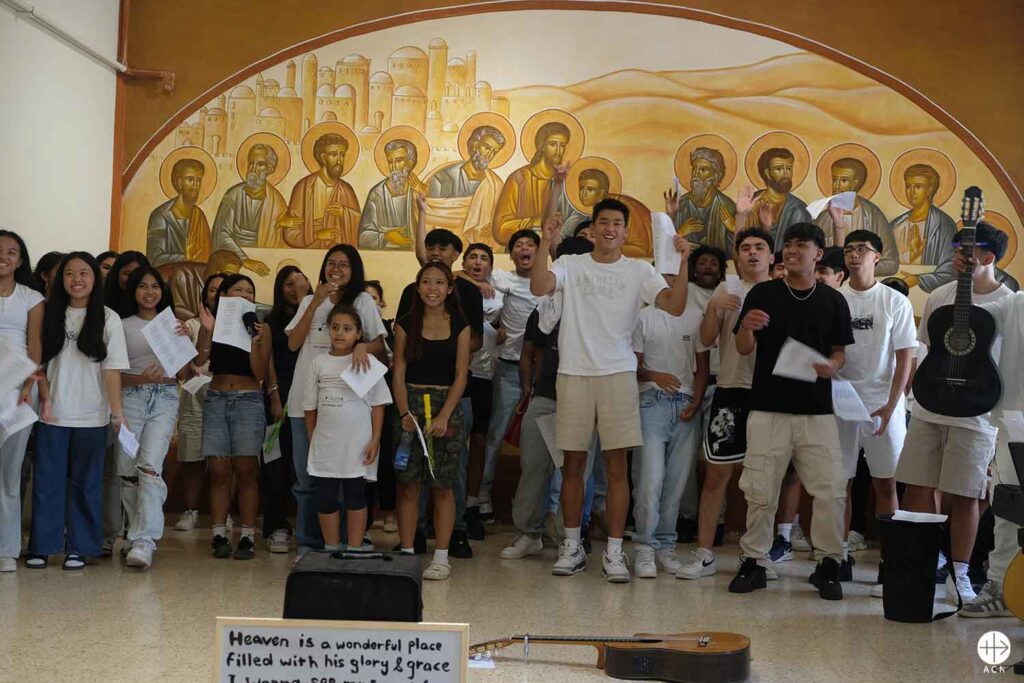
For Aid to the Church in Need, his testimony is a call not to become accustomed to the silent disappearance of Christians from the Holy Land. Because without living Christian communities in Jerusalem, Bethlehem or Nazareth, the holy places risk becoming empty symbols – heritage without witnesses.
And because, as the abbot himself recalled: “There is no Annunciation without Nazareth, no Christmas without Bethlehem, no Easter without Jerusalem.”
Recommended