Religious Freedom: A global victim of authoritarianism, extremism and war
“Religious freedom is a human right, not a privilege”
The international pontifical foundation Aid to the Church in Need (ACN) launched its biennial report “Religious Freedom in the World 2025” today, 21 October 2025, offering a global overview of the state of this fundamental right. The study, covering the period from January 2023 to December 2024, warns of a worrying decline with two-thirds of humanity — more than 5.4 billion people — living in countries without full religious freedom.
The report analyses the situation in 196 countries and documents serious violations of this right in 62 of them. Of these, 24 are classified as countries of “persecution” and 38 as “discrimination”. Only two nations, Kazakhstan and Sri Lanka, showed improvements compared with the previous edition.
“The right to freedom of thought, conscience and religion — protected under Article 18 of the Universal Declaration of Human Rights — is not only under pressure, in many countries it is disappearing,” warned Regina Lynch, Executive President of ACN International. Lynch also highlighted during his speech that this year marks the 25th anniversary of ACN’s first report.
Authoritarianism: The greatest global threat
The report identifies authoritarianism as the principal driver of religious repression. In 19 of the 24 countries in the persecution category, and in 33 of the 38 countries with discrimination, governments apply systematic strategies to control or silence religious life. In China, Iran, Eritrea and Nicaragua, the authorities employ mass surveillance technologies, digital censorship, restrictive legislation and arbitrary detentions to suppress independent religious communities.
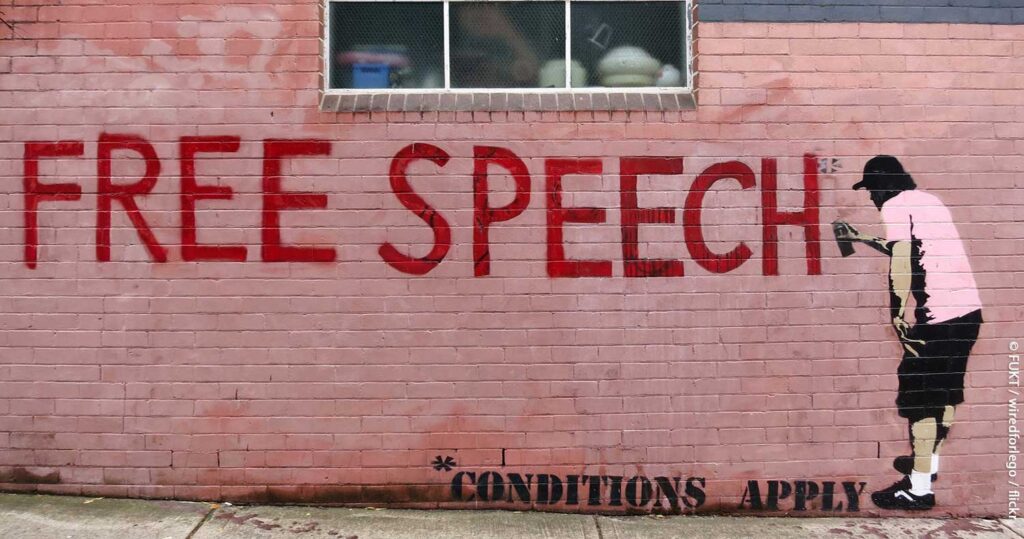
“The control of faith has become a tool of political power”, states the executive summary, which denounces an increasingly sophisticated “bureaucratisation of religious repression.”
The advance of jihadism and religious nationalism
The report warns that Islamist extremism continues to expand, particularly across Africa and Asia. In 15 countries, it is the main cause of persecution, and in another 10, it contributes to discrimination. The Sahel has become the epicenter of jihadist violence with groups such as Islamic State – Sahel Province (ISSP) and JNIM causing the deaths of hundreds of thousands, the displacement of millions and the destruction of hundreds of Christian churches and schools.

Ethno-religious nationalism, meanwhile, drives the repression of minorities in parts of Asia. In India and Myanmar, Christian and Muslim communities suffer from aggression and legal exclusion. In India, the report defines the situation as “hybrid persecution” — a combination of discriminatory laws and violence carried out by civilians but encouraged by political rhetoric.
War, forced migration and organised crime
The decline in religious freedom has also been aggravated by armed conflicts affecting countries such as Myanmar, Ukraine, Russia, Israel and Palestine.
Wars and religious-based violence have triggered a silent displacement crisis. In Nigeria, attacks by armed groups linked to radicalised Fulani herders have left thousands dead and entire communities uprooted. In the Sahel — especially in Burkina Faso, Niger and Mali — whole villages have been destroyed by Islamist militias. In Sudan, civil war has wiped centuries-old Christian communities off the map.

Organised crime has also emerged as a new agent of persecution. In Mexico and Haiti, armed groups murder or kidnap religious leaders and extort parishes to assert territorial control.
The West is not immune
The erosion of religious freedom also extends to Europe and North America. In 2023, France recorded nearly 1,000 attacks on churches; in Greece, more than 600 acts of vandalism; and similar spikes were observed in Spain, Italy, and the United States including desecrations of places of worship, physical assaults on clergy, and disruptions of religious services. According to ACN, these acts reflect a growing climate of ideological hostility towards religion.

The report also documents a dramatic rise in anti-Semitic and anti-Muslim acts following the 7 October 2023 attacks and the war in Gaza. In France, anti-Semitic incidents rose by 1,000 percent, while hate crimes against Muslims increased by 29 percent. In Germany, 4,369 incidents related to the conflict were recorded in 2023 — compared with only 61 the previous year.
A global petition for religious freedom
For the first time in its history, Aid to the Church in Need launched during the event a global petition calling on governments and international organisations to ensure the effective protection of Article 18 of the Universal Declaration of Human Rights, which guarantees every person the right to freedom of thought, conscience and religion.
“Why this petition? Because the right to believe — or to live according to one’s convictions — is in decline in 62 countries, affecting billions of people. Over the past 25 years, ACN has documented how religious persecution destroys communities, fuels conflict and forces millions to flee. Now, more than ever, religious freedom must be defended and protected worldwide,” said Lynch, inviting everyone to support the petition, while mentioning the slogan of this initiative: “Religious freedom is a human right, not a privilege”.

Resilience and hope
Despite this bleak outlook, the ACN report also highlights the resilience of religious communities which, even under persecution, continue to provide humanitarian aid, education and hope. In Mozambique and Burkina Faso, interreligious projects have shown that faith can be a driving force for reconciliation and social cohesion.
“Religious freedom is the thermometer for all other human rights. Its decline signals a wider collapse of fundamental freedoms,” Lynch concluded.

Recommended