Lebanon: “A protest does not unite a divided country”
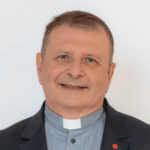
Zahles Greek-Catholic Archbishop Issam John Darwish on the Corona pandemic and its consequences on Lebanon and its people
Your Grace, Lebanon was already experiencing significant hardship due to an unprecedented economic crisis before Corona. Has the virus brought the country to its knees?
Since the Corona pandemic has impacted the economy of great countries, we have to expect a more significant impact on Lebanon since this country has been suffering the burdens of indebtedness and corruption, but there are genuine attempts by the new government to prevent bringing the country into its knees.
Lebanon is a multi-religious country. Would you say the Coronavirus has strengthened that sense of trans-religious solidarity and unity?
Trans-religious consensus is much deeper than being a result of the pandemic or the economic crisis. Consensus or solidarity is a culture that needs to be embedded, and an ethical conviction that needs to adopted. A protest does not unite a divided country. What is likely to unite it is a unifying education and a ruling national role model. Otherwise, Lebanon will remain a field of frustrating experiments and failing statesmanship.
What is the Catholic Church doing to help people affected by the Coronavirus pandemic?
Patriarch Absi asked all the bishops to put the agricultural lands owned by their dioceses at the disposal of the parishioners to cultivate them. In our diocese, we offered our lands this year to the Christians of our diocese to cultivate them, we also started equipping Tel Chiha hospital with the equipment necessary to face the COVID-19 and collaborated with the American University Hospital to train the staff of the hospital in order to be ready to face the pandemic and finally we increased the distribution of hygiene kits to help the people have better precaution.

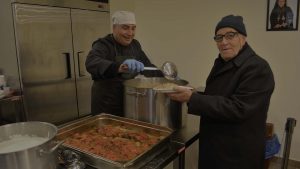
ACN supports the project Saint John the merciful table that provides meals for the needy. Due to the Coronavirus pandemic the restaurant was closed and food directly delivered. Has the restaurant reopened? And has the number of recipients of aid increased?
Saint John the merciful table has never stopped providing free hot meals to the needy people; due to the covid-19 pandemic we directly put in place a plan that allows the people to get their meals without risking their safety. So the people were able to come and take away their meals every day and safety measures were adopted. And this procedure is continuing. The number of recipients has increased and is still increasing daily and it is now providing more 1,400 meals every day.
Lebanon is hosting per capita the highest number of refugees in the world, especially from Syria. Their situation was dire before the pandemic. How is it now? And are Lebanese starting to question their solidarity towards refugees?
Yes, the Lebanese citizens have started to question their solidarity towards refugees. The majority of Lebanese individuals were reluctant to accept the volume of refugees at the start of the Syrian crisis, but the entry of refugees imposed itself on the Lebanese government at certain times, but this situation is becoming more and more dire because the number of refugees proved to be very critical and during the pandemic the huge number of undisciplined refugees is threatening the solidarity as well as the ability of the host country.
How is your diocese helping Syrian victims of the pandemic?
Until now, in Zahle and the nearby region there are no victims. So, the Syrian and the Lebanese people living in Zahle are still safe. But we are taking the necessary precautions to be prepared for any new cases especially by equipping the hospital and providing training to the staff.
From a pastoral point of view: What is the biggest lesson the pandemic has taught the church?
I think that the lesson differs from one church to another, but I tend to believe that the Lord’s providence is reminding the creation of His commandments and His everlasting love and mercy. Mankind is also called upon to reconsider the significant damage industry and weaponry is causing the natural order. We ask God to purify our faith and give humankind the opportunity of repentance so He may lift the threat of this pandemic forever.
Would you say it has brought Christians closer to the church?
The believers were and still are close to the Church. They always asked us to reopen the churches. Whenever we were praying in the church, and the faithful were not allowed to enter, some of them stayed outside the door and prayed with us. They believe that Holy Communion protects them.
by Oliver Maksan

Recommended