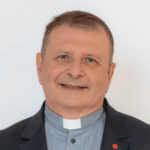
Bishop describes fleeing masses in northern Mozambique: “They carry only what they can. Hunger, thirst and disease will soon follow”
The Bishop of Pemba says the situation caused by the jihadist insurgency is at its worst point, but fears that worse may still be to come.
Speaking to the pontifical foundation Aid to the Church in Need (ACN), Bishop António Juliasse of the Diocese of Pemba, in northern Mozambique, paints a frightening picture of the situation in the region caused by the insurgency led by a group affiliated with the Islamic State and reports that terrorists have raided at least 12 communities, causing the population to flee en masse to the larger cities, which offer relative safety.

“Around a dozen villages, some of them heavily populated, were targeted with the destruction of houses and institutions. In those villages all the Christian chapels were destroyed. The high point until now was the attack on Mazeze, in the administrative posts of the district of Chiúre, where many state owned public and social infrastructures, were destroyed. Our mission, which provided so much support in the region was also destroyed”, said the bishop.
For now, the main concern has been to try and find shelter and support for the internally displaced. “They are fleeing from villages that have been reduced to ashes, and those whose villages might be next in line are also running. The only thing they are sure of is the starting point… They are searching for a safe space; I don’t know where they will find it. Perhaps they will have to settle for the least unsafe.”
But the bishop fears that the worst might still be to come. “They carry only what they can, in a bundle on their heads, or on the family bicycle, that’s all they have left. Hunger, thirst and disease will soon follow”, the bishop warns, giving the sad example of Tina, the niece of a diocesan worker. “She also ran, all she brought with here was her newborn baby. Afflicted by the heat and the dust, she drank some water that she came across, but she got diarrhoea and started vomiting, and she died. The baby was left without a mother.”
Pope’s healing words
Christians are a minority in mostly Muslim northern Mozambique, but the two communities have historically gotten along. In 2017, however, an insurgency began which first targeted mostly civilian and state-owned institutions, but has since produced some cases of anti-Christian persecution, resulting, for example, in the selective killing of Christian villagers and the murder of an Italian nun. The most recent figures available, which are clearly outdated, speak of over one million internally displaced, and five thousand killed.
The goal of the terrorists is not entirely clear, but as their methods become more brutal, and their reach increases, Bishop António Juliasse says the greatest danger for the population at the moment is inaction. “Their greatest risk is to become forgotten faces, drowned out by the other wars in the world. We cannot just sit by and do nothing.”

The Church has been active in trying to mediate solutions for the conflict, and standing by the victims. Bishop António has asked all missionaries to accompany the populations as they flee in search of safety, and to cater to their needs.
The bishop is also very grateful to Pope Francis, who . “His words had a healing effect for us and gave immediate relief and comfort. We accept his invitation to pray for the end of all wars, everywhere”.
ACN has several projects in northern Mozambique, including the provision of pastoral, psychological and social support to the populations that have been affected by terrorism, but also aid in the form of construction material to build dozens of houses and community centres, as well as the purchasing of vehicles for missionaries working more closely with the displaced.
By Filipe d’Avillez.

Recommended