Christian persecution worsens in much of the world, according to new ACN report
Conflict and persecution are displacing Christian communities in parts of Africa and Asia, as authoritarian repression and religious nationalism increase pressure elsewhere.
The report Persecuted and Forgotten? A Report on Christians oppressed for their Faith 2024–26 has found that conditions for Christians worsened in 55 percent of the 18 countries examined. None of the countries assessed recorded an overall improvement.
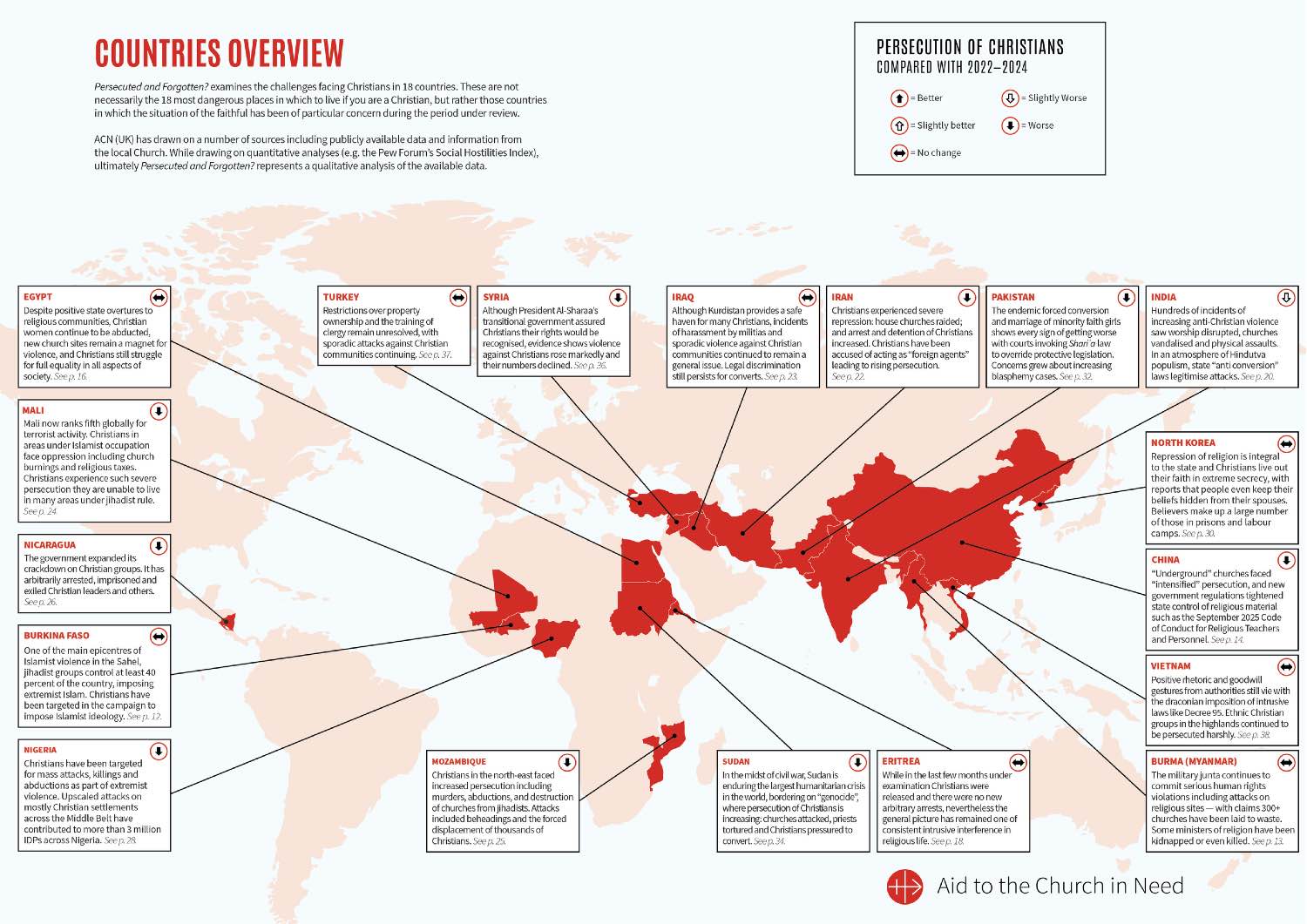
Over the past two years persecution and oppression of Christians worsened due to extremist violence, authoritarian governments and religious nationalism, all of which are placing increasing pressure on Christian communities, according to the new report published by the international pontifical foundation Aid to the Church in Need (ACN).
The study, which covers the period from August 2024 to June 2026, examines countries where religious freedom violations affecting Christians are considered particularly concerning. In many cases, the report found that persecution had intensified in specific regions, rather than at a national level.
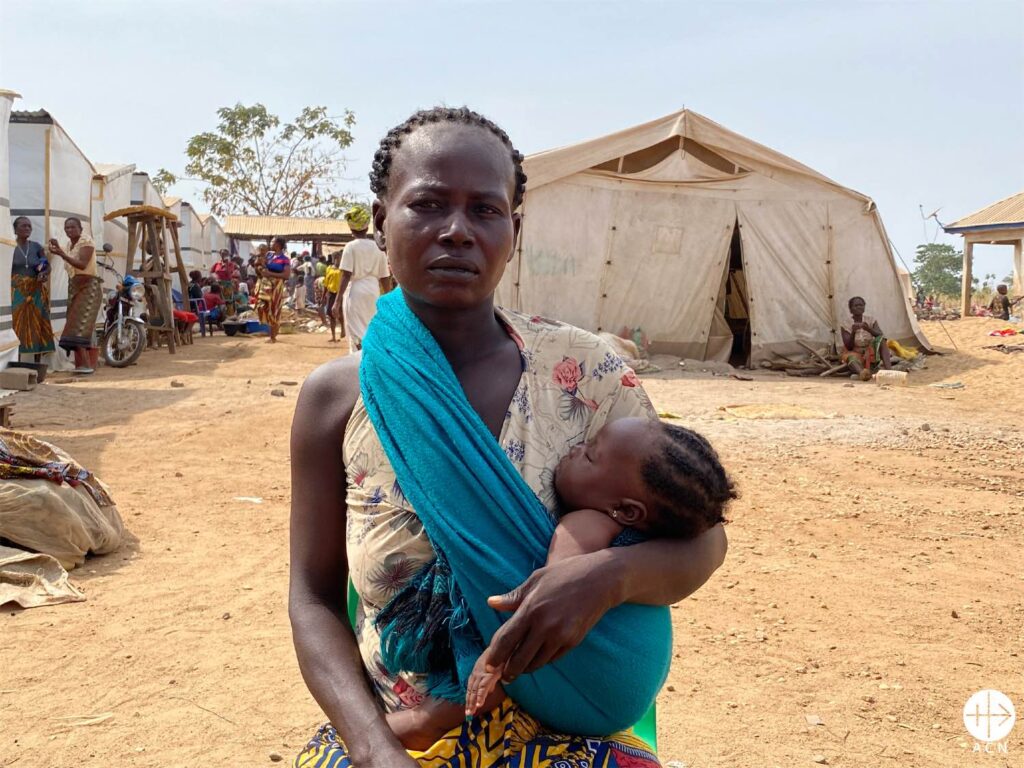
The report also identifies displacement as a major concern, with Christians forming part of a wider exodus of people driven from their homes by conflicts in Africa and Asia, some of it religiously motivated. In Nigeria alone, millions of Christians are among the internally displaced people, while persistent extremist violence across parts of sub-Saharan Africa is raising concerns that displacement could lead to lasting changes in the religious composition of affected regions.
According to the latest figures provided by ACN, 413 million Christians live in countries where serious violations of religious freedom occur, and around 220 million Christians worldwide are directly exposed to persecution.
Some of the serious violations are in sub-Saharan Africa, where Islamist militant groups have expanded their reach into large areas of the continent. Six of the 10 countries most affected by terrorism in the 2026 Global Terrorism Index are in Africa, according to data cited in the report.
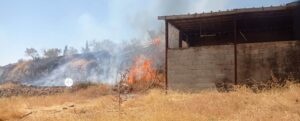
In northern Mozambique, where an Islamist insurgency has devastated communities in Cabo Delgado since 2017, reports cited by ACN indicate that around 1,000 Christians have been killed. The attacks have included beheadings, kidnappings and the destruction of churches and homes.
In Burkina Faso and Mali, where the report indicates that Islamist groups control or operate in much of the country, some Christian communities have been forced to abide by Islamic dress and social codes, while others have suffered killings and displacement.
Elsewhere, the pressure on Christians takes a different form. In Iran, arrests of Christians nearly doubled in a 12-month period, according to the report.
And in Nicaragua, the government’s confrontation with the Catholic Church has continued leading to the arrest and exile of clerics, restrictions on ordinations and the seizure of Church institutions. Authorities have also prevented people carrying Bibles from entering the country.
A third pattern identified by the study is the growing influence of religious nationalism, especially in some parts of Asia.
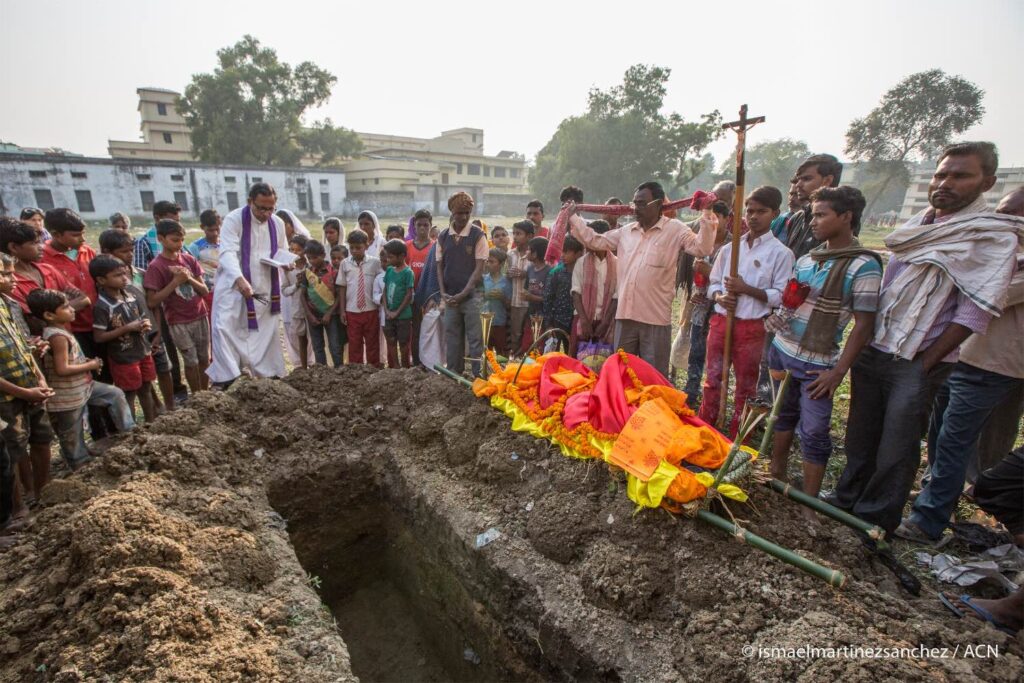
More than 700 incidents of anti-Christian violence in 2025 were recorded in India. The report links the increase to a rise in social hostility, as well as the expansion of so-called anti-conversion laws which, according to Christian organisations, are increasingly being used to repress minority communities.
The report cautions against attributing all this violence to religion alone. Ethnicity, political instability, poverty, and competition for land and other resources often overlap with religious identity. But ACN argues that the religious dimension is also often underestimated, especially outside the affected countries.
The report combines analysis at the national and regional levels with case studies and testimonies collected from Christian communities affected by violence and discrimination. Among them is Solomon Ako, a 33-year-old Christian from northern Nigeria who was abducted when militants attacked his village. His captors demanded that the hostages convert and beat them when they refused: “They whipped us with whips. They chained our legs,” he recalled.
For ACN, these individual accounts are central to the report’s findings: Behind the broader patterns of extremism, authoritarianism and nationalism, there are communities facing attacks and, increasingly, mass exodus from their homeland.

Recommended