Bamenda, Cameroon: A catechism to teach peace after ten years of violence
Archbishop Andrew Nkea Fuanya, of Bamenda, is preparing a catechism consisting of one hundred questions and answers inspired by Pope Leo XIV’s message of peace. With the support of Aid to the Church in Need (ACN), he hopes to print and distribute it widely among the younger generations of a region scarred by a decade of conflict.

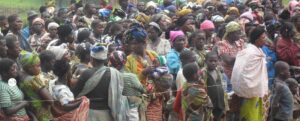
Cameroon is a very young country: around 60 percent of its population is under the age of 25. But in the country’s English-speaking regions, many of these young people have grown up amid violence that has persisted since 2016. The so-called Anglophone Crisis pits separatist groups against the government, with the civilian population caught in the middle.
“During these ten years of suffering,” explains Archbishop Andrew Nkea Fuanya, of Bamenda, “our young people have grown up surrounded by violence.” According to the figures available to him, between 8,000 and 10,000 people have been killed during the conflict, though the actual number is probably higher, and between 800,000 and one million people have been forced to flee their homes.
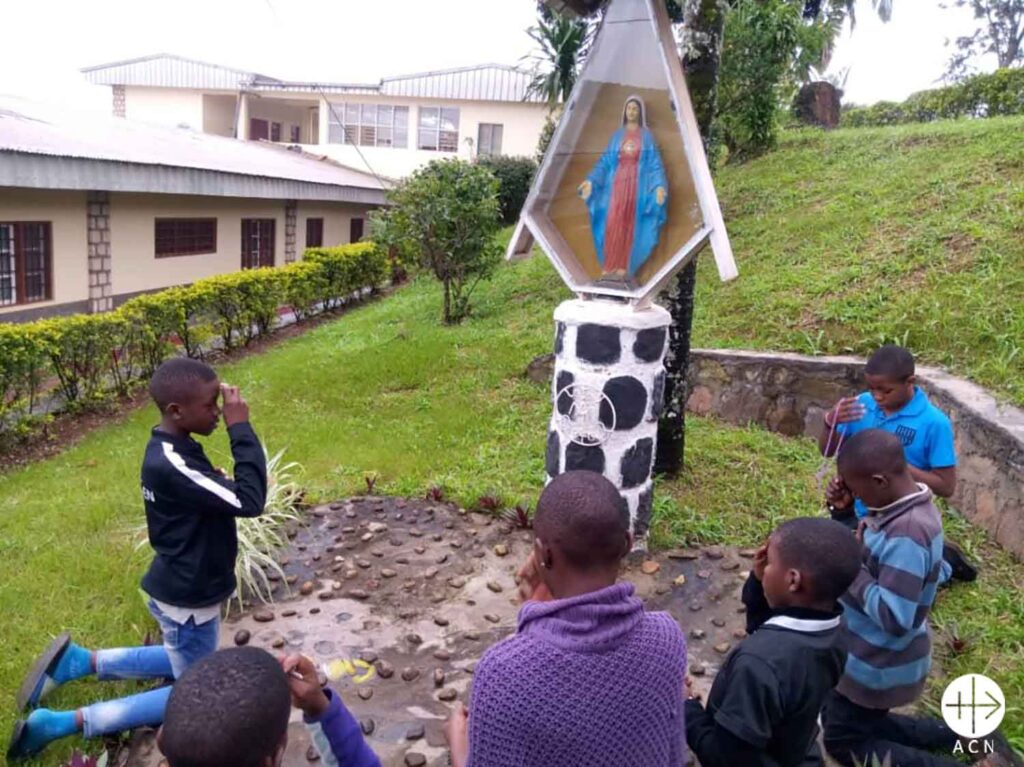
The consequences have been especially severe for children. For approximately five years, many were unable to attend school. When some schools eventually reopened, some of the children had already become too old to return to primary education.
“The war has created a new generation deeply marked by conflict,” says the archbishop.
When violence reaches the communities
The crisis has also directly affected the Church. Priests and even bishops have been kidnapped by separatist groups. In one of the areas most severely affected within the archdiocese, kidnappings became so frequent that Archbishop Nkea announced he would close the parishes and withdraw priests and religious until they could safely resume their ministry.
But there was something that made the situation even more painful. According to the archbishop, those responsible for the kidnappings were not outsiders.
“They were young people from the community itself. Many of their parents were Christians, and some of them also considered themselves Christians. They could attend Mass on Sunday and shortly afterwards kidnap a priest,” he recalls.

Faced with the possibility that some members of the population might respond with violence, Archbishop Nkea was unequivocal: “We are not going to fight anyone.”
The Church’s response would not be violence, but rather the temporary withdrawal of its priests and the closure of parishes.
It was then that the mothers themselves began to intervene. They spoke to their sons and warned them about the consequences of losing the Church’s presence: “We cannot live without Mass”; “If the bishop closes the Church hospitals, where will we go when we are sick?”
Gradually, the whole community came to understand what was at stake, and local residents themselves took responsibility for negotiating the release of the priests, since they did not want to lose their parishes, schools, or hospitals. Thanks to pressure from the local population, the priests were freed.
For Archbishop Nkea, the events of the past decade have left profound scars on young people.
“They have witnessed killings. They have witnessed kidnappings. They have seen respect for human life and human dignity decline,” he says.
The archbishop believes that, in the face of this reality, it is necessary to “start again.” And that new beginning must start with children: “We want to build a new culture. A culture based on respect for the human person, the value of life, reconciliation, and peace.”
A catechism to sow peace
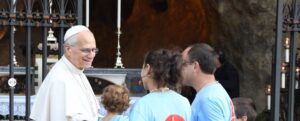
In this context, the visit of Pope Leo XIV took on special significance for the people of Bamenda and the other English-speaking regions. Archbishop Nkea describes those years as a period in which his people “walked in darkness” and sees the Holy Father’s visit as a sign of hope after a decade of suffering.

During his visit to Bamenda, the Pope left, in the archbishop’s words, “a very powerful message of peace.”
Archbishop Nkea did not want that message to remain merely a memory. From this desire emerged a concrete initiative: a catechism on peace composed of one hundred questions and answers inspired by the Holy Father’s words.
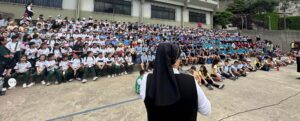
The project is not intended solely for Catholics. Catholic schools in the archdiocese are attended by Christians, Muslims, and young people belonging to traditional religions. For this reason, the catechism will not focus on doctrinal issues but rather on values which, according to the archbishop, can help society as a whole: respect for human dignity, the value of life, peaceful coexistence, and forgiveness.

Around 15,000 students currently attend Catholic schools in the archdiocese, and the archbishop hopes that all of them will benefit from the project.
“It will be a text based on the Holy Father’s message of peace. This catechism will not be intended only for Catholics. We believe it is a concrete way of sowing peace among the younger generations,” Archbishop Nkea explains.
After ten years during which an entire generation has grown up witnessing killings, kidnappings, and a decline in respect for life and human dignity, the Church in Bamenda wants to begin, from childhood onwards, to cultivate a culture of respect, reconciliation, and peace. With the support of ACN, Archbishop Nkea hopes to print and distribute the catechism widely. His wish is that children will be able to begin studying it “from a very young age.”

Recommended