Gaza: Church sounds the alarm for a population at the end of its strength
Without heating and with insufficient electricity, Gaza is sinking into extreme hardship as winter approaches.
“The overall situation in Gaza is becoming more terrible and unliveable every day. Words are no longer enough to describe it,” Father Gabriel Romanelli, parish priest of the only Catholic parish in the Palestinian enclave, told Aid to the Church in Need (ACN).
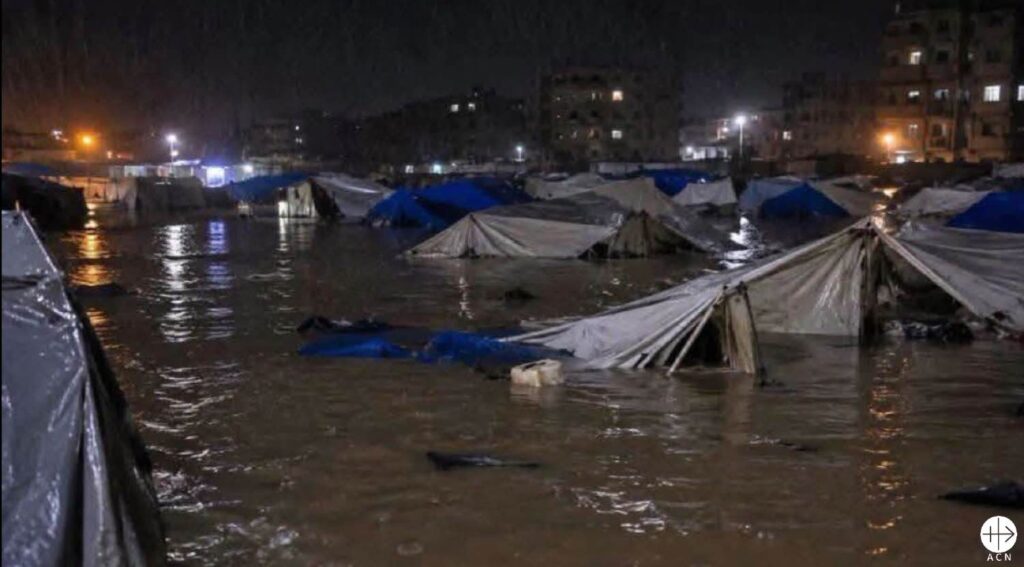
The torrential rains of recent days have further worsened the living conditions of displaced people. Tens of thousands of tents have been flooded.
“Families have lost the little they still had to eat and sleep,” the priest laments.
According to the latest humanitarian assessments, more than 106,000 people have been directly affected by the severe weather, while over 26,000 households have requested assistance after flooding damaged their shelters and belongings. More than 6,000 family shelters are reported to have been destroyed, and a further 17,400 damaged. The rains have also claimed lives. Among the victims were three young children and their mother, who died when a sand embankment collapsed onto their tent in Deir al-Balah. Humanitarian organisations have also reported the drowning of an infant.
As winter approaches, Father Romanelli describes an increasingly harsh reality: “Heating is impossible, unthinkable.”
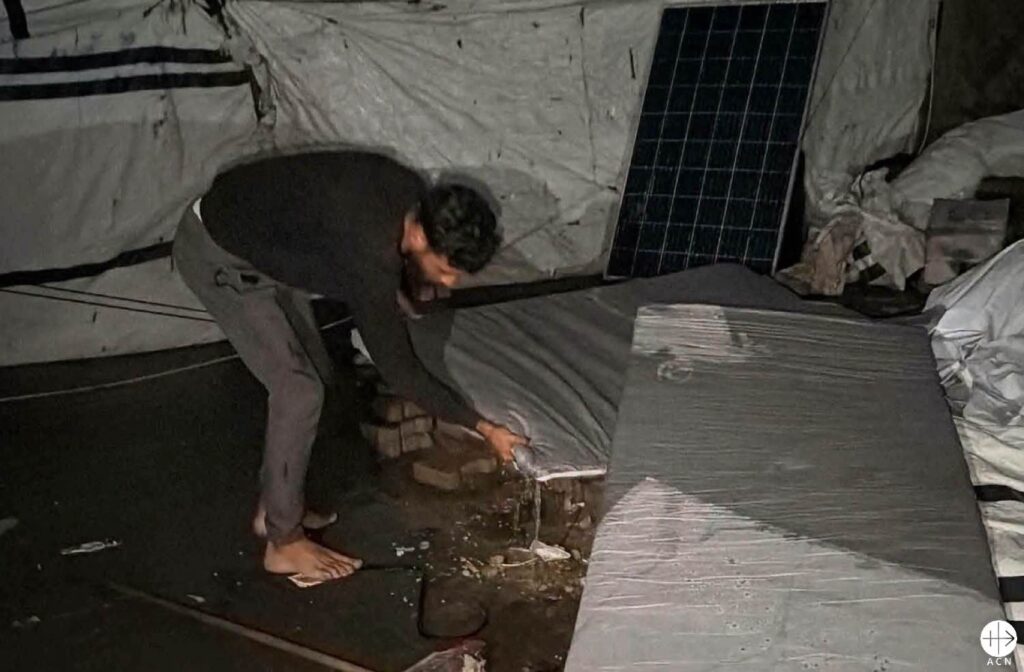
Many homes have lost windows or external structures due to the bombardments. Tarpaulins and plastic sheeting used to protect buildings are often damaged or destroyed. With shorter days and less sunshine, solar panels will generate even less electricity.
“New ones should be allowed into the enclave, but no one seems to hear the cry of the population,” Father Romanelli sighs.
Praying by candles and flashlight
The parish compound itself has limited access to electricity. Its generator operates for only part of the day, and the small amount of energy available is reserved for lighting, cooking and charging batteries.
“When night falls, Gaza becomes a land of darkness,” the parish priest says sadly.
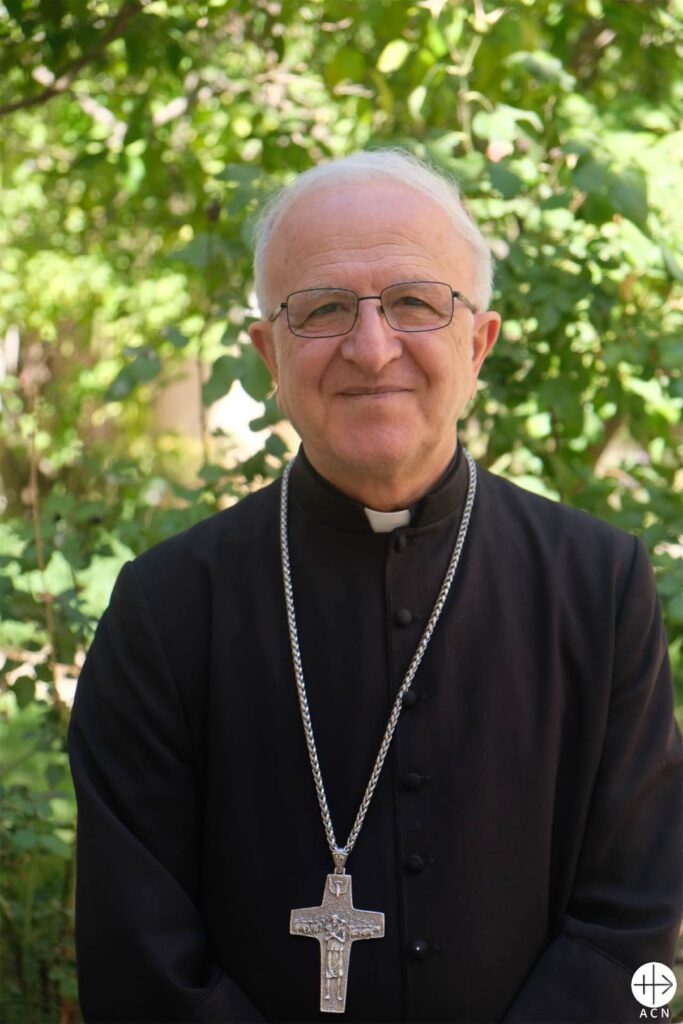
“Many families pray by the light of flashlights or candles,” adds Bishop Shomali, Patriarchal Vicar for Jerusalem and Palestine, who also spoke with ACN.
According to humanitarian agencies, approximately 1.4 million people, around 65% of Gaza’s population, are currently living in tents or makeshift shelters. Nearly one million displaced people are believed to be living in flood-prone areas, making the coming winter months particularly dangerous.
Meanwhile, insecurity remains ever-present. The Auxiliary Bishop of Jerusalem recalled the death of two Orthodox Christian women in a strike on Gaza City on 3 October.
“No place in the Gaza Strip is considered safe.”
The Israeli military line is now located approximately 60 metres from the parish compound, which includes both the church and the school. Every day, 15 buses are required to transport students and teachers. Special arrangements are organised morning and evening to make these journeys as safe as possible.
A Church alongside the most vulnerable
“No one offers a sign of hope, no one says that the war will end, that the people of Gaza will be able to rebuild their homes and provide for themselves again,” Father Gabriel observes.
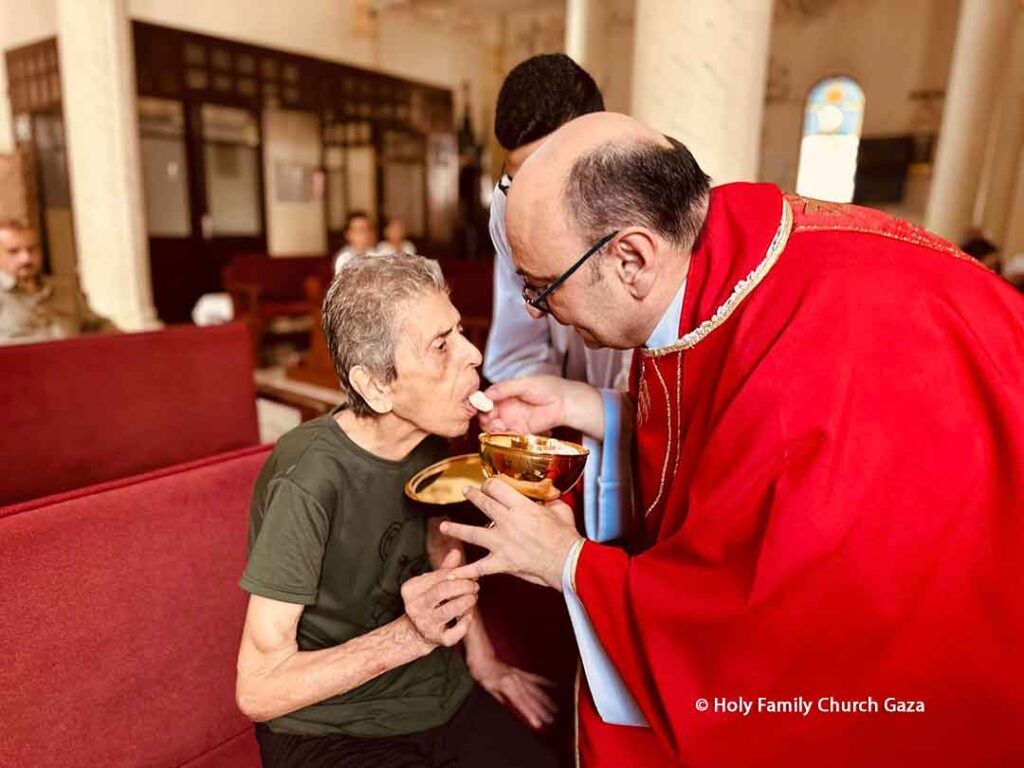
Humanitarian aid, which still does not enter the enclave on a regular basis, is far from sufficient.
The parish remains committed to “continuing to do good”. It still shelters 80 displaced people, distributes purified water to its neighbours, most of whom are Muslim, and shares food assistance with them.
“Most of our neighbours lack everything. And when I say everything, I really mean everything,” Father Romanelli insists.
The Latin Patriarchate supports the parish in its work with the help of Catholic organisations.
“We particularly appreciate the fact that ACN listens to our real priorities and seeks to respond to the needs we identify on the ground,” Bishop Shomali stresses. Among the initiatives currently supported by ACN in Gaza is an emergency aid project, including help for 148 Christian children to cope with the harsh winter conditions.
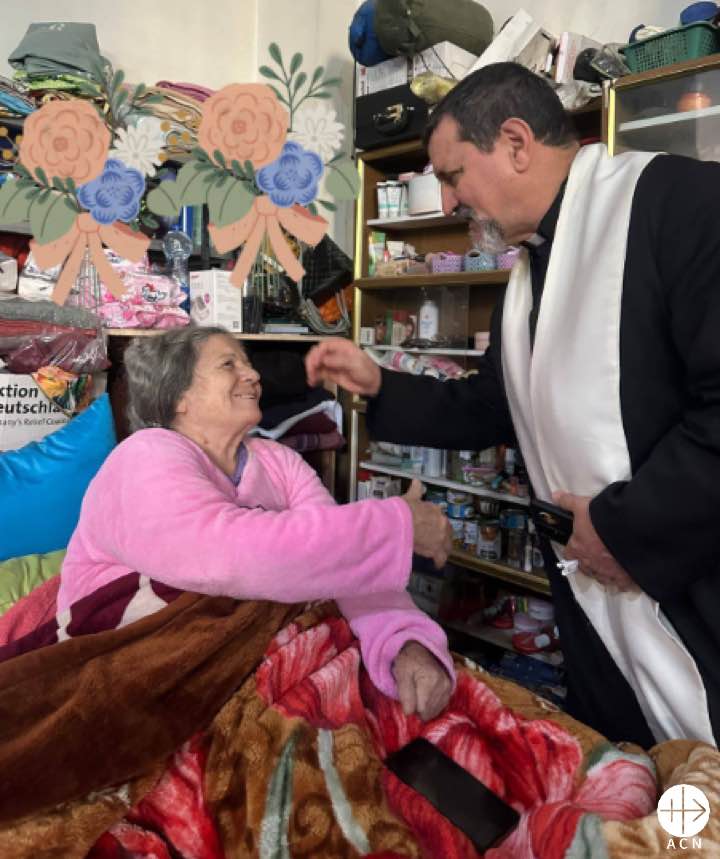
The bishop expressed his gratitude for the donations received, which often represent “a personal sacrifice” and also convey an essential message: “The Christians of the Holy Land have not been forgotten!”
Even under these particularly difficult circumstances, the Church remains a visible sign of Christian hope and solidarity, serving all those in need without distinction of religion or origin.
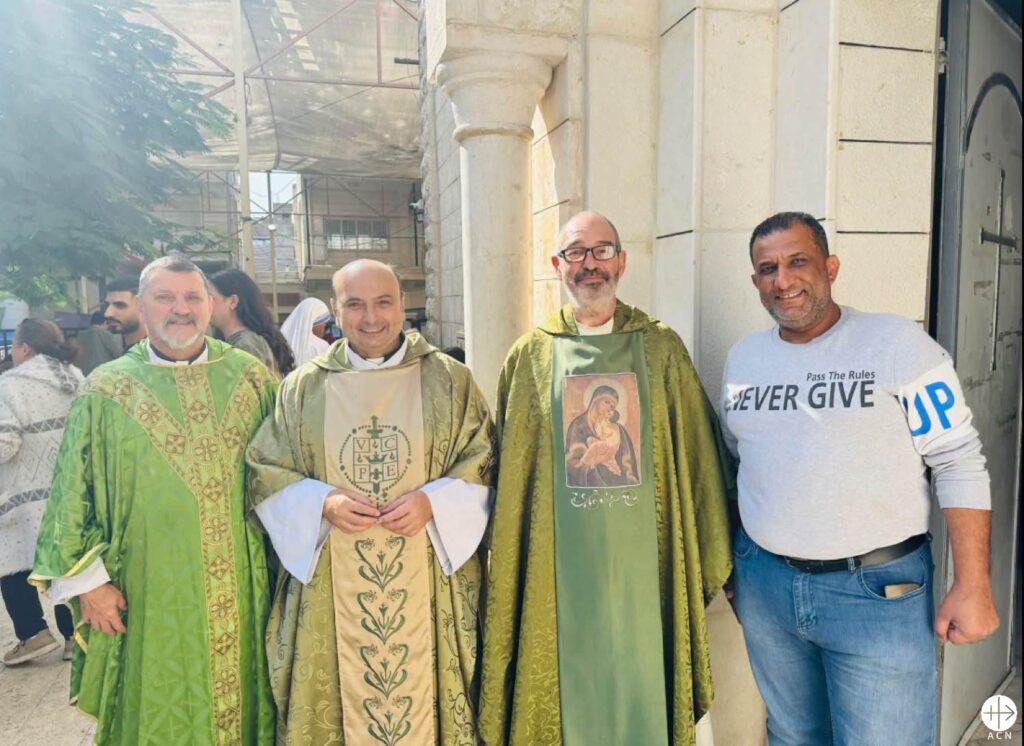
The parish has also received a welcome pastoral reinforcement with the recent arrival of Father Luis Montes, a member of the Institute of the Incarnate Word, who was officially welcomed on Sunday, 8 November, during a Mass at which he presided.
“It is a blessing,” rejoices the parish priest of Gaza.
Father Romanelli also wishes to be the voice of those in Gaza who are no longer being heard. He calls for the enclave to regain its place in the attention of the media and the international community, for borders to be opened to both doctors and patients in need of medical care, and for the humanitarian emergency not to overshadow the urgency of a just peace.
“Peace is possible and justice is necessary, for Israelis and Palestinians alike.”
The pontifical foundation Aid to the Church in Need (ACN) has been working for years alongside the local Church to support the Christian communities of the Holy Land. Its initiatives include employment projects for Christian families in Bethlehem and Jerusalem, the modernisation of a Catholic printing press in Bethlehem, and support for the Latin Patriarchal Seminary of Beit Jala, including improvements to its facilities for religious formation. The foundation also supports Christian education, especially for students from economically disadvantaged families, to which it allocated around €420,000 in the Holy Land between 2025 and 2026. In Gaza, ACN is currently supporting an emergency relief project to help people cope with the harsh winter conditions.

Recommended