“Missiles are flying over our heads” – Tens of thousands displaced as violence escalates in Lebanon
ACN has remained in contact with project partners in the areas affected by airstrikes, assessing the need for emergency assistance.
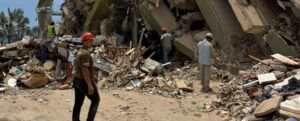
Nearly 30,000 people have been displaced following a wave of overnight airstrikes that hit Lebanon on Monday, 2 March, according to figures released by the Lebanese government. The attacks shattered the fragile calm that had held in recent months.
According to local staff of Aid to the Church in Need in Lebanon, more than ten powerful airstrikes struck Beirut’s southern suburbs at around 2:30 a.m. on Monday. Explosions were heard far beyond the capital, including in the Keserwan region. Additional strikes targeted southern Lebanon and the Beqaa Valley.
Following months of near-daily Israeli strikes, tensions escalated after Hezbollah claimed responsibility for missile launches toward Israel, prompting an immediate response and effectively ending the fragile ceasefire.
Evacuation warnings were reportedly sent to around 50 villages, prompting thousands of families onto the roads. Highways out of southern Lebanon and the southern suburbs of Beirut were quickly overwhelmed. Many families remained trapped in traffic for hours as the displacement unfolded, ACN’s local staff reported.
Throughout the day, the pontifical foundation Aid to the Church in Need (ACN) remained in direct contact with Church project partners — bishops and religious communities — to assess safety conditions and urgent humanitarian needs.
In Saida, Greek Melkite Bishop Elie Haddad described the tense atmosphere: “Missiles are flying over our heads.”
This area has not yet been directly hit, but public schools have opened to shelter displaced families, and parish centres have begun receiving those fleeing the bombardments.
Further south in Tyre, Greek Melkite Bishop Georges Iskandar told ACN that Church facilities are already sheltering Christian families. He estimates that around 800 Christian families within his diocese may soon require assistance if the escalation continues.
Describing the human toll of the renewed violence, he said: “People are exhausted; they fear for their children and their future; they yearn for a simple and ordinary life: that a child may go to school without fear, that an elderly person may sleep peacefully in his home, that a father and mother may work for their daily bread in dignity.”
“As the shepherd of this local Church, my foremost concern is to remain close to these innocent people: to be present among them, to listen to their suffering, to pray with them, and to remind them that their dignity is safeguarded in the sight of God, and that Christian hope is not built upon balances of power but upon faith in the Lord of history, who wills peace for His people.”
Maronite Bishop Charbel Abdallah, of Tyre, reported that while many residents of Tyre city are remaining in their homes for now, Christians from border villages have begun evacuating.
“They are our people”
In the Beqaa Valley, the crisis is unfolding in ways reminiscent of the 2024 war. Maronite Bishop Hanna Rahme of Baalbek–Deir El Ahmar reported that Muslim and Christian families from Baalbek are once again seeking refuge in Deir El Ahmar — many of them are the same families that sheltered there during the previous conflict. Public schools have reopened to host displaced families, and St. Nohra Church is also providing shelter.
Despite extremely limited means, Bishop Rahme insisted the Church will not abandon those in need: “They are our people; we will take care of them with what we have.”
In the nearby village of Zboud, approximately 100 people have taken refuge at a school run by the Sisters of the Good Service. The facility has now reached full capacity. Sr. Jocelyne Joumaa warned: “We are safe for now, but certainly it will be our turn soon.”
While the Lebanese government has opened public shelters and emergency hotlines, the situation remains highly volatile. Several dioceses have indicated that if the escalation continues, they may be forced to seek international assistance to provide food, emergency kits, and basic support to displaced families.
ACN continues to monitor developments closely and stands ready to respond as needs become clearer in the coming days. The foundation also calls for prayer for peace and stability in Lebanon and across the Middle East.

Recommended