Church in Mauritania: A spirit of friendship in the desert
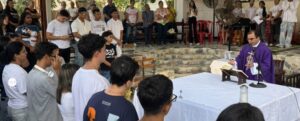
The Catholic Church in Mauritania is in a unique position: there are no Mauritanian Christians, and the entire Catholic community is made up of foreigners and expats. In this context, the Church’s presence is very limited, with only two priests and one bishop, but its mission remains clear: to bear witness to the love of God for everybody, Christians and Muslims alike.
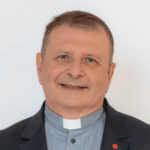
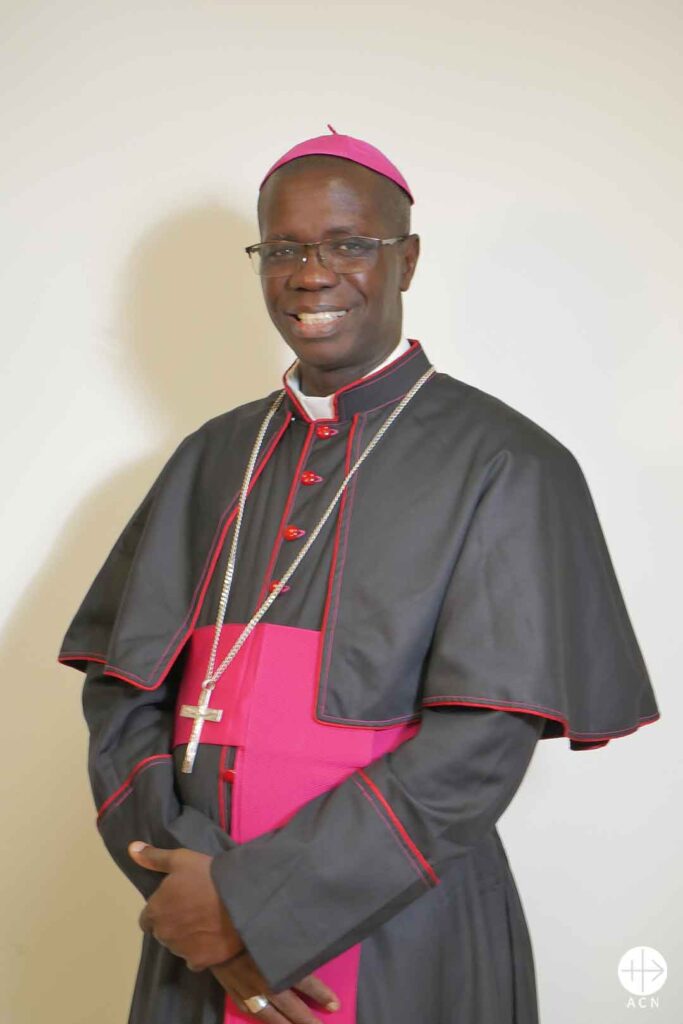
Fr Edmond Théodore is originally from Senegal, but he lives and works in Mauritania and recently visited the international headquarters of pontifical charity Aid to the Church in Need (ACN). He explains that in the African country interreligious dialogue takes place in daily life, rather than through formal functions. “The Church welcomes the migrants as well as the Mauritanians, but at the same time it lets itself be welcomed by the local population.” To him, the Church’s mission in Mauritania must be read through this two-fold dynamic of welcoming and being welcomed.
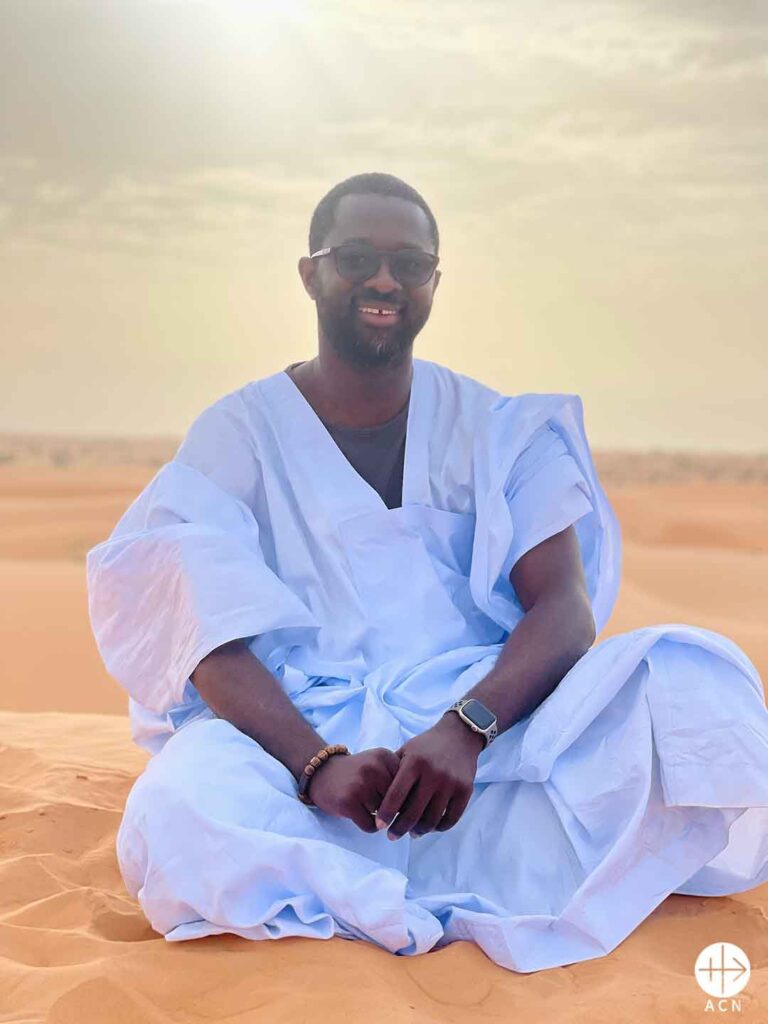
The priest explains that Christian values are well accepted. “There is no persecution. We are free to live our religion,” he says. In his experience, Muslims tend to show deep respect for believers, regardless of their religion. When they realise that a person believes in God and has human and religious values, dialogue follows naturally.
“Despite our differences and how we believe in the one God, we manage to love each other,” the missionary coming from Senegal explains.
His own story in Mauritania began as a work experience. He was meant to stay for a short period, but was deeply marked by the mission of the Church in the country. “The Lord does extraordinary things with very little,” he recalls. That initial experience led him to request a permanent transfer to this mission.
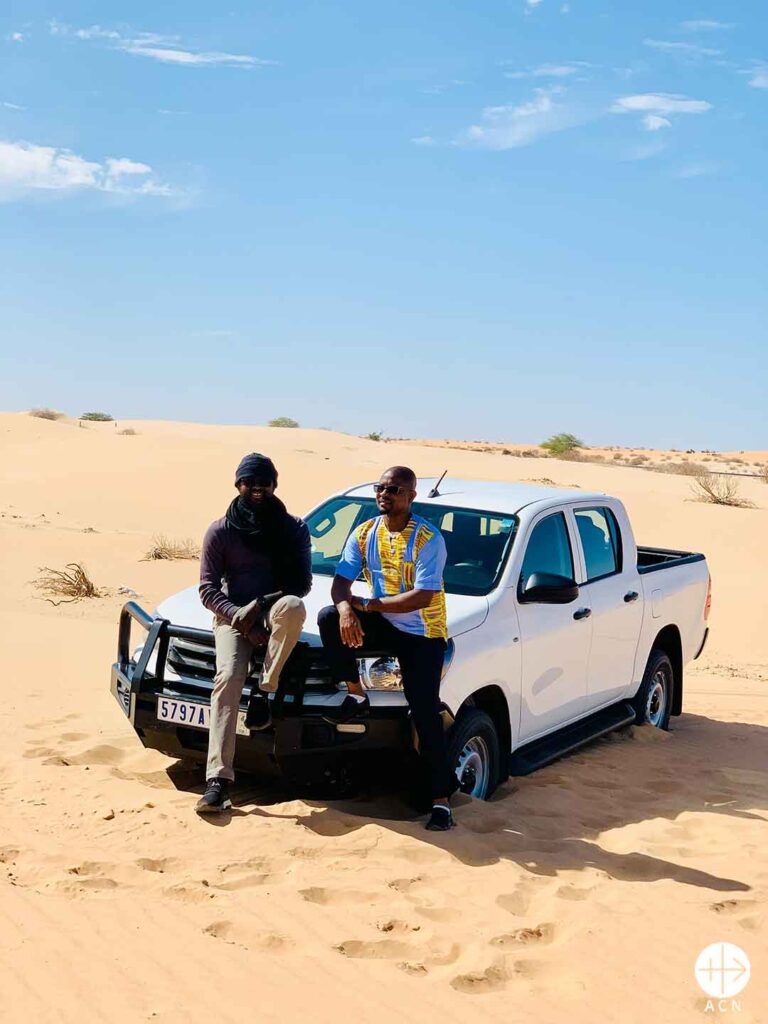
The desert also occupies a central place in his spiritual life. Fr Theodore sees it as a place of dispossession and solidarity. As an example, he explains that Mauritanians have the habit of always stopping to help with vehicles that have broken down by the side of the road. In such a demanding atmosphere, he explains, people have a better understanding of their own limitations, and learn to trust others and to trust God.
“The desert is a place of encounter,” he explains. A place where one can find God, one’s neighbour and oneself. He recalls that in the Gospels the desert is often presented as a privileged place for people, including Jesus, to draw close to God. Having lived for six years in a parish next to the desert has strengthened his inner life and his spirituality, he adds. In this context, prayer itself takes on a particular bent. “We do not pray with each other; we pray for each other,” he says. This helps develop an inner disposition to intercede for others, including those who profess a different faith.
One of the Mauritanian traits that most impresses him is trust in God. “Whatever you say, they reply ‘inshallah’, which means God willing,” he says. Regardless of the difficulties they face, they believe that with God’s help the next day will be better. This attitude, he assures, inspires in him a deep experience of faith, hope and trust, reminding him that everything is in God’s hands.
The priest explains that the Church is not allowed to proselytise in Mauritania, nor baptise Mauritanian citizens, since Islam is the official religion. Nonetheless, he insists that the Church is convinced that God acts in the heart of each person.
“Our work consists in bearing witness to the love of Christ,” he states. The Church serves all the people, regardless of nationality or religion and through this service, he adds, Christians believe that people can encounter Christ, since the Church serves Christ in those it accompanies.
Therefore, he concludes, the Church’s mission in Mauritania cannot be measured with criteria such as efficiency, or by the number of baptisms. Its goal is to bear fruit for the Kingdom of God, trusting that God will recognise the labours of his ministers.

Recommended