“Mozambique needs international aid to solve crisis in Cabo Delgado,” says the Bishop of Tete
There is no easy solution for the conflict in the northeast of the African country, but it is necessary to fight poverty and disinformation, and the Church is doing its part, says the Bishop of Tete.
Mozambique cannot face the crisis in the northeastern province of Cabo Delgado alone, says Bishop Diamantino Antunes.
The Bishop of Tete, whose diocese is in the northwest of the country and is separated from Cabo Delgado by both the state of Malawi and the Mozambican province of Niassa, told Aid to the Church in Need (ACN) during a visit to the foundation’s international headquarters, in Koenigstein, Germany, that the humanitarian crisis caused by the Jihadist insurgency in Cabo Delgado is too great for the country to handle on its own.

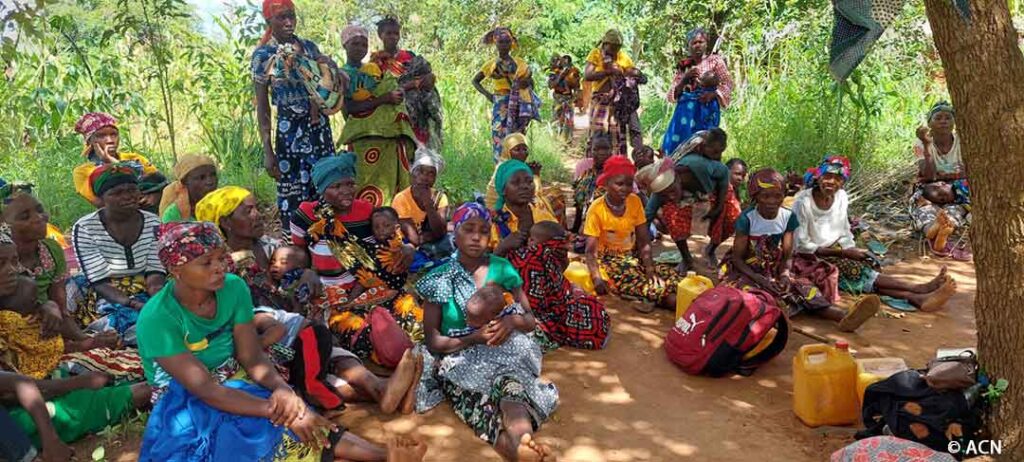
“The situation with those people internally displaced by the conflict in Cabo Delgado is very difficult. There are a lot of mouths to feed, and not many resources. Mozambique needs, and will continue to need, international aid to solve this problem, and others,” the bishop told ACN.
“The displaced live in a very precarious and difficult situation. They often lack the essentials to live, especially food and other goods, and services necessary for a life with dignity,” Bishop Diamantino said, adding that unfortunately the conflict is far from over.
The Jihadist insurgency in Mozambique began in 2017. Since then, it has resulted in approximately 5,000 deaths and has displaced over one million people. Though the Jihadists, who claim allegiance to the Islamic State, began by mostly attacking government institutions, more recently they took to also attacking church buildings and structures, and directly targeting Christians.
No easy solution
The Catholic Church played a pivotal role in securing a peace deal for the lengthy civil war that raged in Mozambique from 1977 until 1992. But Bishop Diamantino says that quelling the violence in Cabo Delgado, which is a majority Muslim area of the country, might prove more complicated.
“Finding a solution for the insurgency in Cabo Delgado is not easy, because we don’t know who is behind it, who is supporting it, and who is benefitting from it,” he explained to ACN.
Nonetheless, the Church continues to do all it can to serve the population. “The Church is present, especially among the people and for the people, to serve the people. We are on the ground, through Caritas, through missionaries, through laypeople, through charities that work with the Government to solve some of the possible causes that continue to feed into the terrorism, such as poverty and disinformation.”
A missionary on St Francis’ horse
As in many countries in Africa, one of the difficulties is the enormous distances and lack of suitable roads or means of transport. Bishop Diamantino, whose diocese is larger than many European countries, explains that before travelling to Germany he completed a pastoral visit of parishes and missions in the south of Tete which kept him on the road for three weeks.
Among others forms of help, the pontifical foundation Aid to the Church in Need has provided the Church in Mozambique with means of transport, though sometimes the roads are so bad, says the bishop, that he has to use what he calls “Saint Francis’ horse”, which means walking, since not even motorcycles are a viable solution.

“We are very grateful to ACN, who have provided us with training for seminarians and priests, aid for the construction of chapels, churches, houses for missionaries, seminaries, means of transport, purchasing of Bibles and catechetical material. Your help has been crucial for the growth and consolidation of the Catholic Church and in support of the poor. I am grateful for all the benefactors, and for the sacrifices they make to be able to help us, and I pray for them.”

Recommended