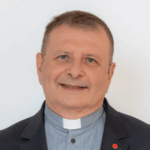
India: “The pandemic is teaching us that we have to fight together if we want to survive”
Archbishop of Bhopal sees encouraging signs in spite of the crisis
India is currently experiencing a devastating surge of COVID-19 cases. About 68 million Christians live in India. Many of them belong to the poorest classes of society and are discriminated against in various parts of the country.
In spite of the tense situation, Archbishop Leo Cornelio of Bhopal in Central India also sees promising signs in the fight against the pandemic. He talks about how priests, religious and the faithful are fighting on the front lines.
Archbishop Cornelio was interviewed by Volker Niggewöhner of ACN Germany.
ACN: Your Excellency, we are receiving distressing reports about the COVID-19 situation in India. What is the situation in your Archdiocese of Bhopal?
Archbishop Leo Cornelio: The situation is dire. When the world was hit by the first wave of COVID-19 it affected Europe and the US more severely than India. The people and the political leadership became careless. We were completely caught off guard by the second wave. Bhopal, the seat of my bishopric, and the city of Indore are among the areas hardest hit in the state of Madhya Pradesh. Both cities have been in lockdown for almost seven weeks. All of the hospitals are filled to capacity. Medicines and oxygen are scarce. To date, more than 300,000 people have died of COVID-19. However, the unofficial figures are much higher; some observers even believe them to be ten times as high! After all, many people who contracted the virus remained at home and died there.

What can the Catholic Church do to help the people during the COVID crisis?
In terms of providing spiritual assistance to the faithful, the Eucharist is regularly being celebrated online in most dioceses in India. In the Archdiocese of Bhopal, we have arranged for our priests to support their parish members by means of online programmes. We encourage our priests to contact every family in their parish. They are to ask about their financial needs and help the families in every imaginable way. For example, we distribute care packages with food. These services are often carried out by the “Small Christian Communities”, a lay movement that is very active in India.
Are the pastoral workers who help the people particularly at risk?
In my diocese, 18 priests have had COVID-19 and one has died. A large number of religious have contracted the virus; four religious sisters have died. Across the entire country, more than 170 priests have died of COVID-19, and many religious and faithful. Basil Bhuriya, Bishop of Jhabua, fell ill and died in early May.
How would you describe the general mood of the people in India?
For several years now, the country has increasingly been marked by a trend favouring division; this trend is rooted in political ambitions. Violations of fundamental human rights, religious polarisation and the issue of loyalty towards the state are being manipulated by those in power as instruments to divide the people.
The pandemic is teaching us that we have to fight together if we want to survive. Political power, economic security, physical health: all of this is ephemeral and will not last. What matters most is charity, fraternity and compassion – values as they were lived by the Holy Mother Teresa of Calcutta. More and more people in India are now realising this.
Are the efforts of the Church appreciated in a country that considers itself a Hindu nation?
The Church in India has always taken the initiative in every crisis that our country has faced in the past. Priests, religious and other church workers have played leading roles in relief and rebuilding efforts. The state recognises Church organisations such as hospitals and medical aid stations. However, the Church is sometimes suspected of using its programmes to convert the people. These critics do not understand the standpoint of Christ who said, “In so far as you did this to one of the least of these brothers of mine, you did it to me.”
Is there something that gives you courage in the current crisis?
The pandemic has brought the people of India closer together again. In Bhopal and in other places the people have joined forces to supply food, shelter, medical aid and many other things. Even though the Catholic Church represents a small minority, we were involved right from the beginning. Our parishes distributed food packages, face masks and disinfectants to people in need. We set up a quarantine station in the pastoral centre of our diocese to shelter and care for the destitute. An Indian proverb says, “Do your duty without expectation of reward”. We are confident that there is light at the end of the tunnel.
Do you have a message for the benefactors of ACN?
Dear friends, I am grateful to you for all the help that our people in need have received from this international aid organisation. This has helped us grow into a family of charity and has made it possible for us to meet each other and experience God’s benign mercy and assistance. May God bless your generosity!