“Faith does not change the situation, but it helps migrants endure their difficulties,” says missionary in the western Sahara region
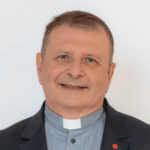
With migration becoming increasingly inhuman and dehumanising, the community in the western Sahara region is facing bigger challenges than ever. During a visit to the headquarters of Aid to the Church in Need (ACN), the Apostolic Prefect of Western Sahara, Fr Mario León Dorado, spoke of the difficult but committed work of the small Catholic community in accompanying the local people and the migrants.

Since its arrival in 1954, the Catholic Church has been a constant presence in the west Sahara region. When the region ceased to be a Spanish protectorate in 1975, the Church decided to stay, even though most of the non-native population left the region.
This gesture of perseverance did not go unnoticed by the rest of the population, explains the Apostolic Prefect and missionary from the Oblates of Mary Immaculate, Fr Mario León Dorado: “The local population has always shown great respect for our presence. They defend the Church as part of the identity of the west Sahara.” As an example, the Spanish missionary tells Aid to the Church in Need (ACN) during his visit, when a Catholic Church was about to be torn down as part of an urban restructuring, it was a wheelchair-bound Sahrawi who positioned himself in front of the machines and managed to stop the demolition. “Funnily enough, nowadays that church is cultural heritage,” he says, with a smile.
The region’s small Catholic community is organised into two parishes, El Aaiún, in the north, and Dajla, in the south central-. “Each one has only about 50 or 60 parishioners, a small but significant number,” says Fr León Dorado. “It is a melting pot of nationalities, with people from all over the world coming in search of economic opportunities, or as a stop on their way to Europe.”
Family pressure and social expectations often lead these individuals to risk their lives in search of a better future for their loved ones, though freedom of choice is far from being a reality for many of them. Nonetheless, the shortest routs have been under Moroccan control for years, which has driven many to set out from Senegal or Mauritania, subjecting themselves to a dangerous voyage of 1,600 km in rickety boats or dinghies. Almost all of them have to contend with the difficult reality of the mafias that control the migratory routs.
“The policy of not giving visas to anyone cannot be the solution. The mafia is merciless and leaving the flow of migrants in its hands is a serious problem,” the priest stresses. According to the missionary, lack of opportunities in their own countries contributes to forced migration, with disinformation, being another factor. “According to the NGO Caminando fronteras, in 2023 over 6,000 people died in the Atlantic, and in the first five months of 2024 almost 5,000 have lost their lives trying to reach Europe,” he says, troubled.
Fr León Dorado highlights the importance of dealing with these problems and defends a holistic approach that includes investing in the development of the countries of origin, as well as the provision of credible information and the protection of migrants’ rights. “Many of these migrants are deceived, and they come here not really knowing what they are facing. Giving them accurate information is crucial for them to be able to make the right decisions about their future. At the same time, it is important that those who want to return to their countries of origin not suffer discrimination or stigma for not having been able to meet the expectations that were imposed on them,” the Oblate missionary says.

The Apostolic Prefect of the western Sahara region also points out that “women are the most vulnerable link in this terrible world of illegal immigration”. He explains how in a so-called “warm bed” system, where up to 14 people share a room, constantly rotating in order to share expenses, many of these women end up suffering abuse. Others see prostitution as their only way out of poverty. They often end up pregnant and without resources, since they cannot work in that state. In 90% of these cases the fathers abandon the mothers, leaving them in a desperate situation.
Fr. León Dorado recalls the heart-wrenching story of a Christian woman from the Ivory Coast who arrived in the parish after three failed attempts to leave the country. She was the victim of robbery, betrayal and arrest, and came close to suicide. “Even though the Church cannot change her situation, the support it gave her allowed her to survive. She had three different debts and a baby to care for. The parish connected her to a psychologist and gave her the support she needed.”
With 40,000 migrants living in the prefecture, the Church’s role is complex but more necessary than ever. “Faith doesn’t change the situation, but it helps to endure the suffering,” the prefect says. “It is not only about giving material and educational support but also about providing a space for listening, accompanying, and nurturing hope.
“The Church’s work here is centred on the little gestures that make a difference, such as getting mothers to register their babies when they are born. A non-registered child is invisible, it has no access to vaccines, to education, and will be even more vulnerable if the family decides to emigrate. The staff at Caritas helps to ensure that these children find their place in society.”
Even though the religious community in the region is small, its presence and dedication are invaluable, Fr León Dorado points out. “Even if there are only two or three of us… We may not have a band at Mass, but we always have a choir. We should bear in mind that there were not many people at the foot of the cross, either. Here in the western Sahara region, faith is lived out in the small gifts that life, or rather, God, gives us; in confronting adversity and in the constant fight to preserve human dignity.”

Fr León Dorado visited the headquarters of ACN to thank the charity for its help, and to present a new project for the construction of a flat for three religious sisters from Mexico and Brazil who will take charge of Caritas in the parish. The religious are also providing pre-school services for the children of vulnerable families and single mothers.
Recommended