Faith can overcome ethnic divisions, says Ghana bishop
The Catholic Church in northern Ghana is working for peace by challenging and trying to correct injustices entrenched in social and cultural systems.
When Bishop Peter Paul Angkyier ordained two young men to the priesthood in Damongo, Ghana, on 29 August 2026, their presence together at the altar carried a message that went far beyond the celebration itself. One came from an ethnic community that had recently suffered a deadly attack, while the other belonged to the community of the attackers.
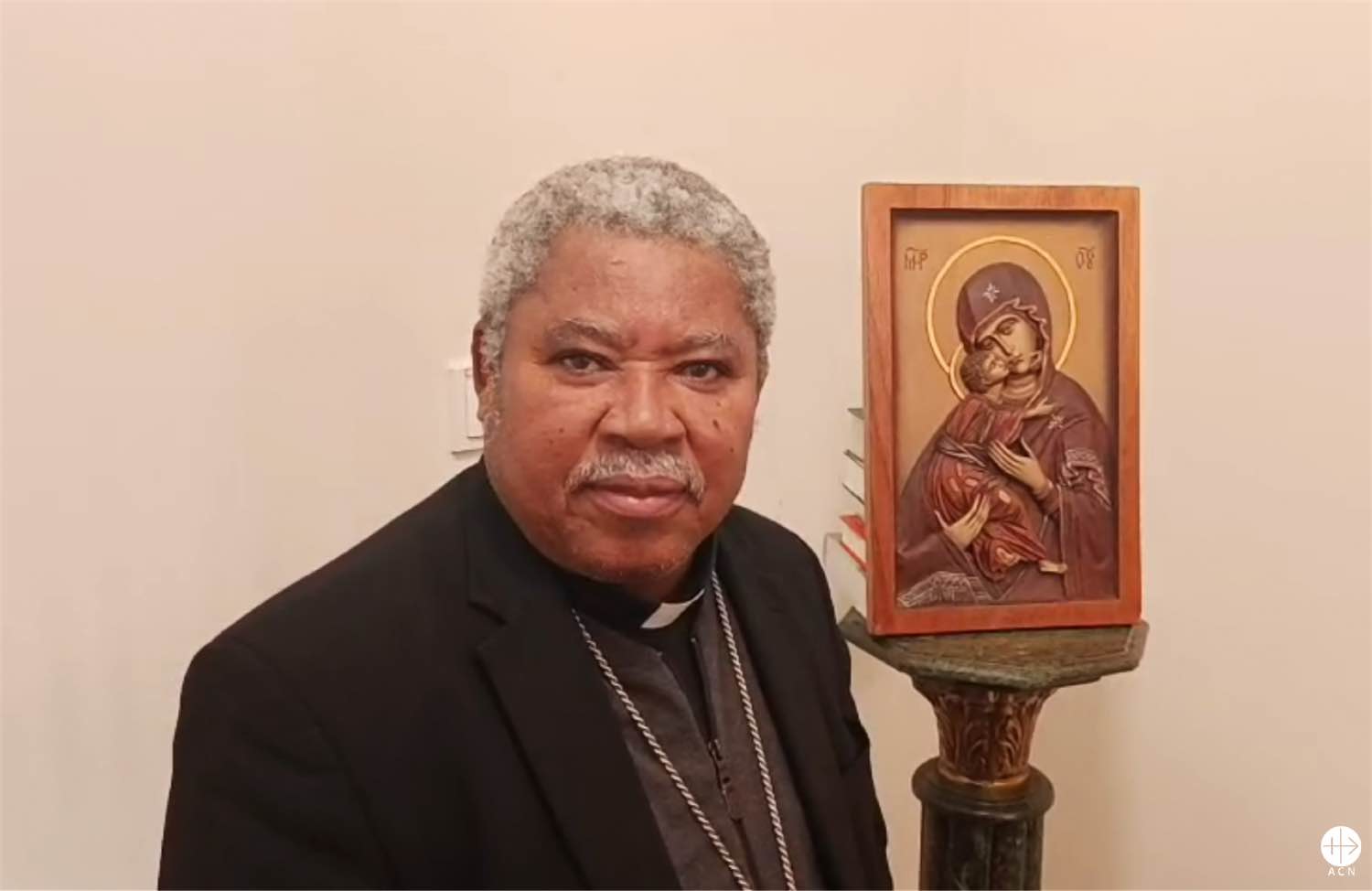
“I told them this is a sign from God that they have to work together,” the bishop recalled.
The region of Ghana where Damongo is situated has at least 23 known tribes. Animists and Muslims make up the majority of the population, with Christians forming only a small percentage.
Relations between the different groups are generally peaceful, but disputes over possession of land, and clashes over traditional social systems that some feel to be oppressive, occasionally lead to violence.
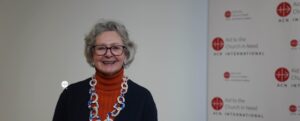
“Our mission as a Church, which is the mission of Christ, is to promote unity,” said Bishop Peter Paul, during a visit to the international headquarters of Aid to the Church in Need (ACN), in Konigstein, Germany.
Bishop Peter Paul explained how he personally got involved in trying to calm a recent deadly tribal conflict over rigid social norms, in 2025. “It was an issue about injustice. People felt that they were being treated unjustly and they have been oppressed, so they tried to resist.”
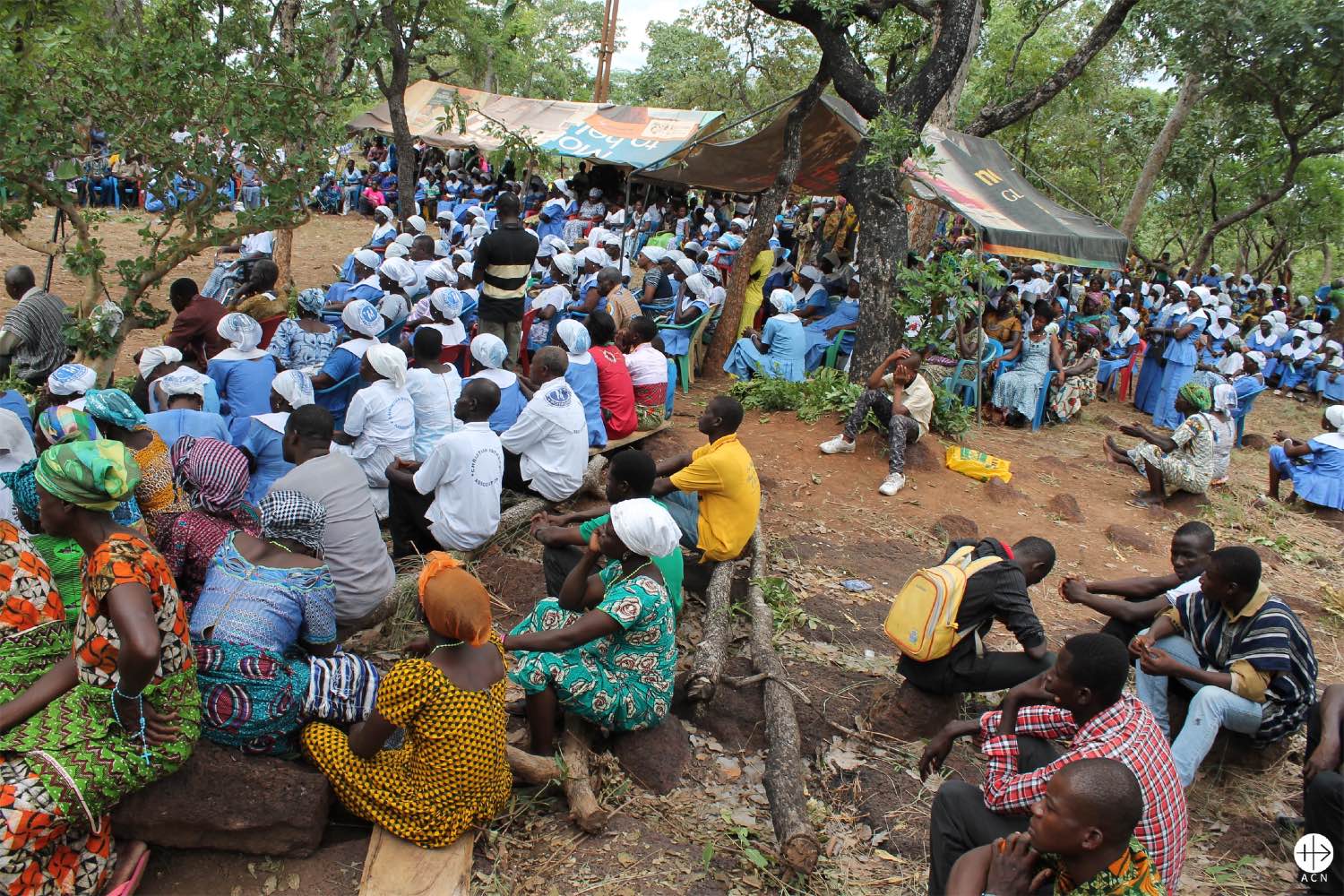
This led to a violent backlash from the stronger tribes, during which several people were killed. “People were suffering, people were dying. Some of the people were fleeing across to the Ivory Coast, across the Volta River, some were fleeing into Burkina Faso.”
Faced with this situation, which was also affecting Catholics from his diocese, Bishop Peter Paul went to the leaders of the tribes who had most power and influence. “I tried to dialogue with different chiefs, and the impression that I got was that they didn’t see that there was anything wrong. In fact, they told me that I should speak to the people who had been attacked, to tell them that there is a certain system, and that they should know what their position is, rather than trying to mix up this order.”
But even though the Church is part of the local culture, and respects traditions, Bishop Peter Paul refuses to condone systems that violate dignity.
“St. Thomas Aquinas said that an unjust law should not be obeyed. If there are unjust systems, the only way to have peace is to reform them. And that is one of the challenges that we face. As a church we try to help different people to come to see that fundamentally everyone is created by God and has a dignity, and no matter what you are doing, you cannot infringe on the dignity of the human person. It is not very easy to break through this mentality. It will take some time, but evangelisation also means reforming and transforming cultural aspects and traditions that are not Christ-like.”
Evangelisation through education
The Church does have some instruments at its disposal in this struggle. “We use education as one way of development and evangelisation. Currently Catholics form about 7.6% of the population in my diocese, but we run about 75% of basic schools in the area, which also admit people from other religions. The Catholic education we provide permits cultural dialogue, it is an opportunity for youths to get to encounter people from other tribes and cultures, which in turn leads to confidence and mutual trust.”
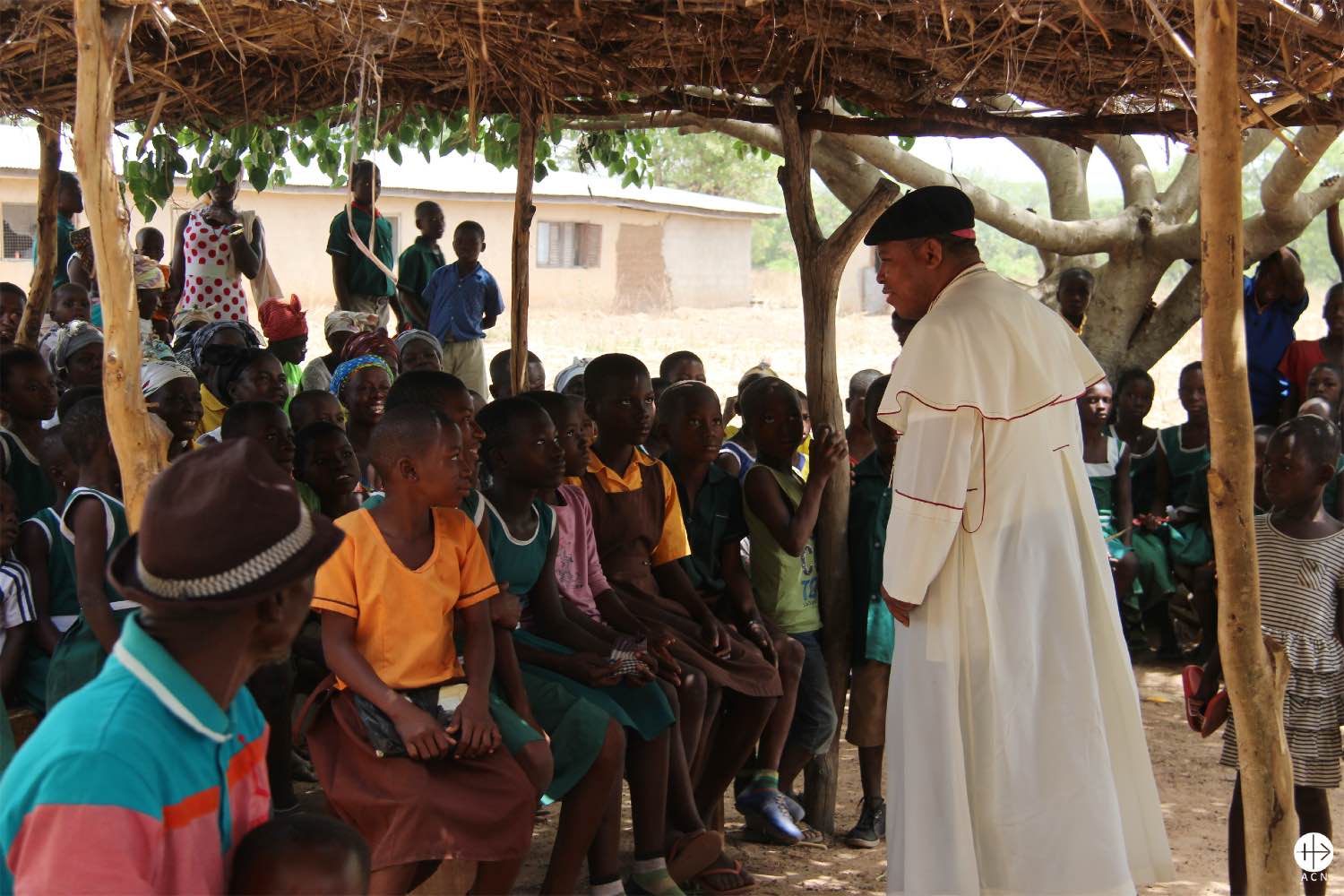
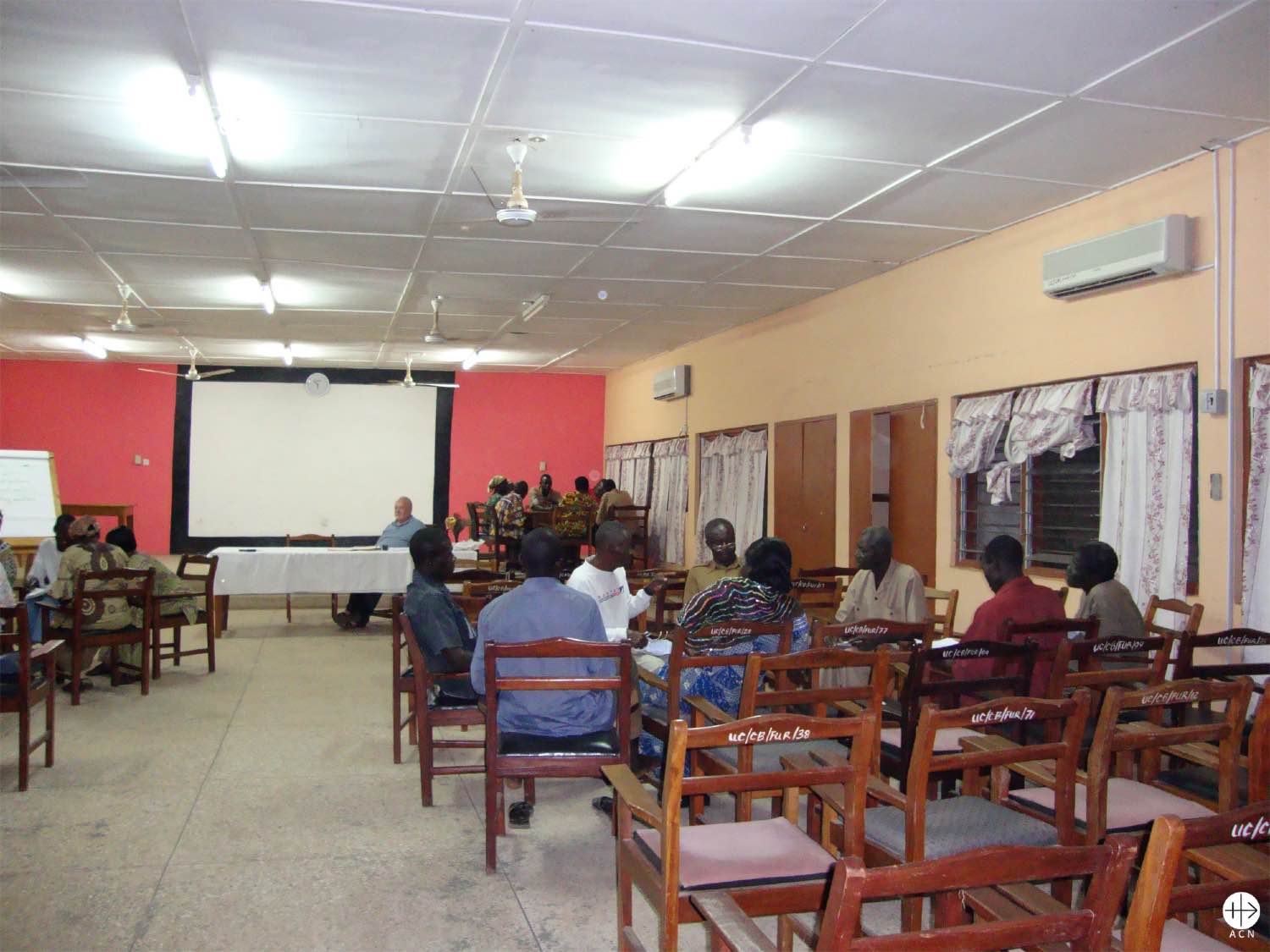
The other tool is the result of the foresight of Bishop Peter Paul’s predecessor. “Noticing that there was this problem of a multi-ethnic diocese, as well as the issue of mistrust, he established a Center for Conflict Transformation and Peace Studies, which is open to all.”
“We have training programmes for different categories of people. For instance, opinion leaders, traditional leaders, youth groups and others. The center is a testimony to the desire to promote peaceful coexistence. We also have, for instance, programmes with the Muslims. Interreligious dialogue is something very, very important for us because we have many mixed families.”
But sometimes, the bishop recognises, the best way to change hearts is for people to unite around a common ideal, such as faith and mission, which brings us back to those two newly ordained priests, lying side by side at the foot of the altar.
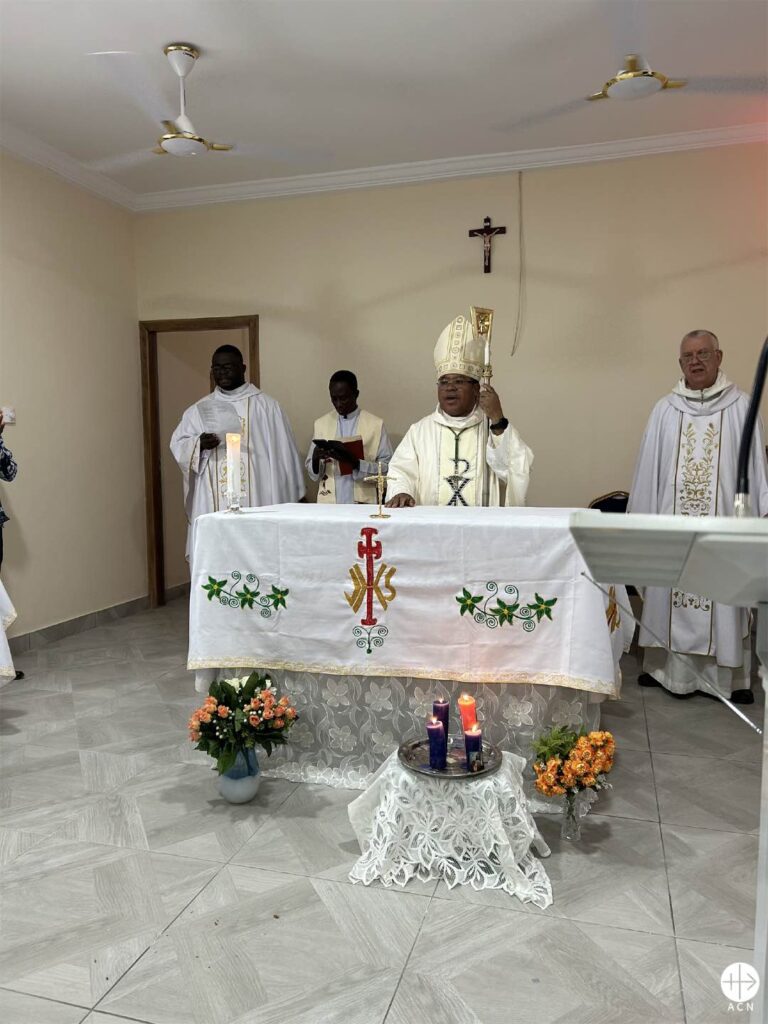
“I told them that through them, their people should know that we are one community, we have one dignity. Because if these two priests hang on to their cultural traditions, they cannot be Christ-like. If there is a conflict, or there is a problem, and you identify with your cultural group rather than to seeing yourself as a Christian, that is a betrayal of the mission,” Bishop Peter Paul explained.
ACN has been supporting the Diocese of Damongo for several years through infrastructure projects for churches and chapels, provision of transport for pastoral work and formation of seminarians and priests, as well as mass stipends for the support of clergy.
Recommended