Attacks caused over 500 victims in Nigeria’s Benue State in 2023
The Catholic Diocese of Makurdi, in Nigeria’s Middle Belt region, suffered 119 attacks against the settled populations by Fulani herdsmen, between January and the end of December, 2023.

Over 400 people were killed, and more than 100 others were wounded, raped or kidnapped in attacks on settlements and farming communities in just one Nigerian state in 2023, says a report sent to Aid to the Church in Need (ACN).
The report comes one month after a series of massacres on Christmas Eve that left hundreds dead in Nigeria’s Plateau State.
According to Father Remigius Ihiyula, a project partner of ACN who heads the Foundation for Justice, Development and Peace (FJPD) of the Diocese of Makurdi – 119 attacks were registered between 2 January and 27 December of last year in Benue State.
The report sent to ACN denounces that these attacks were carried out by members of the Fulani ethnic group, nomadic herdsmen who have been travelling further south in Nigeria, in search of better grazing grounds for their animals, often entering into conflict with farming communities for access to land.
“Nigeria’s Middle Belt, which includes Benue State, where the Diocese of Makurdi is located, is known for its very fertile lands, and has become a battleground in these conflicts. The Fulani come from places as far as the Republic of Niger or the northern states of Sokoto or Katsina. They travel all the way down, disguising as nomads in search of foliage for their flock, but acting like jihadists, to propagate Islam as an ideology. They are armed with heavy weapons, displacing entire villages in surprise attacks, killing and disrupting economic and social activities with the no clear reaction from the Nigerian Government”, explains Fr Remigius.
The report explains that the 119 attacks caused at least 414 deaths in a wide range of communities and locations within the Diocese of Makurdi and other parts of Benue State. These are, however, only the victims who were identified and counted. “In at least two cases the number of dead is described merely as ‘scores’, and in others ‘many feared dead’, so the full number of fatalities is certainly much higher”, adds Fr Remigius. A further 96 people were injured, and there were at least four cases of rape.
The attacks carried out by the Fulani herdsmen also resulted in the kidnapping of 35 people, Fr Remigius told ACN. These kidnappings often lead to ransom requests, which have become a fully-fledged industry in Nigeria.

The first quarter of 2023 was the most violent, with 18 attacks in January, 15 in February and another 18 in March, causing a total of at least 163 deaths. The summer was relatively peaceful, with only one attack in July, which left two dead, and none in August. The highest number of victims was in April, with 63 deaths from only nine attacks.
Although the underlying reason for the attacks has to do with an age-old tension between nomadic herdsmen and settled farmers, the disputes in these regions of Nigeria are aggravated by tribal and religious differences. The Fulani herdsmen are overwhelmingly Muslim, whereas the settled farming communities are generally Christian. In recent cases, in other parts of Nigeria, the attacks have been described as selectively aimed at Christians, confirming a religious element to the violence.
“In the past, the conflict over grazing lands never came with the killings and destruction witnessed today. Before, there was no intention to occupy and displace communities as is being done today. There were also mechanisms for peaceful resolutions and amicable settlements, none of which are present today”, regrets Fr Remigius.

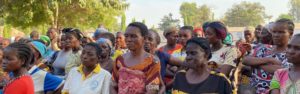
Aid to the Church in Need has supported the work of the Diocese of Makurdi in Nigeria, providing aid to Internally Displaced Persons (IDPs) in Guma and Daudu Camp, two of 14 camps and 13 hosting communities in Benue State. Besides pastoral care, the local Church provides trauma counselling, scholarships, food and other forms of humanitarian aid.
By Filipe d’Avillez.

Recommended