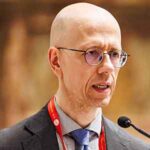
Haitian Archbishop: “Our people are a people who want to live”
On Sunday 3 March 2024, the Haitian government declared a 72-hour state of emergency after armed gangs stormed the national prison in the capital, Port-au-Prince. Haiti is sinking deeper and deeper into chaos. Pastoral life is seriously affected by the violence and the frequent kidnappings, but the faithful are braving the dangers to live their faith. ACN spoke to Max Leroy Mésidor, Metropolitan Archbishop of Port-au-Prince and President of the Haitian Bishops’ Conference, about the situation of the Church in his country.

For several years now, Haiti has been experiencing a period of profound instability. The violence is getting worse every day. Some people speak of a “low-intensity civil war”…
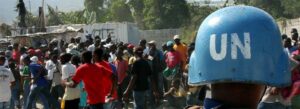
Yes, there is a real danger of civil war breaking out in the country. The armed gangs act like an organised army. They are very well equipped and very well armed. The police cannot keep up with them. In some regions, for example in my area, there are groups of citizens who try to stand up to the gangs. So, there are often clashes between these groups and the gangs, and also between the police and the gangs. There are a lot of weapons in circulation. Yes, it’s like a civil war.
Are there any regions of the country that are still relatively safe?
There is no place that is really safe. The three départements most affected are Ouest, Centre and Artibonite. However, there are groups that have established themselves just about everywhere. They set up a gang leader in certain neighbourhoods in the province, and once he has gained a foothold there, they expand their zone of power. No département is spared, but some areas, as well as the towns and major roads, are more exposed. For example, it is very difficult to get out of the capital, Port-au-Prince.

In 2021, the Haitian Bishops’ Conference spoke of a “dictatorship of kidnapping” in Haiti. What was meant by this?
There are kidnappings everywhere… Whether you are rich or poor, an intellectual or illiterate, anyone can be kidnapped. It is a dictatorship, a plague that must be fought. It is suffocating the Haitian people.
Many priests and religious have been kidnapped in recent years. Is the Church particularly targeted by these kidnappers?
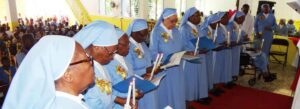
Yes. People have been saying this for some time. We experienced the first abduction of priests and religious in 2021. This year, six nuns were kidnapped in January, six religious and one priest in February and another priest on 1 March. The six religious are still in the hands of the kidnappers. The Church will not leave our brothers and sisters alone. But I have to say that many doctors are also being kidnapped.
How dangerous is it to be a bishop in Haiti today?
I am now starting my sixth year as the Archbishop of Port-au-Prince, and it is really very difficult. Until now, I have not been able to achieve even a quarter of what I had intended, because one must cope with daily life – and this daily life consists of suffering, violence, gunfights, poverty and deprivation. It is very hard. One must have a very stable state of mind. But we bishops try to work together and bear witness together. It is not easy, but we must bear our cross and follow Christ – especially during this time of Lent. We persevere, and we count on the prayers and solidarity of the people.
To what extent is your pastoral work affected by the situation?
It is very badly affected, especially in Port-au-Prince. I cannot visit two-thirds of my diocese because the roads are blocked. To reach the south of the diocese, I must take a plane. I have not been to the cathedral for two years. Once, while I was in my office, there was a lot of gunfire and I had to stay there for four hours before I could get out to celebrate Mass. Bullets struck my office window.
The last celebration I was able to do in the cathedral was the Chrism Mass. It was full. There were 150 priests there, with numerous religious and many faithful. But from the Agnus Dei until the end of the service shots were ringing out; we could see the smoke rising nearby. Since then, I have not been able to return to the cathedral or the bishop’s see.
What is the state of mind of the priests, religious and seminarians?
Everyone is afraid, including the religious. As soon as you leave Port-au-Prince, you are in danger. The seminary is in a neighbourhood where there is a lot of gunfire and fighting.
The gangs even come into the churches to kidnap the people there. Some parishes have closed because the priests were forced to leave. Last week, a parish priest had to flee with his congregation. They walked for 15 hours!

ACN helps by supporting the training of more than 200 seminarians and many catechists in Haiti. Where does the Church get the strength to continue its work despite this distressing situation?
Our people are a people who want to live. They are a people who show resilience despite their suffering… They are used to suffering – even when, as now, the suffering is on a terrible scale! The seminarians and catechists wish to fulfil a mission. That is why they persevere, that is why they stay here. For them, the mission is vital. For example, I recently called a meeting of the pastoral workers. I expected 120 people to come. In the end, there were 220, and even when there were no seats left, they remained standing. They want to be there, with the bishop, to receive a bit of education. They braved the danger to come here.
This shows the importance of faith in these precarious conditions…
Yes. The people are living their faith in these circumstances and despite these circumstances. Perhaps there was gunfire in the neighbourhood the night before. But the next day, even at 6 o’clock in the morning, the church is full. There are people who go and visit the sick, in spite of the danger. For the processions or for the Stations of the Cross, even in the centre of Port-au-Prince, there can be 50,000 people. Sometimes I am speechless.
What do you see as the Church’s most important task in this situation?
The most important thing is that the Church continues to bring people together despite all the difficulties. Through sermons or spiritual exercises for young people, we try to rekindle their hope, to get them to organise themselves and not sink into resignation. Whenever possible, the Church continues its mission. But it is not easy. The motto is: one day at a time.
How does the Church finance itself in this difficult situation?
Some parishes are more or less holding their own. For others, and that is the majority, it is very difficult. The priests receive almost no salary and many of the faithful are impoverished. The wealthy have gone abroad. We have almost no income.
Without the help of ACN, it would be very difficult for the Church to function. If some parishes are still able to carry on, it is partly on account of ACN. It is also thanks to your help that I can provide educational activities for the faithful and for seminarians, and that we can give them a little hope.
ACN does a great deal for us in Haiti. I would like to thank all the benefactors. We keep them in our prayers, and we ask the Lord to protect them. Do not forget us. May God bless you all!
In the last year, ACN supported the Church in Haiti with approximately 60 projects. These projects include support for the formation of seminarians, religious, catechists, and lay people, programmes for young people and people displaced from their homes, equipment for three diocesan radio stations, the installation of solar panels for the Haitian Bishops’ Conference and the Archdiocese of Port-au-Prince among others, as well as retreats and Mass stipends for priests, and emergency aid for nuns.
By Sina Hartert.

Recommended