Home » Featured » Lebanon: “The Muslims want us to stay”, says archbishop

Lebanon: “The Muslims want us to stay”, says archbishop

In the Archdiocese of Tripoli, Lebanon, where Christians now make up only two percent of the population, the Church is actively promoting interreligious dialogue with Muslims, said the Maronite Archbishop of Tripoli, Mgr Youssef Soueif. During a meeting with a visiting delegation from the pontifical foundation Aid to the Church in Need, he spoke about the challenges the economic situation in the country pose to the archdiocese.

The Maronite Archbishop of Tripoli, Lebanon, Monsignor Youssef Soueif in the meeting room of the Maronite Seminary in Karm Saddeh.

“There are many challenges which you cannot solve at the writing table. In Tripoli interreligious dialogue does not happen at the table, but in daily life. Our task is to be the light of the world, in the sense that we are present on the ground,” said the Maronite archbishop.

Tripoli, which lies in the north, is the second largest and at the same time one of the poorest cities in the country. Whereas in Lebanon as a whole Shiites are the largest religious group, in Tripoli Sunnis are in the majority. The number of Christians, on the other hand, is very small: according to Archbishop Soueif, in Tripoli before the Lebanese civil war (1975-1990), they accounted for 30 percent of the population, but now that figure stands at just 2 percent.

Schools at the heart of the mission

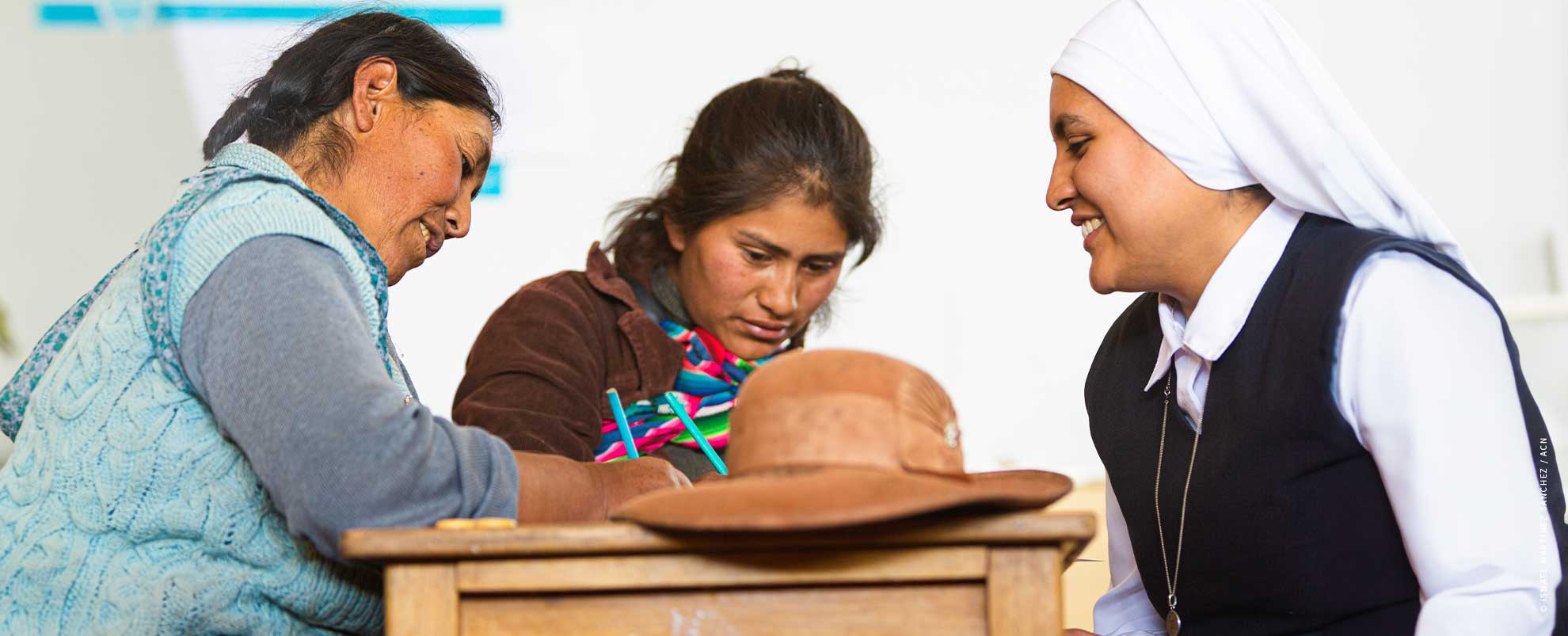
Yet these two per cent make a difference, according to the archbishop: “We have 16 schools with 6,500 pupils in overwhelmingly Muslim regions. We transmit a message of peace, of forgiveness and of love. The Muslims here want this message! They send their children to our schools, because they want them to grow up in such an environment.”

Children of the Lebanese school run by the sisters of the Good Service

Schools are, therefore, the main area of pastoral work in the archdiocese. “Schools are the heart of our mission! They are the place where the good news is proclaimed. Our way of life attracts people. We must pass on the Christian message to them. Without proselytising, however. We respect the faith of others, but also offer them our faith.” The radiance of the Christian message is great and there are frequent requests for baptism. “Almost every week I sign my agreement for the baptism of a convert,” the archbishop explained. “Our constitution defends freedom of conscience and the right to convert. This is unique in this region.”

Building a culture of peace                                                       

In a Message to all the Bishops of the Catholic Church on the Situation in Lebanon, in 1989, Pope John Paul II made it clear that the disappearance of Lebanon would be a tragedy, saying, “Lebanon is more than a country. It is a message of freedom and an example of pluralism”. In his meeting with representatives of ACN, Archbishop Soueif confirmed this: “The Muslims want to have us here! They often say to us: ‘Only together with you can we bring out the full identity of Lebanon.’”

In Tripoli the Church is building a culture of peace with the Muslims, a culture in which differences between people will be accepted. Yet this task, like the rest of the pastoral work in the archdiocese, has for a long time been put to a hard test. Since the beginning of the economic crisis, in 2019, priests in Lebanon have been struggling to survive. “In Lebanon priests do not receive any salary from the Church. They normally get their living through the collections and the gifts of the faithful. Yet, since the crisis, the Sunday collections come to less than 10 dollars. They can’t live on that – especially not our married priests, who in the end have to feed their families” said the archbishop, referring to the Maronite Catholic Church, which is in full communion with Rome, and which maintains the ancient Eastern tradition of ordaining married men to the priesthood.

The Archdiocese of Tripoli has 120 priests, 90 percent in rural areas. Due to the frequent lack of money and fuel, priests are often unable to visit their parishes.

Working against emigration

Alongside the priests, families, young couples and young people also lie close to the archbishop’s heart. Their witness to faith is needed in Tripoli. Since the Church in Lebanon owns land, the Maronite archdiocese is now trying to make this fruitful in order to become financially more independent, to sell its produce to the local population more cheaply and to create jobs for 200 Christians in the area. In doing so, it hopes to be able to combat the emigration of Christians.

ACN has been supporting the Archdiocese of Tripoli for many years. In 2023, it helped to provide Mass stipends – ensuring the daily survival of priests – and health insurance for 116 priests. The charity also contributes to priestly formation.


By Sina Hartert.

Don't miss the latest updates!

Pakistan: Demand for justice after Christian man found hanged

The Christian community has refused the official account that Mr…

“We will stay, despite the war”, says priest in southern Lebanon

Since the escalation of the conflict in the Middle East,…

Drone strike in Erbil raises fears among Iraq’s Christians

The return of war to the Middle East has reopened…

ACN’s global petition for religious freedom surpasses 20,000 signatures

Billions of people live in countries where religious freedom is…

Algeria: The “Son of St Augustine” visits Annaba

The Vatican has officially confirmed that in the coming April,…

Mauritania: The challenges of ministering to a community of migrants

The only diocese in Mauritania has just celebrated its sixtieth…

Ukraine: “You did not only give us food, but a taste of God”

In eastern Ukraine people have grown numb to the danger…

Catholics returning ‘in their thousands, not hundreds’ say bishops

Thousands of Catholics in north-east Nigeria have returned to church…

Taybeh: Do Not Let Palestinian Christians Become a Memory of the Past

The last entirely Christian village in the West Bank, Taybeh, east of Ramallah, has been enduring a wave of attacks and intimidation by Israeli settlers. Hostile acts include setting fire...

Pakistan: Demand for justice after Christian man found hanged

The Christian community has refused the official account that Mr Marqas Masih committed suicide, and claim instead that he was murdered. Two men have been arrested. Church leaders are demanding...

“We will stay, despite the war”, says priest in southern Lebanon

Since the escalation of the conflict in the Middle East, at the end of February 2026, the southern border of Lebanon has again become a war zone. In this context...