Nigeria, the most populous country on the African continent, is at war
Aid to the Church in Need (ACN) project partners denounce war conditions and inaction by the Nigerian government
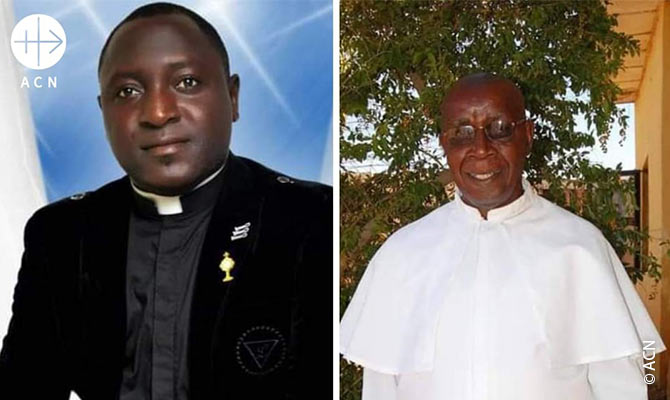
During the funeral ceremony in early June for Fr Alphonsus Bello Yashim, a Catholic priest murdered in Malfunashi, senior Church representatives denounced the current situation in northern Nigeria. In his sermon during the funeral mass, Archbishop Matthew Man-Oso Ndagoso of Kaduna, said: “Our country is at war because of religious fanatics, bandits, kidnappers, terrorists, armed herders and opportunists who are criminals in the true sense of the word. They kill and maim innocent Nigerians regardless of their religion, ethnicity or political orientation.”
The 33-year-old priest belonged to the Archdiocese of Kaduna but worked in the Diocese of Sokoto, where he was murdered on May 21 during a night attack. Pastor emeritus Fr Joseph Keke (75), kidnapped during the attack, was released on 3 June.
Bishop Matthew Hassan Kukah of Sokoto was even harsher in his sermon during Father Bello’s wake. Nowhere in the world are so many innocent people “killed in public without consequences,” he said. Bishop Kukah described the government’s response to the Nigerian people with these words: “Citizens are alone. Keeping your safety is not our priority. Foreign bandits or other criminals can come at will, kill you, loot you, rape you, kidnap you and murder you.”
The Kaduna seminary closed due to grave danger
Fr Joseph Keke’s abduction and Fr Alphonsus Bello’s murder were the latest in a series of attacks to which the entire population of northern Nigeria is exposed. Kaduna is one of the hotbeds of violence. Christian residents are terrified and the work of the Church is seriously affected.
The Kaduna seminary, which was attacked in the past and saw three of its students abducted and a fourth seminarian murdered in 2020, decided to send the seminarians home because the situation is highly uncertain. “We had to close the seminar in a hurry. The reason: kidnappers recently seized 24 students from a university that is very close to the seminary. Five of them were killed. We want to avoid a repeat of what happened to us in 2020!” said Fr Habila Daboh, rector of the seminary, speaking to ACN.
Sadly, violence is not spreading only in northern Nigeria. The whole country is under red alert, and attacks are happening on a daily basis, not only by Islamists from the Boko Haram terrorist group and other jihadist groups, but also by criminal gangs. These gangs kidnap people for extortion and are responsible for looting, rape and cattle rustling.

Ethnic Fulani herders spreading terror and death while the government does nothing
The situation is also tragic in Benue and Taraba states. Land disputes pit members of the Tiv ethnic group, mostly Christian farmers, against Fulani herders who want to use the land as pasture for their livestock. In 2018, the Benue State government passed a law against nomadic open-air grazing, promoting a system of stable livestock farming. This law angered the Fulani, who have since killed hundreds of people across the state.
Father Kuha Indyer, a missionary of the congregation of the Holy Spirit and ACN project partner, reports that “Fulani herders are massacring Tiv people, killing them with their knives and with modern weapons like AK47.” Two weeks ago, 36 people were killed in Benue. “One of my relatives was also among the victims. They came out of nowhere one morning and murdered everyone in a matter of minutes,” he said. Father Indyer also reported that in the Diocese of Katsina-Ala “several schools and parishes were closed due to the activities of criminal gangs.”
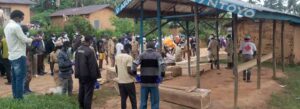
Another priest from a nearby parish described the terrible situation they are going through: “People who fled Taraba State were just unloaded, dumped on a street near a market and left without shelter or food. Some even had to leave their children to run for their own lives.”
Political silence fosters extremism and violence
Several project partners complain about the inadequacy and passivity of political leaders at the local and national levels. “Often, community leaders call local politicians but are not listened to, and their questions are often refused,” Father Indyer noted. “The outlook is scary, but we continue to stay with our people to give them hope. We continue to pray to God for peace.”
Bishop Matthew Kukah speaks of a growing political radicalisation whose goal is to imposed Sharia on Nigeria. “It is clear why they kill our people and where their inspiration comes from. We hear about and experience stories of complicity at the highest level.” This sinister situation began when, “some of our politicians decided to use democracy to install theocracy.”

Recommended