Panama: “We work in places that can be reached only by cars with four-wheel drive”
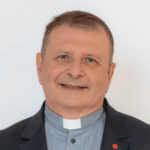
Father Alberto Narváez: “It gives me great strength when I look into the joyful faces of the people upon my arrival”
ACN donates a four-wheel drive vehicle to support the pastoral work of the missionaries
The mission region of Rio Congo is located in the Apostolic Vicariate of Darién in southern Panama and comprises 38 communities. Most of its inhabitants are rice and bean farmers. These areas are very difficult to reach; only two Diocesan priests and two female lay missionaries work there. Bishop Pedro Hernández Cantarero, C.M.F., applied to the foundation Aid to the Church in Need (ACN) for a new vehicle to ensure that the pastoral work, divine services, catechesis, lay formation and other things can continue in spite of the heavy rainfalls prevalent in this region. ACN talked with Alberto Narváez, a Diocesan priest from Nicaragua, who has been working in Rio Congo as a missionary for four years, and asked him to describe his day-to-day life and the conditions in this part of the Central American country.
It is 5:00 a.m. in Panama. Father Alberto’s alarm clock goes off. He begins to prepare for his day-to-day work in the jungle-like and swampy Rio Congo mission region. After he has filled the tank with petrol, checked the tyre pressure and the map to find out how to get to the communities he is planning to visit today, he has coffee, bread and eggs for breakfast and then sets off on his journey. Before he leaves the house, he goes over his checklist one more time: “umbrella, rubber boots, the satchel for Holy Mass, a torch…yes, I have everything!” He has a full day ahead of him today. He hopes to make it to the communities of Peñitas and Cacao. Surrounded by hills, steep slopes and “red soil”, these villages are almost impossible to reach by car on rainy days. “It happened to me once,” he remembers, “that horses had to tow my car away because it couldn’t get any traction and I had lost control of the wheel.” An anecdote that taught him one thing: “You simply can’t reach these almost inaccessible areas by car when it is raining heavily. It is better to come on another day than risk your life.”

In many communities of the Apostolic Vicariate of Darién, there are no telephone lines, much less Internet. In each village, “delegates of the Word” coordinate or conduct Sunday worship when the priest is absent. From time to time, Father Alberto Narváez meets them at gatherings or training courses. They then arrange the dates for a priest to visit. The delegates let the members of the congregation know when a priest will be coming to their villages. If the day set for his visit comes and the missionary does not arrive, the people go out to look for him. “They are waiting for me, they know the day and the time when we agreed to meet. But they also know: if I do not come, it is not because I don’t want to come, but because something kept me from doing so,” Father Alberto explains. He again points out how dangerous it is when the waters of the river rise and hence the need for a four-wheel drive vehicle to keep the car from being swept away by the current. “If the vehicle does not have enough power, you are putting your own life at risk.”
However, all the “stress of the bad roads and the fatigue” are immediately forgotten when he reaches the communities and gets out of the car. “You forget about yourself when you see the joyful faces of the people. All that remains is the sincere affection of a humble and simple people. That is something that gives me strength as a priest,” he says.
Due to the prevailing weather conditions, the mission trips are planned by the calendar, or rather, the rainy season. “We, the delegates of the Word and the missionaries, get together and arrange the dates according to the feast days of the respective patron saints, Sunday worship and pastoral needs. In the summer, I can reach places that are located further away and spend several days there because it is impossible to travel back on the same day,” the missionary says. “If several communities are located fairly close together, I usually stay at each one for an hour or two, depending on how many sick people there are to visit and how many blessings, confessions or other Sacraments are required,” Father Alberto explains. He then talks about how the faithful often confide their concerns to him, asking him to pray for a sick relative or for new work.

The seat of the Apostolic Vicariate of Darién is located in Platanilla, about 240 km from Panama City. The region is inhabited primarily by farmers who originally were evangelised by missionaries from the order of the Claretians, who arrived in the region in 1924. In the letter in which he asked ACN to support the purchase of a four-wheel drive vehicle for carrying out pastoral work in the region, Bishop Pedro Hernández, Vicar Apostolic of Darién, explained that the majority of the population there is Catholic because the communities are located in a very old mission region. “Popular piety strengthens their faith. Religious feast days are vital to them.” The bishop emphasised the importance of lay people in the pastoral care of these communities, no matter whether these are the delegates of the Word, catechists or representatives of mission groups for children.
The bishop wrote that the vehicle would make it possible to carry out monthly “mission trips”, during which three to five communities would be visited at a time. Furthermore, the sick would receive spiritual care and the priest would be able to celebrate the respective feast days of the patron saints.
After having travelled hundreds of kilometres and visiting dozens of families and houses, Father Alberto returns home full of stories and memories of faces. A full day of work comes to an end. And tomorrow is another day.

Recommended