Turkey’s invasion of Syria strikes a blow against Christians
PRESIDENT TRUMP’S order to withdraw US troops from northeastern Syria effectively greenlit Turkey’s invasion of the region. With this shift in US policy, Turkey has been given an opening to reshape its borders and begin to carry out a multi-faceted strategy. As the crisis unfolds, one thing is clear: Christians and other minorities are again in the eye of the storm.
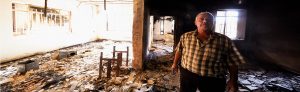
Northeastern Syria is home 30.000 to 40,000 Christians, Armenians, Chaldeans, Assyrians, as well as Syriac Catholics and Syriac Orthodox. Although suffering some restrictions, they have been living under the protection of the Kurds in an area that stretches 300 miles from the Euphrates River to the Iraqi border. Kurds comprised the bulk of the Syrian Defense Forces that, alongside US troops, fought against ISIS.
With the Kurds now likely to engage Turkish forces in battle, Christians and other minorities are afraid they will be left without protection. This confrontation may trigger an exodus, further depleting the Christian population of Syria, which has already shrunk by 80 percent in some regions since the start of the country’s civil war in 2011. To make matters worse, Kurds have warned that they may abandon the guarding of some 11,000 ISIS prisoners, who, if freed, would pose a huge threat to the entire region.
Already some refugees from northeastern Syria have reached Kurdistan and northern Iraq. A new wave of refugees will overwhelm the capacity of local government and the local Church to care for them. The Chaldean Archdiocese of Erbil, Kurdistan, was home to 120,000 Christians who had fled the 2014 ISIS invasion of northern Iraq. Still some 40,000 Internally Displaced People (IDP) are placed in the archdiocese and it would simply lack the means to cope with a new influx of refugees from Syria. What’s more, fleeing to Lebanon is not an option. Lebanon, overwhelmed by more than a million Syrian refugees, has initiated a policy of forcing refugees to return to their homeland.
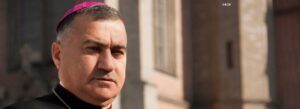
Erbil’s Archbishop Bashar Warda expressed major concerns that once again, “Christians and Yazidis will be collateral damage” as great powers make their moves in the region. He worries that many of the Christian refugees from northeastern Syria, unable to find adequate refuge in Kurdistan or northern Iraq, may leave the Middle East altogether.
Will Western nations stand up and protect Christians and other minorities? Non-state actors, such as faith-based organizations, will have to fill the gap best they can. For its part, “Aid to the Church in Need will continue to stand firm in its commitment to protect and serve persecuted Christians in the Middle East and beyond,” said George Marlin, Chairman of ACNUSA.
Turkey’s plan to create a 20-mile wide safe zone in Northeastern Syria may serve multiple purposes, among them a possible forced resettlement of up to 3.6 million Syrian refugees currently in Turkey; Sealing off the refugees from Turkish territory—the gateway to Europe—would give President Erdogan leverage in negotiations with the EU for billions of dollars in payment for keeping thousands of refugees from migrating to Europe. Turkey may also claim significant resources, such as fertile agricultural land, ample water from the Tigris and Euphrates rivers, and vast natural gas reserves.
Turkey’s plans may even go further. President Erdogan may well want to extend his nation’s control of Syrian territory to also include northwestern Syria. That would raise the prospect of the displacement of Christians all across northern Iraq, including Aleppo, where the Christian population numbers around 30,000. Such development could be “the beginning of the end” for Christians in Syria, said Father Mesrob Lahian, an Aleppo-based Armenian Catholic priest.
President Trump’s much-criticized decision to pull US troops out of northeastern Syria has set in motion a highly unpredictable sequence of events that could lead to massive military confrontations involving the major powers with stakes in the region—Russia, Iran, the US, Turkey and the Syrian regime. Ultimately, said Archbishop Warda, such a major escalation may well achieve the ISIS agenda: “the eradication of Christianity from the Middle East.”
Ed Clancy is director of outreach for Aid to the Church in Need-USA, a papal charity that supports the suffering and persecuted Church around the world.

Recommended