Nigeria – Fulani terror group commits Boko Haram-style massacres against Christians
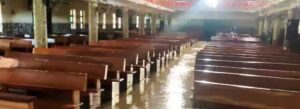
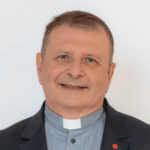
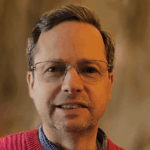
Between 2006 and 2014 more than 12,000 Christians have been murdered and 2,000 churches destroyed by Islamist terror groups in Nigeria. These are the figures cited by Bishop Joseph D. Bagobiri of the diocese of Kafanchan, in Kaduna State in the north of the country. He was visiting the Italian national office of the international Catholic pastoral charity Aid to the Church in Need (ACN) in Rome. Above all the Islamist group Boko Haram is responsible for the fact that Nigeria now ranks third on the international Global Terror Index 2016. However, as Bishop Joseph points out, Boko Haram is not the only group that is spreading terror in the country. “In the last three months, over half the territory in the southern part of Kaduna State has witnessed an intensification of attacks by the Fulani Herdsmen Terrorists (FHT), a terror group drawn from the nomadic pastoralists of the Fulani ethnic group. It is a group almost unknown in the West, the bishop told ACN, but at the same time he showed the report of the attacks since September this year: “53 villages burned down, 808 people murdered and 57 wounded, 1,422 houses and 16 churches destroyed…”
The Fulani are an ethnic group of tribal pastoralists whose traditionally nomadic way of life has for centuries led to conflicts with the more settled farming tribes in the region. Nonetheless, the attacks in recent times are of a completely different calibre to the old-style conflicts between farmers and pastoralists. For the Fulani tribesman are now using “sophisticated weapons that did not exist before, such as AK-47s of unknown provenance” Bishop Joseph reports. Equally, the reasons behind the attacks are not only the traditional ones, as he further explains: “In addition to the social and economic motives that have existed since ancient times, such as the distribution of the land and shortage of grazing, the dimension of the problem has changed, because the Fulani are Muslims and the land they are attacking belongs mainly to Christian ethnic groups, so that now there is a clear motivation of religious hatred. Both motives are still present, but in recent times the religious aspect has become the preponderant one – it has turned into a religious persecution.”
The fact that in many of the villages it has been especially the small businesses of the Christians and the Christian churches that have been singled out for attack is a clear indication for Bishop Bagobiri. “Nor can it be said that the violence is directed against a particular ethnic group, since the Christians belong to various different ethnic groups”, the bishop explains.
Despite this very grave threat against the Christians, “the persecution in Nigeria is not given anything like the same level of international attention as what is happening in the Middle East, for example.” And still worse in the bishop’s view is the fact that not even the Nigerian government itself is paying enough attention to it. “These attacks are taking place in the face of the indifference of a government that is content to sit and watch, while the people are exposed to attacks by armed terrorists”, he explains, adding, “Either the police do not have the appropriate weaponry to intervene, or else they have not been given orders to do so.”
Bishop Bagobiri has little doubt that this terrorist threat is also related to the growth of Islamic fundamentalism in the country and in particular to the problem of the sharia law, which has now been introduced into 12 of the 36 states of Nigeria, including Kaduna State. This Islamic law, he says, is the source of “inequality and discrimination, because for example the Islamic Courts frequently set free Muslims who have committed crimes such as the murder of Christians whom they have accused of blasphemy.”
You can find out more about Nigeria and the issue of religious freedom in the report by ACN on Religious Freedom Worldwide, published on November 15 this year.

Recommended