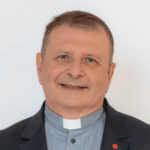
Cardinal Bechara Raï: “States have to change their perspective. It’s not about focusing on the number of Christians in the Middle East, but on the value that the presence of the Christians adds.”
The Patriarch of the Maronite Church, Cardinal Bechara Raï, calls for measures so that Christians will not abandon the Middle East because they are a decisive moderating factor among the region’s Muslim majority countries.
“Many have had to abandon Syria, because nobody can live in a war, under bombardment,” the cardinal told pontifical foundation Aid to the Church in Need (ACN). “This migration is reducing the number of Christians, who in the Middle East have contributed to the formation of a moderate Islam. If the Middle East is emptied of Christians, Muslims will lose their moderation,” said the cardinal, during an interview in Bkerke, the Episcopal See of the Maronite Catholic Patriarchate of Antioch in Lebanon.

Patriarch Raï regrets that in Lebanon “many Christians and Muslims have also had to emigrate, because the lack of peace and security, and the economic and financial situation affects everyone. The positive side of this is that they can restart their lives, carrying their faith with them around the world. But the negative is that Lebanon is being emptied of Christians.”
“States have to change their perspective. It’s not about focusing on the number of Christians, but on the value that the presence of the Christians adds,” he explains to ACN.
Whereas in countries such as “Iraq, Syria and Jordan, which are Muslim states, Christians are ‘tolerated’ and considered merely ‘second class citizens’, in Lebanon there is separation of Church and State, but there is respect for God and no laws are passed that contradict Christian or Muslim doctrine. This is why the Christians of the Middle East look to Lebanon as a source of hope.”
Lebanon is the only country in the region in which Christians are not a minority, making it a model of coexistence. “There are Christians and Muslims all over the world, but in Lebanon their presence is guaranteed by the constitution, and if a government were to act against this coexistence it would be outside the law. The Lebanese constitution guarantees a Christian presence,” the cardinal stresses.

“The Lebanese model includes Christian and Muslim values, and that is why they can coexist in this country. We want it to continue that way, and that all Lebanese Muslims and Christians can remain in Lebanon. The same for Syria and for Iraq. We want the Christians and the Muslims to remain, because this joint way of life leads to a moderate Islam. There is a danger that Christians and Muslims will emigrate, and then who will control Syria? Who will control Iraq? Who will control Egypt? Nobody knows.”
Cardinal Raï cites the example of the education sector, in which ACN has supported more than 160 schools in 2024. In Lebanon, many Muslims take their children to Catholic schools, as they are models of coexistence. “In the south, in our Catholic schools, all the pupils are Muslims. And they do not close to provide the value of life in common, the value of moderation.” “These schools do everything to stay open, especially in the mountains, for the good of the citizens.”

Difficulties for Christians
Lebanon has a population of 5,364,482, according to official figures from 2024. In 2011, it ranked 79th in the UN’s Human Development Index, which combines economic development with indicators such as education, health and income; by 2025 it had dropped to 102 of 193 countries analysed. In May 2024, the World Bank warned that poverty levels in Lebanon had risen from affecting 12% of the population in 2012 to 44% in 2022.
The country has been suffering from a delicate economic situation for many years, which was only made worse by the explosion in the Port of Beirut on 4 August 2020. The crisis has led to a “brain drain”, with around 77,000 people leaving the country in 2021, mostly professionals between the ages of 25 and 40.
Patriarch Bechara Raï says that “all Lebanese, Christians and Muslims alike, suffer the consequences of the economic and financial crisis in the country. Muslims get help from other Muslim countries, but the Christians in Lebanon can only count on the Church,” which has far fewer resources, and “that is why they are miserable. The Christians are poor, and that affects issues such as access to food, medication and hospital care.”

Despite this, “our people are a people of prayer, a God-fearing people. Our churches are full of youth, of people who pray, and thanks to this prayer, Lebanon can rise again.”
“The Christians of the Middle East have a mission in the Middle East, to bear witness to Christianity in the Middle East, along with the Muslims, for this martyred Middle East. This is where our mission is, and this is where we will stay,” he states. The Patriarch recalls that Christians in the Middle East are “the guardians of the roots of Christianity in the Holy Land, of the Christian Faith which has been in Syria, Iraq, Lebanon and Jordan, and in the Holy Land since the first century. The first communities who followed the Faith are here and we should help them to remain, and not to leave,” he suggests.
Cardinal Bechara Boutros Pierre Raï, 85, was elected Patriarch of Antioch and all the East of the Maronite Church on 25 March 2011. According to official Church statistics, by the end of 2022 the Maronite Church had 3.5 million faithful served by almost 1,400 priests and 42 bishops.
“I know pontifical foundation Aid to the Church in Need well, because it has supported many projects in Lebanon, and continues to do so. I greet you with deference and gratitude for all that you are doing both for Christians in the East and Lebanon, and for Christians around the world,” the cardinal concludes.