Radical Hindus aim to divide and conquer, says Indian bishop
With inter-religious conflicts in Manipur recently killing over 50 people, an Indian bishop says that the Church is concerned at growing radicalism, but adds that the majority of Indians value and appreciate the Christian presence, including services such as hospitals, schools and aid organisations.
A recent conflict between different ethnic groups in the Indian state of Manipur quickly acquired an interreligious dimension, leading to widespread attacks by Hindus from the majority Meitei group against mostly Christian tribal communities. Dozens of people were killed and several churches burned during the clashes.
Interreligious tension is nothing new in India, a country which is overwhelmingly Hindu, with a large Muslim minority (14%) and a Christian population that is below 2.3%. Despite its small numbers, Christians are often the target of attacks and even laws which aim to hinder their evangelisation work.
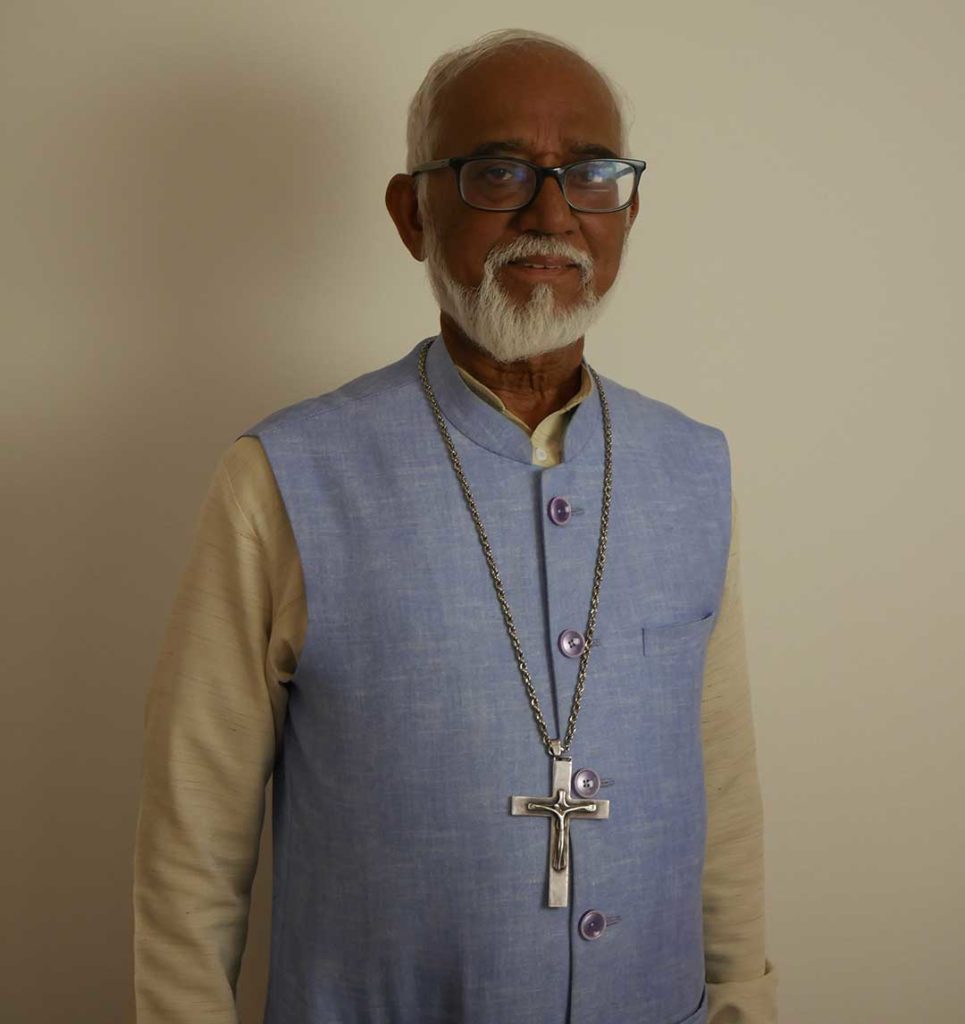
Bishop Salvadore Lobo, emeritus of Baruipur, explains that the anti-conversion laws, which cover some states, are generally misused to provide cover for discrimination against Christians. “The laws are very clear, they state that forced conversions are forbidden. The Church doesn’t do this. Certain parties accuse the Church of allurement, but over the past 30 years the Church has not grown in percentage in India, there is no allurement.”
The bishop points out the irony of radical Hindus accusing missionaries of converting people in exchange for food or money, when they do not seem to have a problem with the Church’s massive social projects, including hospitals, schools and aid organisations, that serve thousands of people. “Recently I visited a Catholic hospital in Bangalore that serves around 3,000 outpatients per day. Most are not Christian, yet they travel long distances to go there. Our hospitals are much appreciated because they treat the patients as human beings. Yet they accuse us of allurement because of this.”
Another problem with the anti-conversion laws is that they can be used for personal vendettas, much like blasphemy laws in neighbouring Pakistan. “If I am accused, I have to prove that it is not true, and that takes a long time, energy, and money, because lawyers are expensive”, says Bishop Lobo.
India has been ruled for almost a decade by the Bharatiya Janata Party (BJP), which runs on a Hindu nationalist platform. “The principle of the BJP is to divide and rule”, says Bishop Lobo. Despite the fact that Christianity has had a presence in India for close to two thousand years, radical Hindus will often portray them as being non-Indian. They use this rhetoric to rile their voting base, to win elections, but the result is a persistent anti-Christian tension in many parts, though not all, of the country.
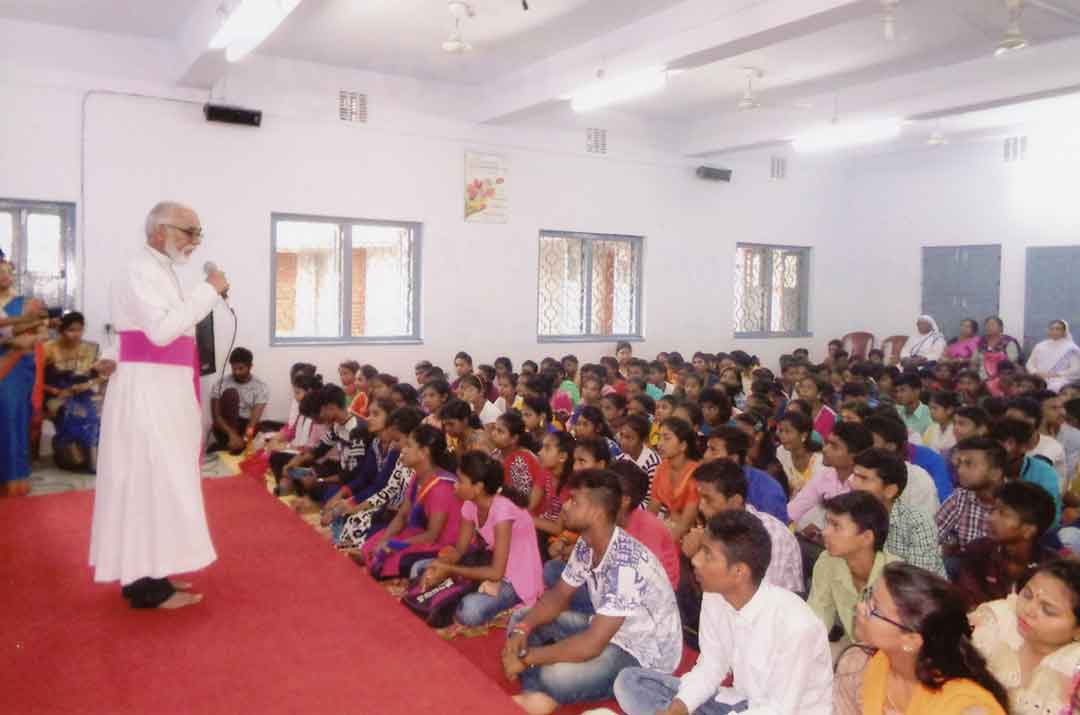
“Hindus and Muslims do not have the custom of going regularly to their temples or mosques, they generally pray with their families. But since our churches are full on a weekly, and sometimes daily basis, this gives the impression that we are more numerous than we are and makes us a target for this sort of discrimination”, Bishop Lobo explains.
However, despite the obvious concerns at anti-Christian speech, which may peak again with the next elections in 2024, the bishop says that the Government is actually doing a good job in other aspects, namely economically, and that the lack of organisation among the opposition parties may lead to another victory for BJP.
Although Bishop Salvadore Lobo acknowledges that the situation in some parts of the country is very difficult for Christians, in Bengal, where his former diocese is located, things are much better and interreligious harmony prevails. “In Bengal people respect different religions. Non-Christians are mostly educated in our institutions. Problems may come later on, but at the moment things are good.”
ACN supports many projects in India, and specifically in West Bengal. Bishop Lobo, who spoke to ACN during a visit to the organisation’s international headquarters, in Germany, thanks all the benefactors who make this aid possible, and assures them that “sometimes there are persecutions, but these are not the end of the Church, and we believe that the blood of the martyrs makes the Church grow. We need to have patience and make our lives a visible witness, even when we are suffering”.