Priest kidnapped in Mali was aware of the risks: “We are an easy target, but we have a mission”
The German-born missionary is an ACN partner and is heavily committed to inter-religious dialogue
The pontifical foundation Aid to the Church in Need (ACN) expresses its pain and concern over the disappearance and likely kidnapping of missionary Hans-Joachim Lohre – or Ha-Jo, as he is known – in Bamako, the capital of Mali, where he has worked for over thirty years.
The German priest went missing on Sunday, 20 November, after celebrating mass in a convent of nuns in the same city, according to sources from the White Fathers, as the Missionaries of Africa congregation is known.
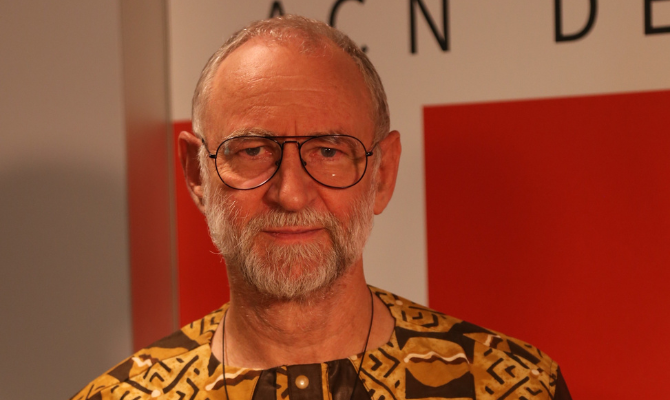
The same sources told ACN that there is no more information regarding the disappearance, but everything points to a kidnapping, since the missionary’s car was found abandoned and the cross, he always carried with him was on the ground. However, nothing is known about who took him, or why.
“We ask all our benefactors and friends to pray for the immediate release of father Ha-Jo. He was a builder of peace in a context of violence and terrorism. Our foundation supported his mission over the past few years, and now he needs our prayers and solidarity. We extend our support to his spiritual family, to the congregation of the Missionaries of Africa, and to Hans-Joachim Lohre’s family in Germany. You can count on our prayers”, says Thomas Heine-Geldern, executive president of ACN.
“Besides prayers, ACN also calls on the international community to do everything it can to improve the situation caused by jihadists among the populations of the Sahel, not only in Mali, but also in neighbouring countries. What is happening is a tragedy, an open wound for the world”, says Heine-Geldern.
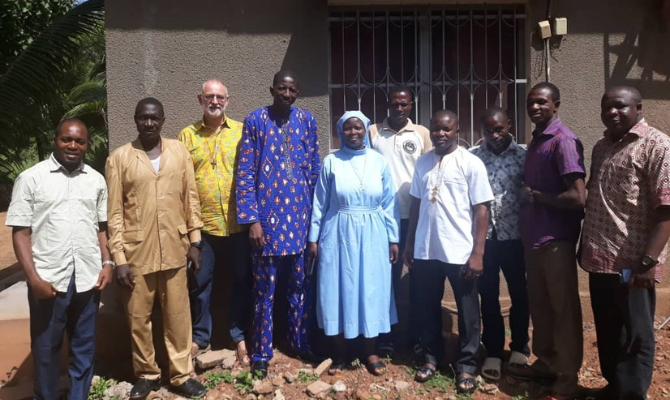
Father Ha-Jo, as he is known, is an ACN project partner and had taken part in several events hosted by Aid to the Church in Need. During a visit to Switzerland, less than six months ago, he told local benefactors about the situation in Mali. “The jihadists come in groups, on motorcycles, and the local communities have to make deals with them. They are forbidden from ringing church bells and drinking alcohol, and women are forced to wear the veil”.
ACN has called attention several times to the situation endured by Christians in the country, namely in central Mali, where the Katiba Macina jihadist group, linked to Al Qaeda in the Islamic Maghreb (AQIM), operates.
The missionary was well aware of the danger he faced in his work every day. “You don’t know when, or where it might happen. As white Europeans, we are easy targets, and we have been told that the jihadists are watching us”. But in several interviews with ACN he also explained why the imminent danger did not keep him from remaining in the country. “The question is given to us in the Gospel, ‘who do you say I am?’, that is the meaning of our lives, and we see that what is important is not how long we live, or how little or how much we achieve, but whether what we do has meaning and can make the world a better place”.
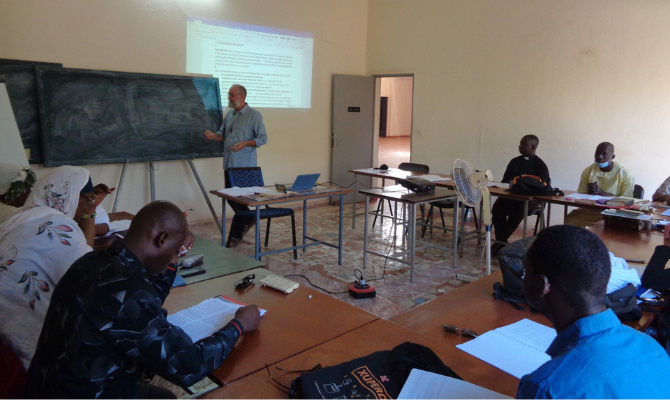
Father Ha-Jo was also very conscious of the importance of his own mission, to promote dialogue between Christians and Muslims, through education in Islamic studies of laypeople and of religious. “At the moment there are very strong fundamentalist currents in Mali, but most people just want to live in peace. Therefore, it is crucial that we foster good relations with the Muslims around us. We provide Christians with deep knowledge about Islam, so that when they return to their communities, they can help to build bridges and make contact with the surrounding mosques”, he explained during a visit to the international headquarters of ACN in Germany.
ACN has supported over 70 projects over the past three years in Mali, among them a four-year training and awareness programme for evangelisation agents, which covers the meetings organised by the Islamic-Christian Training Institute, in cooperation with Father Hans-Joachim Lohre.

Recommended