Pope visits Congo and South Sudan, where the Church plays a major role in peacebuilding
On 31 January Pope Francis will land in Kinshasa for a short visit to the Democratic Republic of the Congo. He departs for Juba, South Sudan, on 3 February, and then back to Rome on 5 February. It would take a miracle for peace to return to these nations, but that is exactly what the people expect from the Pope’s visit.
Aid to the Church in Need (ACN) organised an online conference on Monday, 16 January, entitled “Pope Francis’ trip to the DR Congo and South Sudan: A message of unity and reconciliation in two countries crushed by violence and suffering”, in the course of which speakers stated that during his visit to the Democratic Republic of the Congo (DRC) and to South Sudan Pope Francis will be providing a much-needed boost to the local Church in both countries, a Church that plays a major role in holding their political establishments to account, and forging peace in countries torn by war and conflict.

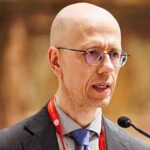
The Pope’s first stop will be in the DRC. Contrary to the first schedule for his trip in 2022, which had to be cancelled due to the Pope’s painful knee problem, he will not be visiting the east of the country, where the worst of the conflicts take place. The security situation has deteriorated significantly in recent months, although the Congolese authorities are saying that the reason for cutting the trip to Goma is due to the Pope’s health. However, the Congolese Church is making efforts to bring internally displaced people and others who have suffered from the effects of the war between different rebel groups to Kinshasa, to meet the Pontiff there, explained Fr Godefroid Mombula Alekiabo, a Congolese missionary based in Kinshasa, during the online conference.
With around 35 million faithful, which is 50% of the population, the Catholic Church is the biggest religious confession in the DRC. “The impact of the Catholic Church is difficult to overestimate. Its schools have educated over 60% of the nation’s primary school students and more than 40% of its secondary students. The Church owns and manages an extensive network of hospitals, schools, and clinics, as well as many other projects”, explained Fr Godefroid who is also a professor and academic secretary of Saint Augustine University, in Kinshasa.
From ally to critic
Much of the Church’s influence comes from colonial times, but “the reversal of the Church’s role in relation to the state since independence has been striking. Formerly a reliable ally, it has increasingly become the state’s most severe institutional critic”, the Congolese priest explained.
“Overt conflict first erupted in 1971 when the state, as part of its efforts to centralise and extend its authority, nationalized Catholic schools. The conflict intensified in 1972 when, as part of the authenticity campaign, all citizens were ordered to drop their Christian baptismal names and adopt African ones. Cardinal Malula protested at the decision. The regime retaliated by forcing the Cardinal into exile for three months and by seizing his residence”, the speaker told the audience.
“Later bans on having Christmas as a holiday, the nationalisation of schools and the forced replacement therein of images of the Pope and crucifixes with portraits of Mobutu, were all short-lived. “The state’s lack of managerial skills and resources rendered its takeover of the education system a disaster. Faced with these realities, the President asked religious institutions to resume responsibility for church schools. Courses on religion were once again integrated into the curriculum”, explained Fr Godefroid, concluding that at the moment, “in relation to the state, the Church is considered as voice of opposition to authoritarian regimes.”
The Congolese priest expects Pope Francis to bring a message of reconciliation for the people of the DRC that is badly needed and says that this should follow the teachings laid out in Fratelli Tutti and in Laudato Si’. He also hopes to hear Pope Francis condemn the multinationals that exploit Congolese mineral wealth and stoke the fires of war. “Several rebel groups compete to extract maximum commercial and material benefits at an exorbitant human cost of millions of Congolese lives. The private sector plays a vital role in the continuation of war by facilitating the exploitation, transport, and marketing of Congo’s natural resources.”
That all may be one
In the same conference, Fr Samuel Abe, Secretary General of the Archdiocese of Juba and coordinator for the Papal visit in South Sudan, spoke about the world’s youngest country, which gained independence from Sudan proper in 2011 following decades of conflict between Christians and Muslims.

In a country that has been torn by internal tribal conflicts over power, the motto for the visit is: “I pray that all may be one”. The Pope has spoken often about the need for peace in different parts of the world, but the attention paid to South Sudan has been special. In April 2019 he invited political leaders, representing different factions and tribal groups, to the Vatican for a spiritual retreat. Because South Sudan is not an exclusively Catholic country, but also has a significant number of Protestants, the Archbishop of Canterbury and the Moderator of the Church of Scotland were also involved. In fact, Pope Francis credited Archbishop Justin Welby with the idea of the retreat.
The big surprise, however, came at the end of the retreat, when the Pope kneeled and kissed the feet of the South-Sudanese leaders. “That is an expression that he loves the people of South Sudan, and wants them to live in peace”, said Fr Samuel, during the online conference.
Waiting on the miracle of peace
However, peace has eluded South Sudan since it became independent in 2011, admits Fr Samuel. “We have a problem with Tribalism. My late Archbishop Paulino Lukudu Loro used to say that to have a tribe is not a problem, but it should be an expression that unites us with other tribes. When we were one Sudan, there was a unifying factor, we used to look at ourselves as one people. We didn’t allow problems to divide us. Tribalism came about when we became independent.”
Politicians, he believes, are largely to blame. “As a Church we can say that the tribes themselves are not bad, but we can see that the politicians are the ones who incite people to hate opposing ethnic groups. If the politicians could refrain from causing inter-tribal strife in the villages, then we can have peace”, he told participants in the ACN conference.
The priest ended on a hopeful note. “When the Pope touches the ground of South Sudan many miracles can happen. We believe that the message he will bring will be a follow-up message to the one he gave our leaders in the Vatican, and we hope it will encourage our people to live as brothers and sisters. Even at the moment, as our country is implementing the peace agreement, there are signs that things are changing for the better.”

Recommended