Key to Lebanon’s stability is neutrality, says former President
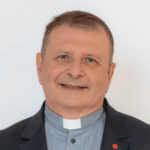
Michael Suleiman is a Maronite Catholic politician who was President of Lebanon between 2008 and 2014, following a decade as commander of the country’s Armed Forces. Traditionally, the President of Lebanon hails from the Maronite Christian population, the prime minister is a Sunni Muslim, and the head of the National Assembly is a Shiite. During his term in office, President Suleiman worked hard to create unity among Christians, Sunnis and Shiites, but the task was difficult, with Saudi Arabia backing Lebanon’s Sunnis and Iran supporting the Shiites, largely through its funding of Hezbollah

Lebanon is currently going through a severe political and economic crisis. Aid to the Church in Need (ACN) has responded with aid to impoverished Christians. In the wake of the August 2020 explosion in the Port of Beirut—which inflicted heavy damage on the city’s Christian neighborhood—ACN also embarked on an extensive program of rebuilding churches and Church-buildings damaged by the blast. After more than a year of political stalemate, a new government took office on 10 September 2021. In this interview President Suleiman speaks to ACN about the country’s political situation.
Traditionally, Lebanon has been a symbol that Christians and Muslims can live in harmony in the Middle East. How are Lebanese politicians contributing to that message?
We are creating a bad impression of our country’s message as we are not united to show the clear image of Lebanon. This should be the mission of each Lebanese citizen, regardless of their religion. Christian input in the country is an Islamic demand to begin with, as Muslims deeply care for Christians to be their primary partners.

Why do Muslims want that?
This is how the Lebanese people behave at their core and this is the real nature of our people. However, politicians always divide citizens, and sectarian interests divide political parties. A case in point are the parties that support Iran to such a point that Shiite citizens feel alienated from other Lebanese citizens. Personally, however, I am optimistic that soon Christians will fulfill their real role in Lebanon and the Middle East.
Have Christian politicians protected and nurtured the role of Christians in Lebanon?
Christian politicians could not do justice to the role of Christians in Lebanon because they could not enter into alliances with Hezbollah. Overall, political leaders could not agree on the idea of building our nation. It seems that Hezbollah doesn’t want to make an agreement with any Lebanese party that wants Lebanon to be a free and independent country. Today, Lebanon is not an independent or free country anymore due to the Iranian interference in Lebanese affairs carried out by Hezbollah, which is supporting Iran and opposing Arabic countries and the US, as well as Europe.

What do you think the Lebanese should do about this?
All we need is the neutrality of Lebanon, Lebanon should be a neutral state. Then we can go back to focusing on our institutions and the separation of religion and state. In Lebanon, politicians who want to be President or prime minister make alliances with the most powerful party in the government and that is Hezbollah.
Tradition dictates that the President of Lebanon must be a Maronite. Does this empower Christians?
No, because the President of Lebanon doesn’t have the power to govern. The prime minister, who, according to the same understanding, should be a Sunni Muslim, has more power than the President. I suggested to have a rotation of key offices among religions.

Would waiving the requirement of the President to be a Christian affect the presence of Christians in Lebanon?
Not at all. The religion of the President has no effect on Christians. The most important issue is having Lebanon not involved in the region’s problems.
The country is in crisis now. What should be done to improve the situation?
We have elections next May to choose members of the National Assembly. It is up to the Lebanese people to elect new representatives with good reputations, free from corruption, and loyal only to Lebanon.

What is your vision for the future?
Nothing is possible if we don’t dream. People should keep dreaming of the best outcome. During my presidency, I was not able to achieve the Lebanese dream. My big achievement was the “Baabda Declaration” (2012), which stated that Lebanon should not be involved in the region’s problems and wars.

Recommended