INDONESIA – after the most recent attacks: “Terrorism will strengthen moderate Islam”
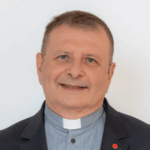
On 13 May this year radical Islam struck once again in Indonesia. There was great anguish and distress following the attacks perpetrated on three Christian churches of different denominations in Surabaya, the second largest city in the country. Maria Lozano, of the international Catholic pastoral charity and pontifical foundation Aid to the Church in Need (ACN) interviewed Father Franz Magnis-Suseno, a Jesuit of German origin who now has Indonesian nationality, having lived in the country for over 45 years now. In the interview, Father Magnis-Suseno, who has a profound knowledge of the religions in Indonesia, explains the reaction in the country following this wave of attacks and expresses optimism about the spirit of national unity, defended by the democratic system in the country based on the doctrine of Pancasila.

On Sunday 13 May, three churches in Surabaya, in the eastern part of the island, were subject to terrorist attacks. Why did they choose Surabaya? Is this city in particular danger for any reason?
No, there is no particular reason why these acts of terrorism should have happened in Surabaya. The only reason appears to be that the family involved, who almost certainly belonged to or had links with so-called Islamic State, lived in Surabaya or close to it. Christians have never had any problems of this nature in this city.

The first explosion took place in the Catholic church of Mary Immaculate at 7.15 a.m. What were your first thoughts when you heard the news?
I found out what I could on the news networks and then in the newspapers. The attacks were widely reported in Indonesia. The first thing that came to my mind was, “Not again!” Because I remembered that last year we had the attack in Jogjakarta in which Father Jimmy Prier, a Jesuit like myself, was struck in the head.
What was the reaction of the Christian community in Indonesia? Are they afraid?
It is thought that the terrorists in Indonesia are above all pursuing two objectives in their attacks: the Indonesian police, and the “heathens”, or “kafirs” in Arabic. And the latter – for the extremists, and only for them – include Christians, Buddhists and other religions. But generally speaking, the Christian community does not feel frightened at all. The Christians have seen and noted above all the reactions of their Muslim fellow citizens.

And what was the reaction of the Muslim community?
On the one hand the representatives of the moderate Muslim majority, especially the Nadlatul Ulama (NU), which with over 40 million members is the largest Islamic organisation in the world, responded rapidly and energetically. On the other hand some of those following the most hardline forms of Islam suggested that these attacks were manipulated by the government of President Joko Widodo and those linked to him in order to cast Islam in a bad light. But the majority of Muslims reject this theory. Most Muslims, such as the taxi drivers I spoke to, for example, firmly condemn this and all other acts of terror.
The police have identified the group Jemaah Ansharut Daulah (JAD) as the agents behind these attacks. What is this group?
It is one of the clandestine jihadist organisations; indeed I would say one of the most extreme. It recruits its members from among the extremists who have returned from fighting in Syria. And it is estimated that there are somewhere between 500 and 1000 extremists who have returned…
And why now?
It could be intended as a signal to other terrorist groups to launch or intensify a terrorist offensive, above all against the police, similar to that which took place in Palembang. In reality this would politically damage the proponents of hardline Islam – the non-terrorist groups which began a populist Islamic wave around a year and a half ago with the aim of deposing our president and replacing him with someone more Islamic. But in the case of the attacks on the churches in Surabaya, as well as on the police stations a few days later in other parts of the country, it is likely that the three families involved were acting without any overall political plan, but merely out of “terrorist devotion” in order to have a guarantee of arriving directly in heaven.
You have been working and living in Indonesia for over 45 years and you have devoted your life to interreligious dialogue, to building bridges between the religions. Do you not find this terrible news surprising and disillusioning now?
Not in the least. We are beginning to accept that we will have to live with terrorism. In my opinion this could even strengthen moderate Islam and at the same time reaffirm Indonesia in its ideological principles of the Pancasila – the doctrine that Indonesia belongs to all Indonesians independent of their religion. Or it might be that this terrorism will only strengthen the rejection of hardline Islam. The photo of the family involved and its two little children was shocking and abhorrent to many Indonesians.
You are a professor of philosophy at the ‘Driyarkara School of Philosophy’ in Jakarta, where a good number of the students on the Masters and Doctorate programs are Muslims. Hence you are familiar with the “most open” branch of Islam. Yet on the other hand it appears that Islamic radicalism is on the increase throughout the world, including in Africa and Asia… What is your analysis of this tendency?
I do not have a global vision of the issue, but in Indonesia the situation is still open. We have the traditional “abangan” – Javanese who were only slightly influenced by Islam and who today, although they pray and fast, strongly reject Islamic policies. And then there are the “nationalists” who in 1945, when Indonesia proclaimed its independence, made sure that Indonesia did not become an Islamic state. But we also have the two major organisations – the NU, mentioned above, which is mainly present in rural areas and has a traditional character, and the Muhammadiyah, which is city-based and working mainly in education (they have more than 100 universities) – both of which are strongly Islamic in motivation, yet they nevertheless resolutely reject Islamic terrorism. Also very important, not to say decisive, is the feeling of national Indonesian identity. Extremists like Hizbuth Tahrir (which was outlawed last year and which aspires to an Islamic caliphate) are rejected by other Muslims for not respecting their Indonesian identity. As long as the 50% of lower earning Indonesians continue to believe, as they do now, that under the existing democratic Pancasila system their children will have a better future, Indonesia will not become Islamist. So although the international wave of Islamic extremism is clearly felt in Indonesia, Indonesians have an extremely strong national and cultural identity. But not everything is okay. The politicising of Islam for personal political interests poses real dangers.

Is there anything that we can do about it?
Indonesia will certainly become more Islamic; but hopefully still within the existing constitutional and democratic framework. For us Christians, the task is clear: we have to build up trusting, positive relations with mainstream Indonesian Islam – which incidentally is something they greatly appreciate. The Church in Indonesia has taken the initiative in this respect for over 30 years, and these relations are bearing fruit. For example, for the past 20 years or so many of our churches have been protected around Christmas and Easter by the Banser, the militias of the Nadlatul Ulama (NU).

Recommended