Egypt: “We’ve seen real progress”
His Beatitude Ibrahim Sidrak, the Coptic Catholic Patriarch of Alexandria, heads the small Coptic Catholic Church, which has around 300,000 faithful. In an interview with the Catholic charity Aid to the Church in Need (ACN), he shared his concerns and joys over his country, which has become a refuge for many Christians from other countries.

How do you explain the fact that, unlike many other Near East countries, we have not been witnessing a mass migration of Christians from Egypt?
Historically, we have a large Christian community – probably 15 million! – who are integrated into Egyptian society. You can ask an Egyptian Muslim if his family originated abroad, but not a Copt. If someone is a Copt, that means that their parents and grandparents were also Egyptian.
Another difference is that in contrast with neighbouring countries, where religious freedom has diminished, in ours it has improved. Over the past ten years, give or take, our community has seen real progress. Our churches are legally recognised by the state, and there are much fewer acts of violence against us than before.
Twelve years ago, Mohamed Morsi and the Muslim Brotherhood rose to power in Egypt. Was this a terrible period?

It was, yes, but fortunately it didn’t last long. During Mohamed Morsi’s tenure, attacks on Copts increased. I believe that in 2012, when the Egyptians voted, they thought to themselves that they had never given the Muslim Brotherhood a chance, and that they should. They won’t make that mistake again.
Do you believe that the Muslim Brotherhood issue, which began in Egypt and is very hostile to religious minorities, has been settled?
No, because these sorts of movements never fully disappear, but the current government is taking this threat very seriously, and they no longer dominate Egyptian society. When they held full power, between 2012 and 2013, it was very risky for a Christian to go out alone. Our Churches were under constant threat, hundreds of them were burned!
Now we live in relative safety. There are fanatics and terrorists, as happens everywhere, but they are restrained.
Nonetheless, Egypt is going through an economic crisis. Has this caused disturbances?
Yes, we are going through difficulties, especially with regard to youth unemployment. We have an impressive population; every year, two million Egyptians are born! And the labour market is not keeping up. Many young people are affected by unemployment, which leads to frustration. Furthermore, we have received many immigrants from war-torn countries. In the past, we received Syrians and now it is Sudanese who have come to seek refuge.
What role can the Church play in this context?
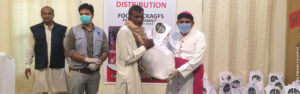
We welcome a number of these immigrants as best we can. The Coptic Catholic Church generally plays an important charitable role in Egypt, through its schools, hospitals and clinics. There are 180 Coptic Catholic schools, which have a good reputation. Many Muslims want to send their children to our schools, and some members of government have attended them. This not only helps to educate our people, but also keeps them united, despite religious differences.

To better fulfil this role, we insist on the importance of formation, not only for the clergy, but also for catechists, to whom we offer four-year training courses. We are also particularly focused on strengthening the Faith among the children.
What are the Church’s needs?
We need to build more churches. Now that the government has lifted the restraints on the building of new churches, all the dioceses have ongoing construction projects. The churches are the heart of our communities, but for many faithful they are difficult to get to. Those who live further away have to spend around a quarter of their salary to get their families to the nearest church for Sunday services by bus. Our cathedral in Luxor, which was burned, is a good example of this need of Coptic Catholics to rebuild. Soon it will be completely restored, thanks, especially, to Aid to the Church in Need.

Recommended