DR Congo: Church condemns massacre of young Christians in Komanda and calls for justice
Bishop of Bunia: “We need support for displaced priests”.
Following the brutal attack carried out on the night of 26-27 July in the town of Komanda, in the northeast of the Democratic Republic of the Congo (DRC), the local Church has raised its voice in condemnation and pain. The attack, which occurred around two in the morning at the parish of Bienheureuse Anuarite, in the territory of Irumu (Diocese of Bunia), resulted in the death of dozens of Christians, mostly youths.
According to the organisers, the young people had gathered to pray and celebrate the 25th anniversary of the Eucharistic Crusades movement. At the time of the attack, they were in the parish hall after a vigil, preparing a presentation for the closing Mass, which was scheduled for the next morning. The attackers killed 37 young people and wounded six more. Four managed to flee. “Human life is sacred and should not be destroyed like this,” says a statement issued by the Eucharistic Crusades.
Support for displaced priests
Speaking to Aid to the Church in Need (ACN), the Bishop Dieudonné Uringi of Bunia described the profound impact of the massacre: “Many people have been traumatised. When the adults found out, they came immediately to see what had happened.”
The entire community remains shocked both by the brutality of the attack and the fact that those responsible have not yet been apprehended. The bishop also lamented the lack of reaction from the security forces: “The police and the military were not far away, but they did not act in time. They should have intervened more quickly to protect the population”.
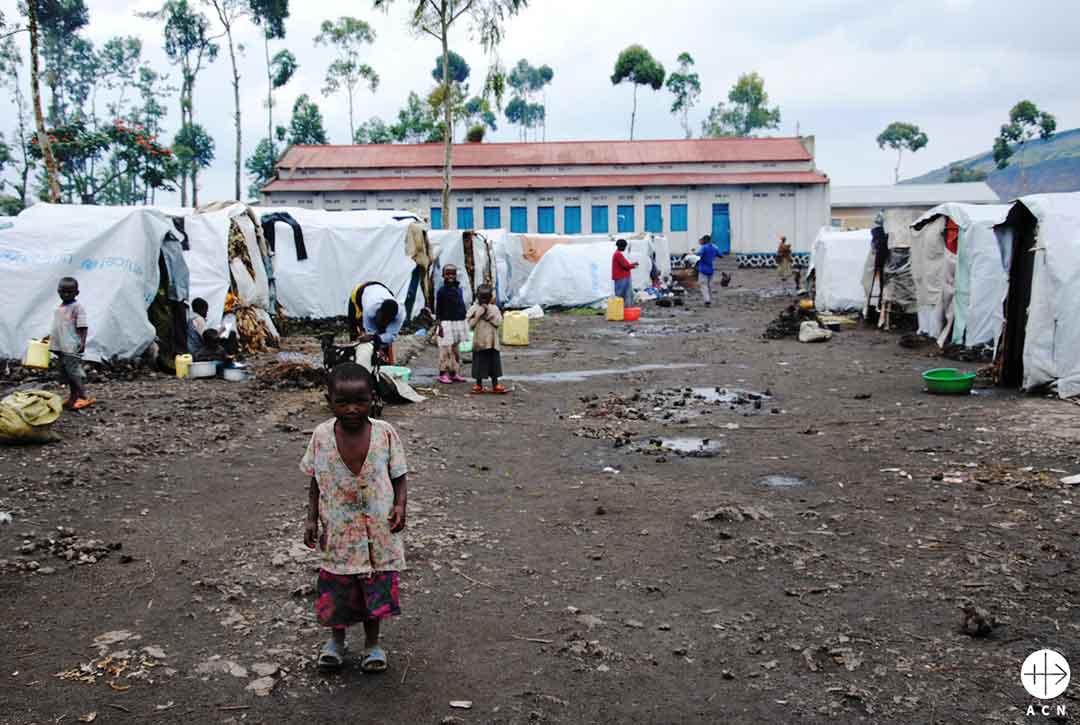
Although there are no confessional tensions between Christians and Muslims in the region, Bishop Uringi denounced the continued presence of armed groups. “There is no conflict between communities. The problem is the rebels from Uganda who have been operating in this area for years.”
Despite the climate of insecurity, the bishop continues to visit remote communities; even in the midst of fear, the Church does not abandon her people. “This very afternoon, I must travel more than 60 kilometers to a mining area in the middle of the jungle, as I did in June and July. I do travel every month to administer the Sacrament of Confirmation,” he says during the conversation with ACN.
The bishop also asked ACN for support for young priests displaced by the violence. “Many had to leave their parishes and seek refuge in Bunia. We welcome them, but we have no means to sustain them. It would be a great relief to receive help as we have before from your foundation to accompany us at this time.”
Investigation for justice
For its part, the National Episcopal Conference of Congo (CENCO) expressed its dismay in an official statement, issued on July 28, and condemned what it described as a “hateful massacre” carried out against innocent faithful.
“This umpteenth massacre has occurred in one of the provinces that has been under a state of siege for several years, with the presence of the joint operation of the Congolese armed forces (FARDC) and Ugandan (UPDF), in addition to MONUSCO. In these provinces we are witnessing murders and kidnappings,” the statement laments.
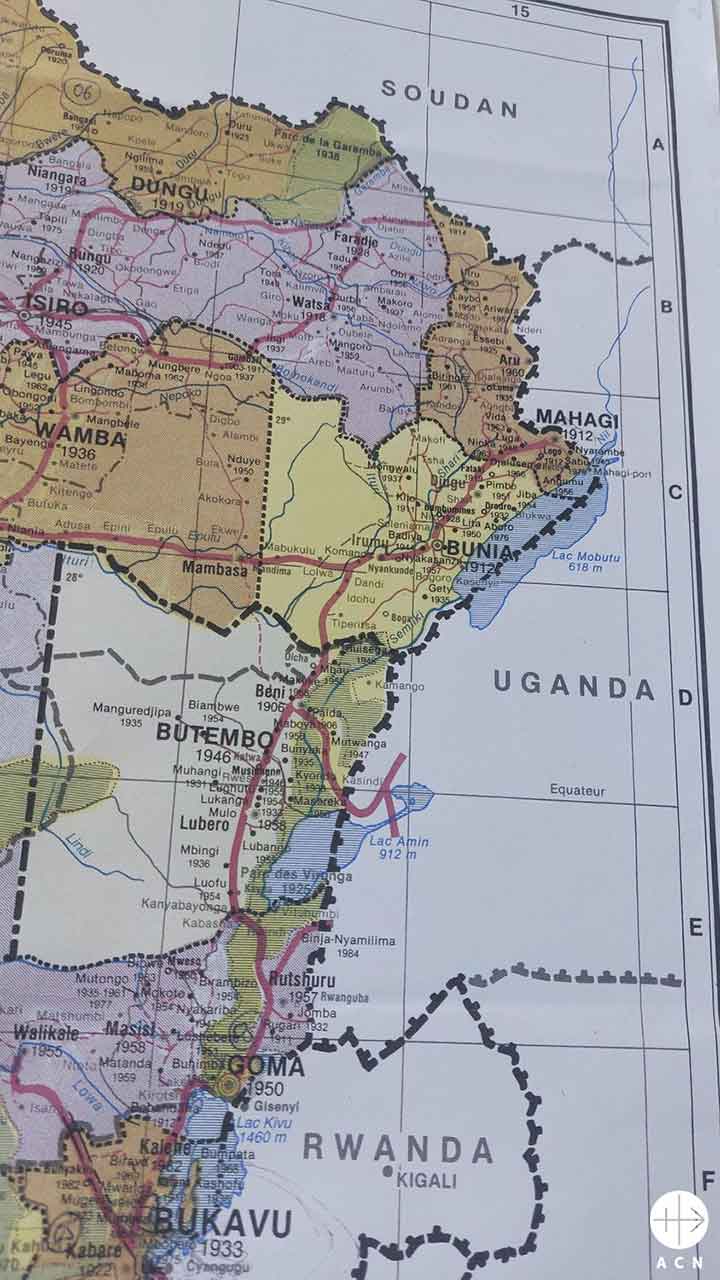
The outrage is even greater because “no credible explanation has been offered to reassure the population” about the identity of the attackers. The bishops wonder why, despite so many years of massacres, the authorities are unable to clearly identify those responsible. “Is anyone talking about the Islamists of the ADF, the terrorists of the ADF/MTM ISCAP? Do these serial killers have any purpose? Who benefits from these crimes perpetrated for years against peaceful citizens?” the bishops ask. They also call for “a thorough and satisfactory investigation into the tragedy” so that justice is done.
According to the statement, this tragic event comes just a week after the desecration of the parish church of Lopa, in the same diocese.
ACN reaffirms its commitment to the Church in the Democratic Republic of Congo, a country that is among the top ten recipients of aid from the charity and asks for prayers for the victims of this attack, for their families and for the entire Christian community in Bunia.
Recommended