Dozens Killed in New Wave of Attacks on Communities in Nigeria’s Middle Belt
A series of brutal attacks on communities in Nigeria’s Middle Belt have left at least 36 people dead, with several others injured or abducted, according to reports received by the Catholic charity Aid to the Church in Need (ACN) from the Diocese of Makurdi.
The wave of violence, attributed by local sources to militant members of the Fulani herder community, took place between 24-26 May across several villages in Benue State. Victims include civilians, a police officer, and individuals targeted in what appear to be coordinated assaults on farming settlements.
The first incident occurred on 24 May in Tse Orbiam, Gwer West Local Government Area (LGA), where Father Solomon Atongo of Jimba Parish was shot in the leg upon returning from a memorial service for two priests killed in 2018.
Ori Hope Emmanuel, of the Diocese’s Foundation for Justice, Development and Peace, stated: “On the evening of his return from a memorial service held in honour of two Catholic priests killed in 2018, Father Solomon Atongo of Jimba Parish was shot in the left leg by armed assailants identified as Fulani jihadists. The two passengers accompanying him were abducted by the attackers. Father Atongo is currently receiving medical treatment.”
At the same time, a local farmer, who had just concluded his day’s work, was reportedly shot and killed on his farm.
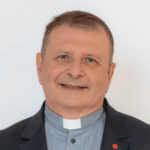
In a statement, Father Oliver Ortese, Chairman of the International Advisory Board for Makurdi Diocese, criticised the security forces for failing to intervene during the attack: “There is a military post where this incident happened, where the Nigerian army personnel are kept by the government. This has left many questions on our minds. Were the soldiers asleep while these shootings were going on?”
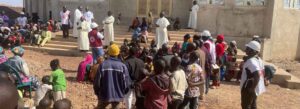
The violence escalated the following day when 20 people were killed in Aondona, also in Gwer West LGA. Aondona is the native village of the Bishop of Makurdi, Wilfred Chikpa Anagbe. The heavily armed attackers “reportedly opened fire indiscriminately, resulting in civilian casualties and triggering widespread panic and confusion”, said Ms Emmanuel. “Many residents fled their homes in search of safety.” The priests and religious sisters who live in Aondona managed to escape to Taraku, a nearby village, where many of the survivors of the tragedy have found asylum in the Catholic Church of St Patrick.
On the same day, three members of a family—a father, his teenage son, and a two-year-old child—were killed in Yelewata Village, Guma LGA. The wife sustained serious injuries. The attack followed the brutal beating of a 67-year-old farmer and the destruction of his cassava farm.
Further attacks on 26 May saw five more lives lost in Tse Orbiam and six others in Ahume, Gwer West LGA. Ms Emmanuel reported that the assailants “indiscriminately shot at individuals, resulting in multiple fatalities, including the death of a Mobile Police Officer on special assignment in the area”.
A final attack that day occurred on the Naka-Adoka Road in Gwer West, where armed men opened fire on both residents and travellers, injuring six and killing one.
Father Ortese condemned the wider impact of these repeated attacks on local communities: “They are creating humanitarian crises, as those who survive are moved into camps where they become beggars to seek out a living. You cannot imagine the reality we live in here. This is horror. This is terror.”
Conflicts between nomadic herders and settled farming communities have been a persistent issue in Nigeria’s Middle Belt, with complex root causes including competition for land and water, and entangled ethnic, political, and religious tensions. From this toxic brew emerge Fulani terrorists – a minority among the 12 to 16 million Fulani ethnic group in Nigeria.
ACN asks for prayers for the eternal rest of those who lost their lives in the attacks, for the families affected by the violence, for the recovery of Father Atongo, and for the safe release of the abducted individuals.
The pontifical foundation, which is supporting the diocese with emergency aid, trauma healing initiatives, and pastoral projects, calls for greater protection of vulnerable communities and urges the international community to stand in solidarity with the victims of violence.
Recommended