NIGERIA: Christians are challenged to gain political power
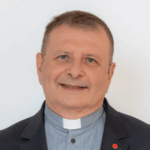
Bishop Matthew Kukah, 70, has led the Diocese of Sokoto in northern Nigeria since 2011. He is an outspoken critic of his country’s government for its failure to curb a culture of violence and protect Christians from deadly attacks. In an interview with Aid to the Church in Need (ACN), Bishop Kukah reflects on the expectations for the new government, which was sworn in at the end of May

What are your expectations for the new government, particularly regarding the treatment of Christians? Some have expressed optimism because of incoming President Tinubu’s wife being a Christian, while others have concerns about Vice-President Kashim Shettima. What is your perspective on the issue?
Some may consider my opinions controversial, but they are not based on sentiments, they are based on facts. First, I happen to have known Tinubu for more than 20 years, and I also happen to know Kashim Shettima. I have worked with him. I don’t want to be in a country where my opportunities depend on whether the president is a Muslim or Christian. These killings have been going on for a long time. Buhari’s vice-president, Yemi Osinbajo, was a Christian pastor, but what difference did he make? He never visited any place where Christians were being killed.
I judge people based on their capacity and competence and on how they see justice, fairness, and equity. I don’t think the president of Nigeria is going to favor either Christians or Muslims. A lot of the anxieties that people are expressing are unfounded. I have been to Maiduguri, and there are certain things that Shettima did while governor that I found unprecedented. We went to the opening of the cathedral in Maiduguri, and I was shocked to see five or seven commissioners there who were Christians and members of his cabinet. And he was involved in the building and re-building of mosques and churches destroyed by Boko Haram. What else can you ask of somebody?
Is there reason to think of Tinubu as an improvement over Buhari?
What is clear is that the outgoing president is one of the worst the country has ever had. The president was a Muslim, key leadership in the National Assembly was Muslim, nearly all security officials were Muslims, along with other important positions. It is sad that while all this was going on, Christians did not raise their voices. The point is that Christians are not organized politically.

Of course, I would like a Catholic to be president, but he would not govern Catholics – he would govern everybody in this country. I have enough experience living in Nigeria, for instance, to know that some of the best opportunities we have had as Christians did not come from a Christian president. The Pope did not come to Nigeria during the administration of a Christian. He visited Nigeria twice, courtesy of two Muslim leaders (Alhaji Shehu Shagari in 1982, and General Sani Abacha in 1998). Let us focus on the capacity for fairness, integrity, and the building of a better Nigeria.
What role do you see Christians playing in the new government, and how can the Church community support these efforts?
There is no substitute for engaging government. We Christians must do more than merely talking and complaining. The Buhari government was one of the worst because he operated a system based on nepotism. Ironically, in the midst all of this, northern Nigeria remains the most ungoverned region in the whole country. And what Christians have suffered is a fraction of what northerners have suffered, in terms of kidnappings, killings and destruction.
By the way, Christians have no reason to play victim. They remain the most educated in Nigeria, the most successful in business. They have power that is not political, but it is power they can use well. Our success transcends the scope of our numbers, even in Sokoto, where we are a minority. So, the issue is creating an effective strategy for exercising influence over the policies that affect us negatively.
What are the key factors affecting women and girls in Nigeria, and have these conditions worsened in recent years? How can the Church community address these issues and support women and girls in the country?
In northern Nigeria, women and girls’ education is frowned upon due to early marriages and the belief that women are meant only to marry and bear children. We can only help in educating more girls in northern Nigeria if the government is willing and ready to cooperate with us. So far, the northern governors have no clear plans for collaborating with the Church because of the way we are perceived and the likely backlash from Muslims.
Nowadays, some women and girls are more enlightened and realize that their lives need not end in the kitchen. We support them by encouraging them to live their lives and become better versions of themselves. In Sokoto, most women and girls are vulnerable to horrible and traumatic things, such as mass kidnapping, sexual slavery, rape and abuse. The government shows no interest in most of these cases, and it is really a pity that the media does not cover such stories. Here, people prefer a culture of silence.

What have the ACN-funded programs meant for you personally and for your people? How have you seen lives change?
My gratitude to Aid to the Church in Need knows no limit. I am deeply grateful for all the support they have given us so far, and I will always consider them part of the family of Sokoto Diocese. Thanks to ACN, our pastoral work is easier. They are sponsoring the school fees of some of our seminarians, and they have also succeeded in supporting our priests through generous Mass stipends. Here, when we attend any retreat, the priests are ordinarily expected to pay, and most of the parishes cannot afford to. ACN is stepping in to bridge that gap. We have received support, also, in areas of infrastructure, such as the roofing of churches. We are blessed and grateful to be associated with them.