CENTRAL AFRICAN REPUBLIC: « The Church is at the forefront of work for reconciliation »
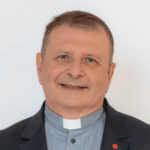
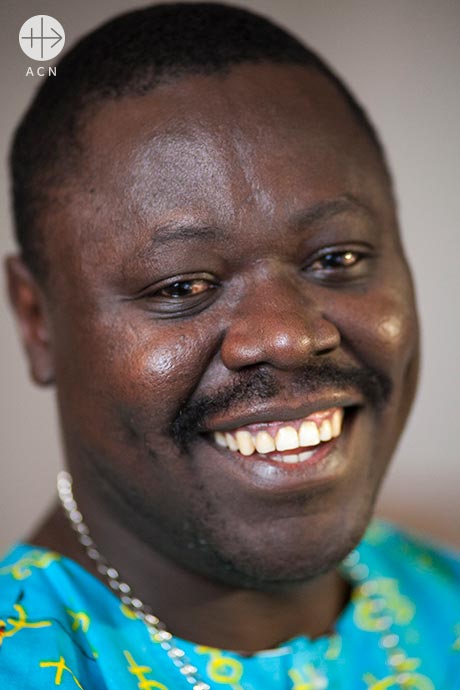
Bishop Nestor-Désiré Nongo-Aziagbia SMA, aged 58, is the bishop of Bossangoa in the northwest of the Central African Republic. He recently visited the international headquarters of ACN in Königstein, Germany, where he spoke to Pierre Macqueron.
What is the situation today in the Central African Republic?
in Central African Republic
The situation in the country is confused – The African Union, and Russia, are taking various initiatives. The principal leaders of the Seleka rebels groups met recently in N’Djamena, the capital of Chad, without any official reaction on the part of the Chad authorities.
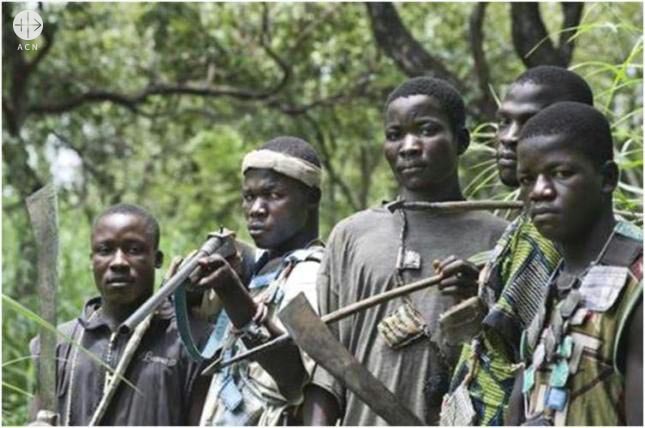
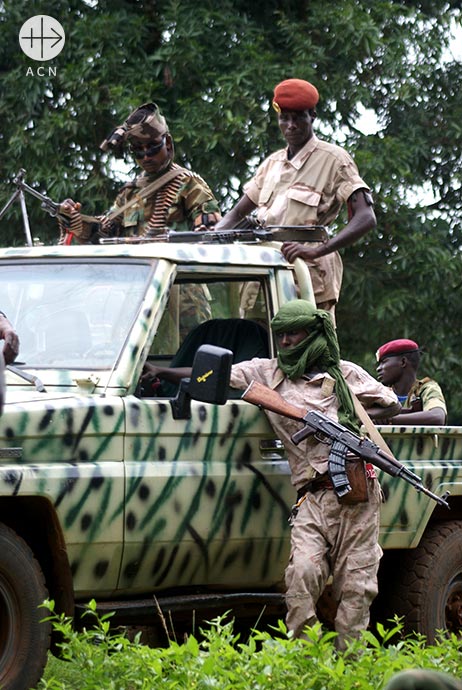
As for ordinary people, they suffer from a lack of security. Today 70 -80% of the country is in the hands of armed rebel groups, so that the majority of the country is no longer under state control. There are around 15 or so armed groups, including the Seleka, the RJ (Revolution and Justice), the anti-Balaka …. They are only interested in seizing control of the valuable mineral resources, such as gold and diamonds, and they also covet the livestock. They have no intention of seizing overall power, they are simply taking advantage of the crisis in order to enrich themselves. It’s a lucrative business.
And what about your own diocese?
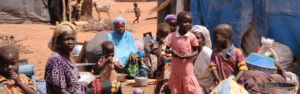
My diocese is in the northwest of the country on the frontier with Chad. It covers some 62,000 km², and we are just 31 priests for a population of 700,000. In December 2017 there were clashes between two rebel groups, the Seleka and the RJ. Many people lost everything and sought refuge in Markounda. There is a Catholic priest living there and he is trying to foster a relationship of trust between the refugees, the local people and the rebels. It is a risky business, and anything could happen, but it is essential to establish peace and harmony. There is no government army there, nor are there any UN troops.
My diocesan priority is to rebuild churches and encourage the faithful to be authentic witnesses to Christ among their brothers and sisters. There are 14 parishes and one convent. All their buildings were the targets of destruction. So far we have managed to repair five churches have .
So it is not a matter of a conflict between Christians and Muslims?
Ever since the start of the crisis, the episcopal conference has made a point of rejecting this interpretation, as have other religious leaders. And for good reason. The Seleka rebel groups, who are principally Muslim, are fighting among themselves for control over primary resources and livestock. In the process they don’t hesitate to racketeer and exploit those of their own religion. So religion is no more than a pretext in this case. It is above all a political, economic and geostrategic conflict.
How do you interpret the attack on the church of Our Lady of Fatima in Bangui on 1 May this year, which left 16 people dead and 99 injured?
I believe this attack was an attempt to provoke the Central African people to slide into an interreligious war. After this attack in Bangui, many Christians were enraged and wanted to take revenge. Cardinal Nzapalainga, who was away at the time of the attack, returned in great haste and made a declaration as soon as he got back to Bangui, appealing to the Christians to forgive and seek reconciliation.
Some young people, who call themselves Catholics, have joined the anti-Balaka group, who have been described as « lawless and faithless killers » by Cardinal Nzapalainga. To what extent does their ignorance and lack of formation represent a danger?
A genuine lack of education, and the fact that many of our nominally Christian people are living in a state of real spiritual confusion does represent a danger. These young people often thrive on superstitions.
For a decade now the educational system has been a failure. Professionally trained teachers are a rarity, and indeed absent altogether in many rural areas. Sometimes the parents, who themselves have no education, attempt to take their place. As a result the overall level of education is falling, and this has a direct impact on people’s ability to discern the situation.
Spiritual education is likewise extremely important. In our country we do a lot of work with our lay leaders, the catechists. Candidates for the position can be difficult to find, because in some villages there is no one who can either read or write. In such conditions how is one to understand and convey the biblical scriptures?
How is the Church endeavouring to participate in the reconciliation process?
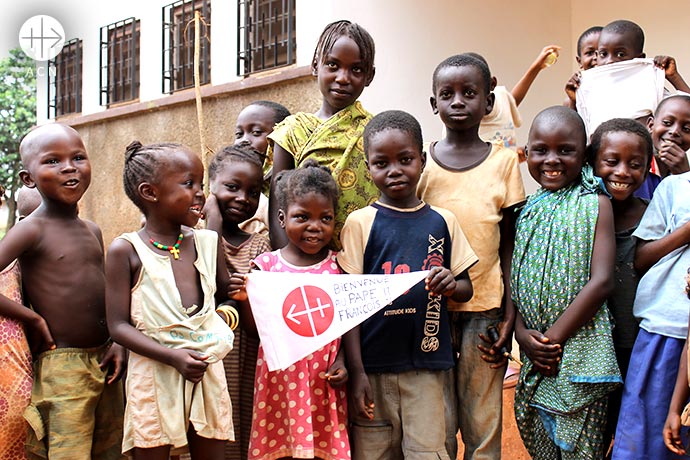
The Church has been at the forefront of the efforts for reconciliation. Most of the bishops, the priests, the religious brothers and sisters are involved in this process. We give shelter to the refugees and help those who are in need, without regard to their religion. We organise meetings of pardon and reconciliation, so that people can live in harmony and respect for one another.
From the very beginning of the crisis, we have maintained an inter-religious platform where Catholics, Protestants and Muslims can work together to offer a common response [Editor’s note: Protestants account for some 45.6% of the population, Catholics for 20.4% and Muslims for 14.7%].
Attempting to establish peace in an unstable country must inevitably involve risks…?
It is a risk that is part of our mission. I was kidnapped on one occasion, together with some priests. The bishop of Bangassou was threatened. A number of priests narrowly escaped death in Bangassou, and some were killed in Bambari. That is all part of our mission, as witnesses to Christ.
What message would you like to convey to the benefactors of ACN?
On behalf of the diocese of Bossangoa and of the Church in the Central African Republic, I would like to take this opportunity to express my gratitude to ACN for the many different ways in which it has supported us during these difficult moments of crisis, for example the ongoing formation of our priests and catechists, the support for our seminarians (the 31 seminarians at the major national seminary of Saint Mark in Bangui and the 80 at the minor seminary in Bossangoa), the reconstruction of our churches, presbyteries and religious houses, helping our Church to be a living community. I can only express my profound gratitude and continue to be in close communion with you in spirit and in heart.

Recommended