Caritas in Ukraine focuses on evacuating civilians from danger zones
The first thing people did when the bombings began was to pray
Caritas has two independent branches in Ukraine: Caritas Spes is run by the small Latin Catholic Church and Caritas Ukraine is operated by the larger Ukrainian Greek-Catholic Church. Although separate entities, the two collaborate on the ground.
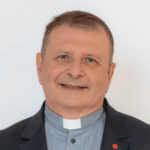
Father Viaczeslaw Grynevytsch is a Pallotine Father and president of Caritas Spes. He spoke to Aid to the Church in Need (ACN) about the work he has been doing and the situation in the country after almost two weeks of war. The interview was conducted by Filipe d’Avillez.

Where are you at the moment?
A few days ago, I was in Kiev, but then we decided to relocate to another, safer place, where our team can be together, and now we are close to the Ivano-Frankivsk region, in the west. We will be working from here.
What was life like in Kiev when you left?
It was a very complicated situation, which was one of the reasons we decided to move. It wasn’t so much the danger of bombs, the most difficult was thinking about what might happen if we had communication, internet or electricity cuts, because we had already had a few problems with the internet connection. We also had problems with lack of food in supermarkets.
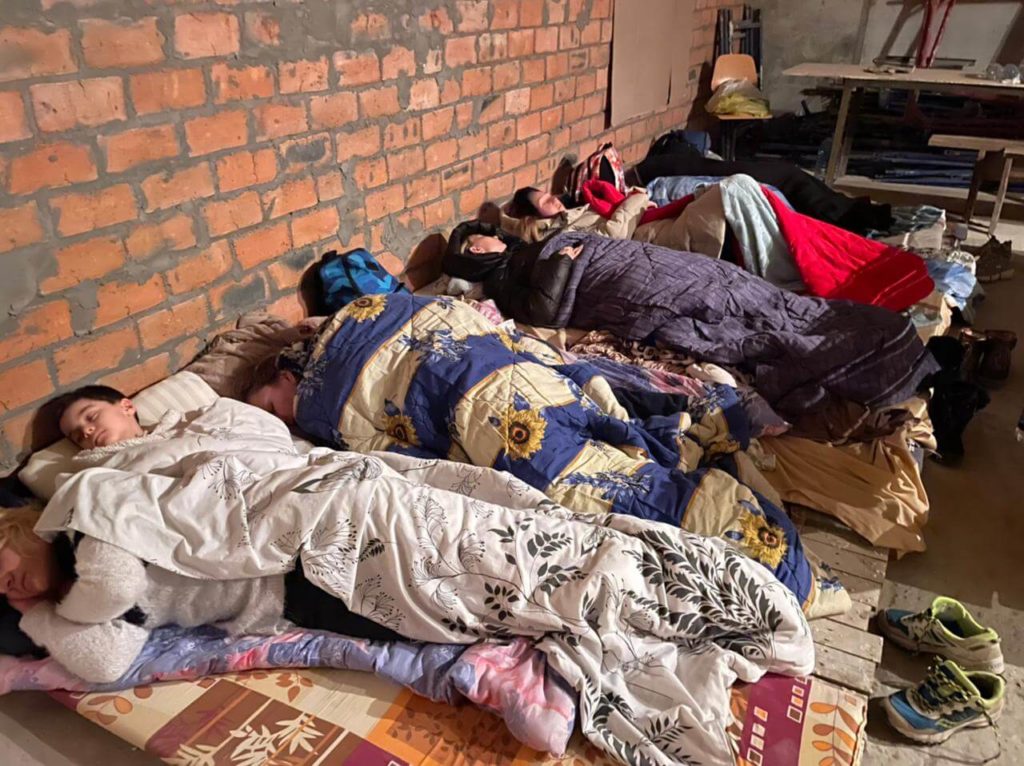
In Kiev we were looking after 27 children and mothers, but we helped transfer them to the border with Poland. So, finally, there were just four of us left. When I realised that my presence in Kiev was no longer necessary, I left and drove to fetch my mother in Zhytomyr. Normally it would have taken about two hours from Kiev, but using back roads through the small cities it took about nine hours. There were a lot of road blocks and soldiers. Finally, I managed to pick her up and the next day we left, taking one member of our staff, plus a mother with two children, and we relocated to Ivano-Frankivsk.
Is it still possible to get emergency aid into the capital?
The train system still works well. We can evacuate people by train and give them support in Lviv, and we can also provide aid in Kiev. We have a few storage houses in Kiev that we use, and our volunteers distribute food among the people.

With larger groups of people, we can just use our bus and deliver food to them, but we have had problems with scattered individuals, like cases of one or two people who remained at home. There are only two bridges open between the east and west sides of Kiev, and the queues to transfer people take three or four hours. This is a logistical problem. But we try to organise a system where on one day we distribute on one side, and the next on the other. We have to be very flexible, because every day the situation changes.
Initially we focussed more on humanitarian aid, such as distribution of food, medicine, and hygiene items, but now we have to focus on evacuation, because we get calls from people at the train stations, metro, shelters, or other places, and we need to support them through logistics, seeing where we can evacuate them to, and we are trying to do this in the next phase.
How about the areas of Ukraine that are already occupied by Russian troops? Do you have access to those?
We are waiting for them to open the humanitarian corridor to support the people in Mariupol, and we are in communication with Red Cross, but we cannot guarantee the issue of security, which is a problem for us. The banking system is still working, so at the moment we are trying to collaborate with local units of Caritas Spes, supporting them by transferring money, so that they can buy things such as food and medicine. We will try to support them with humanitarian aid, but at the moment it is difficult.
We have seen many images of families split apart as women and children are evacuated and men stay behind to fight. Are the men who have remained in Ukraine receiving any sort of psychological help? How about those who leave?
This is really very important, but at this moment we are not ready for that. At the moment we have to evacuate people, support them with food, safety, medicine, also protecting them on the border, because many people are inviting women into their homes, but we have to be 100% sure of their safety and take into account that some might have secondary intentions, so we need some sort of safeguarding against different kinds of violence. The next step will be psychological help.
We have seen many examples of priests and nuns staying behind to help people. How important is spiritual support at a time like this?
It also serves as psychological support. When we were in Kiev, with that group of 27 people, I could see how prayer is very important for them. When the bombing started, they went to the bomb shelter and the first thing they did was pray together. It was the only type of support they had. Being with them, as priests, we tried to speak about God, about spirituality, and we opened our church.
This is also a form of ecumenical enrichment, because the Latin Catholic Church in Ukraine is a very small group, we are only 1% of the population, but we have invited people into our house, without any question of denomination. In this centre where we are now, there are about 300 women and children, and some of them are Protestant, but they asked if they could participate in the Holy Mass. As a priest I said no problem, we are open. For me it is important that I can serve as a priest, and it is my duty to support them through my service and the vocation God gave me.

Recommended