Beyond the breathtaking beaches: the Dominican Church on the Haitian border
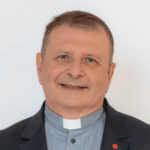
In December 2024, Verónica Katz, project director for Central America at Aid to the Church in Need (ACN), visited the dioceses on the Dominican side of the border with Haiti. In this interview she shares her experience in the less-visible areas of the Dominican Republic.

When people think of the Dominican Republic, they often think of a “paradise”, but what was your experience in the dioceses you visited?
The western part of the Dominican Republic is a very beautiful but forgotten region, facing serious economic, social and pastoral challenges. Many people think that the whole country is like Punta Cana and other more touristy areas, being considered a “developed” country and not in need of help. The dioceses we visited – Barahona, San Juan de la Maguana and Mao-Montecristi – are the largest in the country, and they cover the poorest provinces. It is a region that has been rather neglected by the government. Many parishes there are not self-sustainable, but the faith and the solidarity of the faithful in the local Church are inspiring. The distances are enormous, and there are not enough chapels in the urban areas, which are growing fast. Furthermore, the west is also a mountainous region, and lack of adequate transport makes pastoral work difficult.
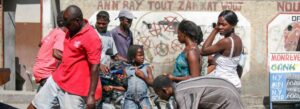
These dioceses on the border with Haiti are in a very vulnerable situation. Besides their own challenges, they also have to face a migration crisis, which has grown worse in recent times, because of the dramatic situation in neighbouring Haiti.
How does the migration situation affect the country and the Church’s work in the border regions?
There are many military checkpoints, so moving around is difficult. We were frequently stopped to see if we had any illegal Haitians in the car. And we saw several trucks, mostly in terrible condition, full of Haitians being deported. Most of the deportations take place at night, but we also saw some during the day. This has an effect on the dioceses in the border region, and there is a linguistic challenge, since most Haitians speak French or Creole, and not many catechists speak those two languages.
What is the situation of the clergy and the pastoral agents in these dioceses?
There are too few priests, which means that the ones who are there have to serve too many parishes and take on many responsibilities over a wide expanse of territory with bad roads. This is very tiring for them, and leaves them feeling that they cannot fulfil all their duties. We were even told that there are missionaries who don’t want to be sent to this region because it is so difficult and dangerous, and they have very little help.

As in many countries in Central America, cults are on the rise and in some areas, we also begin to find rituals such as witchcraft and voodoo, which are brought over by the immigrants from Haiti or through other influences. Lay leaders are also very limited, since they often do not have enough materials or resources. Nonetheless, their solidarity is very moving.
What else from the trip would you like to highlight? What signs of hope or of strength did you see in these communities that might be of inspiration to others?
The Dominican Republic is a deeply Catholic country, with a very strong devotion to the Sacred Heart of Jesus, and that in itself is very impressive. Its coat of arms includes a representation of the Cross and of the Holy Scriptures. My experience was that the Catholic Faith still has a strong presence and that was also impressive.
I would also like to highlight my visit to Batey 5, where ACN has been helping for some time. Life in the Bateyes is very tough. They have few economic resources and have many needs. There we had a strong experience of a very active community, of a truly living Church. I will never forget what a priest told me when we visited Jimani and which really touched my heart. He said that ACN’s visit made them feel that they were not forgotten, that even our visit was for them a sign of hope.

What are the main support projects that ACN has planned for the Dominican Republic in 2025?
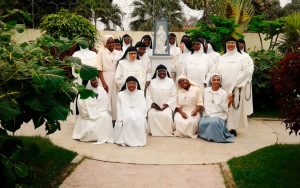
In 2025, ACN will be increasing its support for the country through the construction of churches, parish houses and other pastoral buildings, vehicles to help reach remote areas, the formation of laypeople and catechists, the education of seminarians, support for religious sisters, investment in media and the provision of Mass stipends for priests.

Recommended