Another war in the Holy Land. “We have never faced anything like this,” say Christians
With yet another blow to regional stability, many Christians in the Holy Land believe it is time to leave. Yet the mission of the Church remains, bringing hope and dignity to people in their daily lives.
The director of the Development Office of the Latin Patriarchate of Jerusalem, George Akroush, was in Munich, Germany when Israel and the USA began the latest war against Iran.
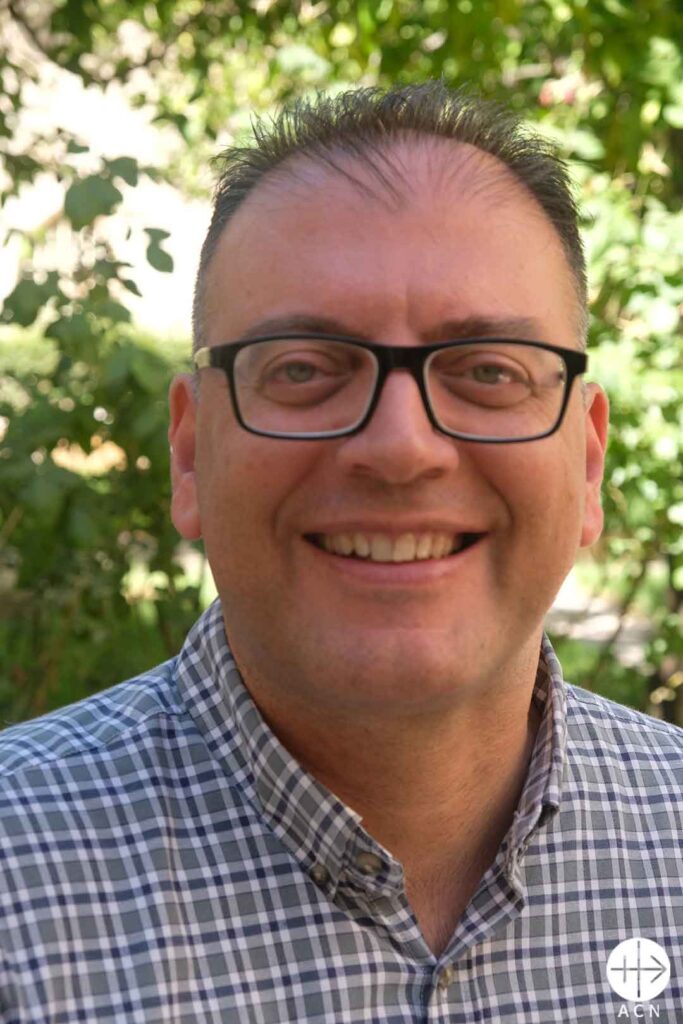
With all flights to Israel cancelled because of the Iranian retaliation attacks, George began an exhausting 32-hour trip that would take him from Munich to Athens, then to Cairo and from there, over land to Taba, also in Egypt, where he and thousands of others boarded Israeli government shuttles to Ben Gurion airport.
“It was really a tiring, terrifying experience, because when we reached the station of Ben Gurion Airport the sirens went off again, and we were in the most sensitive spot in Israel,” he said in an interview to ACN.
He finally made it home to Jerusalem, where his wife and children had been enduring three days of constant air-raid sirens. “I try to pretend I’m not afraid in front of the children, but this has been the worst experience of my whole life. We have never faced anything like this,” he says, and this from a man who has directly experienced 14 wars in the Holy Land.
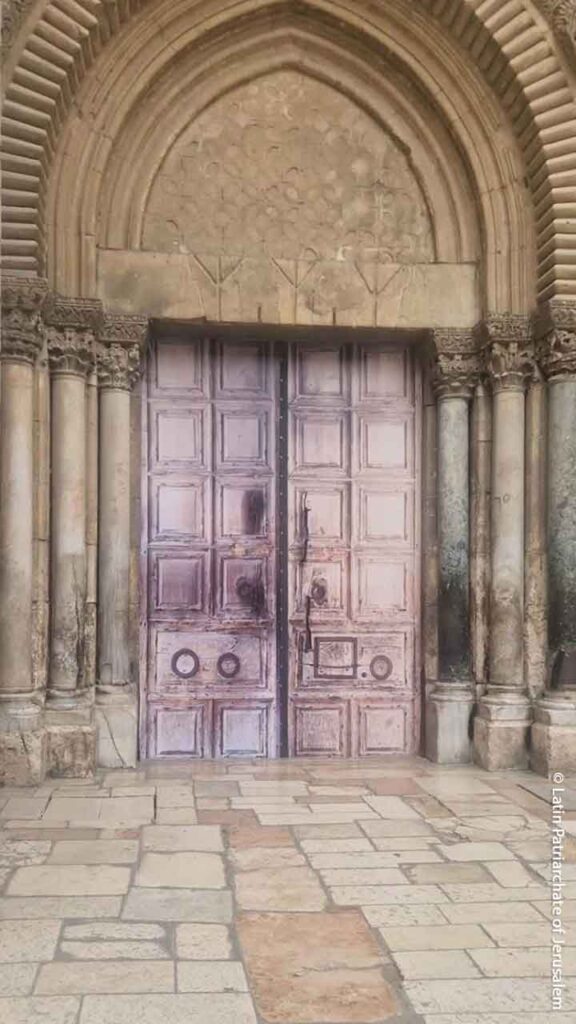
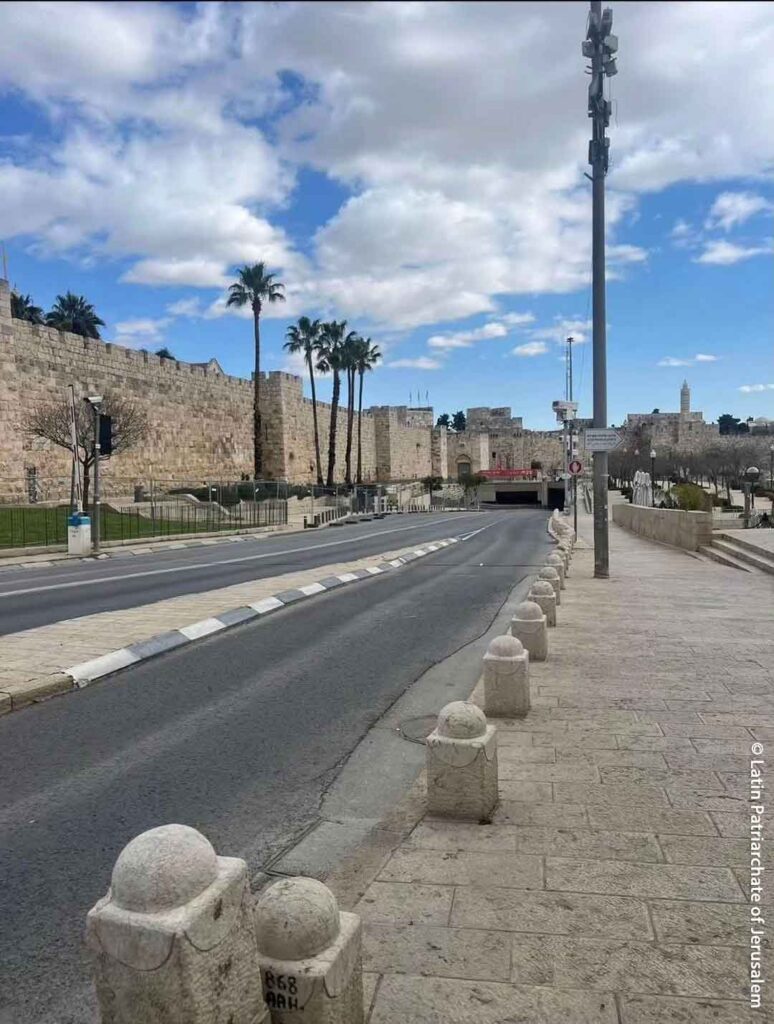
The Iranian retaliation strikes on Israel have upended life for all residents, including the ancient Christian community. Those in and around Jerusalem are subjected to the constant threat both of rockets and the shrapnel from the interceptors which are fired to destroy them. On Thursday morning shrapnel showered down over the Old City of Jerusalem, where many churches, convents and other holy sites exist, including the headquarters of the Latin Patriarchate.
A missile that hit the southern city of Beersheva damaged many apartments, including one belonging to a Christian family, according to information provided to ACN by the St James Vicariate for Hebrew Speaking Catholics.
Further north, the regions of Haifa and the Galilee are within range of rockets fired from southern Lebanon by Iran’s proxy militias, with the added irony that many of the villages closest to the border, on both sides, are Christian.
Humanitarian aid stopped
Meanwhile, the war saw the closing of border crossings from the West Bank into Israel. “180 thousand Palestinians from the West Bank used to have permits to work in Israel. After the 7 October attacks in 2023, the number dropped to 15 thousand. Unfortunately, now even those have lost access to their livelihoods, including teachers and support staff at the Christian schools in Jerusalem. This is a big challenge that we have to face, because 40% of our high-quality teachers and support staff come from the West Bank on a daily basis,” George Akroush explains.
Officially, Israeli authorities say that they lack the manpower to operate the checkpoints, but among many Christians this is seen merely as an excuse. “In my opinion, this seems to be just a pretext to exert more pressure on the Palestinian communities , because we see Israeli soldiers doing incursions every day in the West Bank, and they have even been filmed supporting settler attacks against Palestinian villages and towns. They are everywhere in the West Bank, but when it comes to facilitating access, they say that they don’t have sufficient human resources.”
The same logic has been applied to Gaza, where despite a welcome ceasefire, all urgent humanitarian aid was blocked when the war with Iran began.
“Since Saturday, 7 March, not a single humanitarian shipment was delivered to Gaza, including medication, spare parts for hospitals, not even antibiotics. We are trying our best to help the only Christian hospital there, which is very close to the Catholic compound, but all the channels that the Latin Patriarchate used to communicate with the authorities were closed. They say that everybody is involved in the war.”
This has forced the LPJ to rethink its most recent project of reopening one of the Christian schools in Gaza. “We were about to share that we decided to reopen the school, first with 400 students, then 600 and then 1,000, but with this war we are not sure whether we can stick to this plan.”
Breaking through despair
With the winding down of armed conflict in Gaza, and through LPJ sponsored initiatives, around 300 people have moved out of the Catholic compound where they had sought refuge for more than two years, but around 200 people are still living there, in addition to almost 50 people with disabilities who are cared for by the Missionaries of Charity. “His Beatitude Patriarch Pizzaballa has assured us that the Church will never abandon the weak communities,” George Akroush explains.
The LPJ remains committed to helping Christians all over the Holy Land, and continues to employ many people across the regions under its care, including 60 people in Gaza. But in a region where Christians mostly depend on the tourism sector, the prospect of a drawn-out war with Iran is difficult to bear. “Christians who invested in the hospitality sector are beginning to despair. Things seemed to be recovering, we had five or six big and important groups coming to visit us in the upcoming weeks, but if the war continues, they will all have to cancel.”
“Many are hoping to go to Jordan and then apply to move to some European or Western countries. Even the people who think that they are not ready yet for immigration are trying to secure documents that can allow them to leave.”
Yet home remains alive. ACN has been supporting the LPJ in many projects for several years, and especially since the beginning of the latest crisis, namely through emergency assistance, job creation programmes, food packages and others. George Akroush says that “Patriarch Pizzaballa often describes the mission of the Church in these difficult times as a jackhammer that slowly and persistently strikes hard rock until it begins to crack. Each act of service, each job created, each child returning to school, and each family supported represents another small break in the rock of despair.”