Almost 125 million for the Church in need
International annual report of the pontifical foundation Aid to the Church in Need
Over the past year, the pontifical foundation Aid to the Church in Need was again able to maintain a high level of donations. This is documented by the organisation’s 2017 Annual Report, which has now been released following attestation by the auditing firm KPMG. The report shows that the total sum of donations, legacies and other income was almost 125 million euros (124,057,414 €).
The largest part of the donated funds (82.5 per cent) was used to finance mission related expenses. The main share of this – 84.0 per cent or 84.6 million EUR – served to carry out 5,357 projects in 149 countries. 16 per cent of the mission related expenses served to raise awareness for the cause of the suffering church, media work and advocacy work with political institutions.
Another 7.0 per cent of the funds was used for administrative purposes and 10.5 per cent was used for fundraising, advertisement and communication with the around 400,000 benefactors of the organisation. The pontifical foundation now has national offices in 23 countries.
Specific items included in the annual report: 1,212 construction projects were co-funded by donations. These were chapels, churches, cathedrals and seminaries, many of them in regions devastated by natural disasters. A third of the funding in this area went to church building projects. Every tenth priest (a total of 40,383) received help in the form of Mass stipends, particularly in Africa (15,440) and Asia (10,748).

Aid was also approved for 13,643 seminarians, a larger number than ever before, a part of which was again granted in the form of stipends. This is equivalent to every ninth seminarian around the world, most of whom are in Africa. Subsistence aid was granted to 12,801 religious sisters (mostly members of contemplative orders) as was funding for their training. Donations were also made for cars, motorcycles and bicycles as well as three boats, four lorries and three buses. Around 2,000 aid requests were not approved because they did not meet the strict criteria for funding.
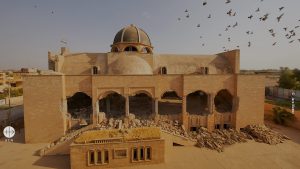
Last year, a large portion of the aid once again went to the Middle East. Second only to Africa, this region is the focus of many relief measures. Since 2011, the year of the “Arab Spring”, around 75 million euros have been directed towards conflict areas in the Near and Middle East, more than 17 million euros in the past year alone. Measures taken with this funding ranged from emergency aid and pastoral expenses (e.g. the printing of Bibles) to church building projects. Thanks to this aid, thousands of Christians were able to return to their homes. One major project was – and still is – the rebuilding of Christian settlements on the Nineveh Plains in Iraq after their devastation by the “Islamic State”. With almost 9.3 million euros, Iraq is at the very top of the list of countries that received aid from Aid to the Church in Need in 2017. India ranked second on the list of recipient countries with 5.86 million euros, followed in third place by Syria (5.8 million), in fourth by Ukraine (4.7 million), in fifth by Brazil (3.88 million) and in sixth by the Democratic Republic of the Congo (3.42 million).

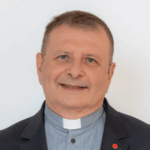
“In 2017, the regional focus of our aid projects was the Middle East as well as Africa. In all of our project work, the dialogue with the local church is particularly important. After all, the local bishops and religious know best where the need is greatest and which relief measures need to be taken. We believe that our job is primarily to support the church in those places where it does not have the material resources to carry out its pastoral activities or where Christians are suffering from suppression, persecution and violence,” Thomas Heine-Geldern, the executive president of the pontifical foundation, explained.

Recommended